
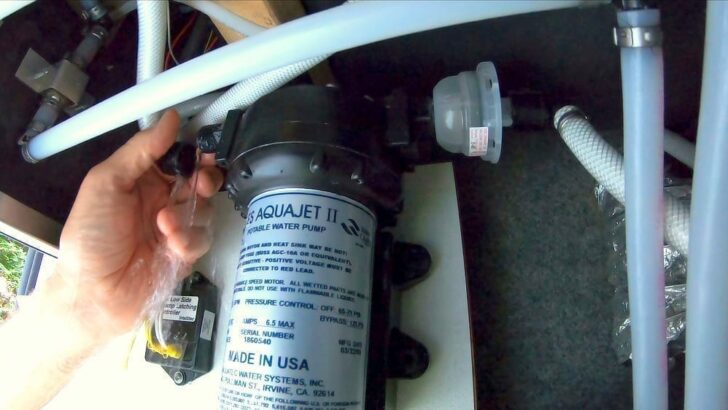
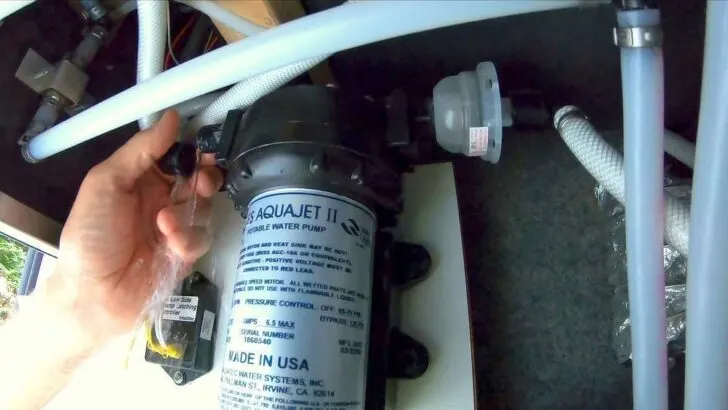
A water pump is an important component of any RV or camper… particularly for those who want running water while off the grid. The purpose of an RV water pump is to deliver water from your RV’s fresh water tank to your kitchen and bathroom faucets, your showers (indoor and outdoor), and for flushing the toilet. The best RV water pumps are those that work consistently and, if possible, quietly. You want a water pump you can depend on to deliver water where and when you need it, regardless if a city water connection is available at your campsite.
As we noted in a recent post about our own RV water pump replacement, pumps may not last forever, so sometimes a new water pump is necessary. Today we’re taking a look at five of the best RV water pumps on the market so that you’ll be prepared if “water pump replacement” makes it onto your RV “Honey Do” list.
Water flow, power efficiency, water pump size, and the RV itself are relevant factors to be considered in determining which RV water pump is right for you. Let’s begin by taking a look at how your RV water pump works and how you’ll know when it’s time to replace it.
- 1) How Does an RV Water Pump Work?
- 2) Benefits of an RV Water Pump
- 3) Do You Need to Replace Your RV Water Pump?
- 4) 5 Best RV Water Pumps
- 5) Protect Your RV Water Pump With A Filter/Strainer
- 6) Which RV Water Pump Will You Choose?
- 7) How To Replace Your RV Water Pump Yourself
- 8) Speaking of a Fresh RV Water Supply…
How Does an RV Water Pump Work?
The primary purpose of an RV water pump is to supply the water from your RV’s freshwater holding tank to various water access points throughout your RV such as your faucets, shower(s), and toilet.
An RV’s water pump typically requires a connection to your 12V power supply. Your RV’s size will typically determine the size of the pump necessary to ensure sufficient flow to all points.
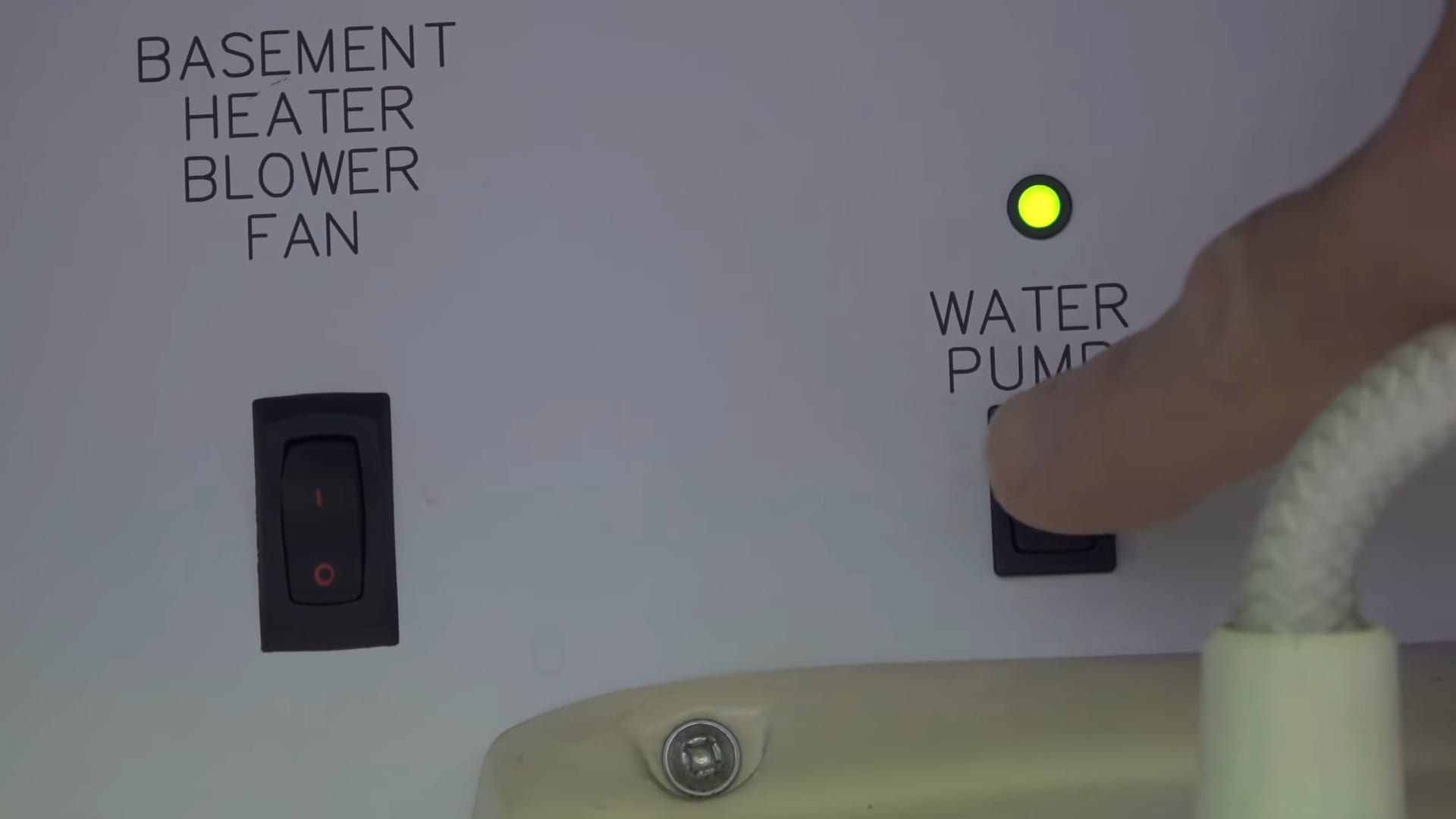
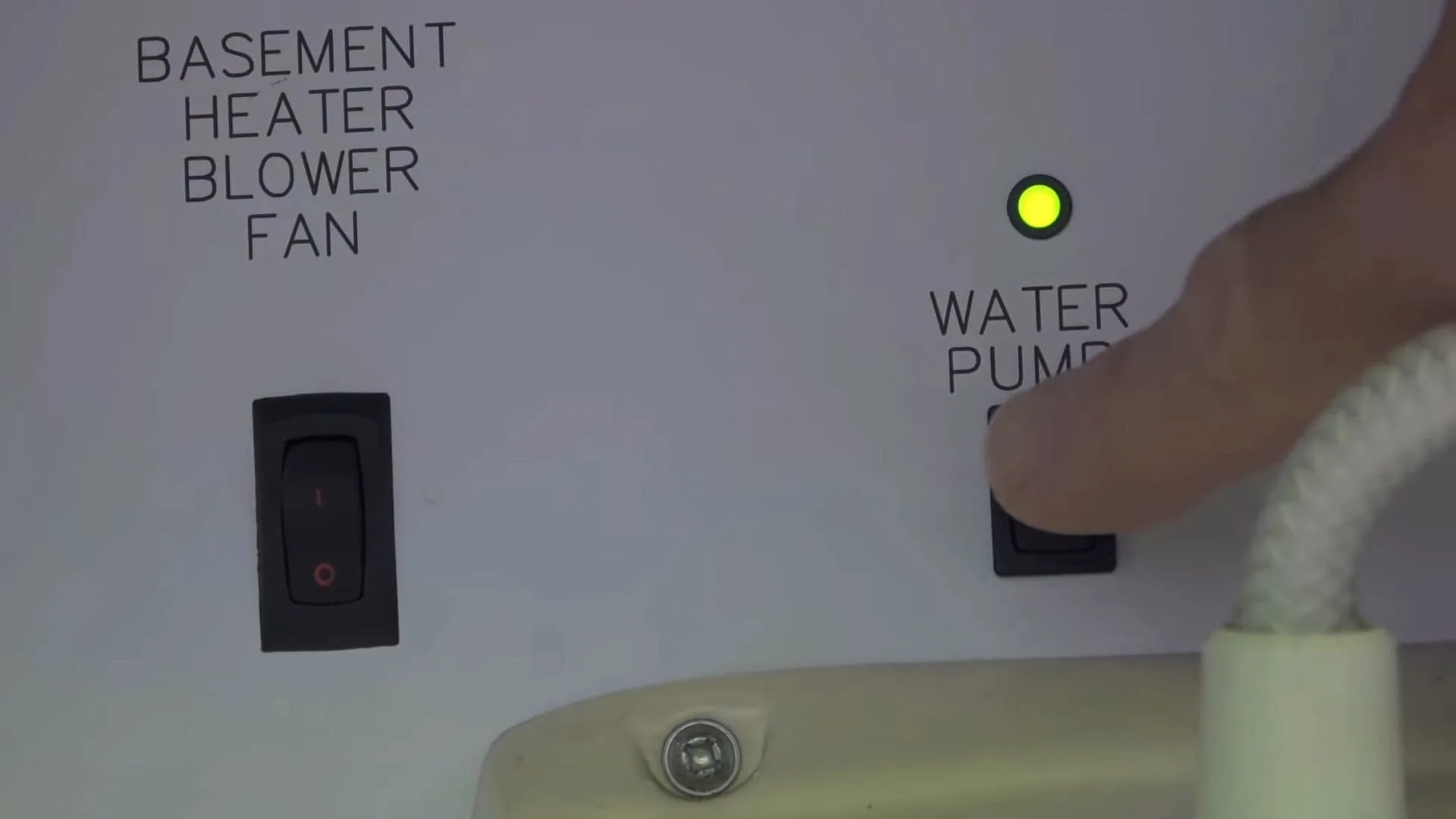
An RV water pump typically runs off 12V DC power supplied by your RV’s battery, allowing it to work wherever you’re parked.
Benefits of an RV Water Pump
The benefits of an RV water pump are significant, as it’s a key component that allows us to live comfortably no matter where we’re camping.
Your RV water pump (in conjunction with your fresh, gray, and black water tanks) is the reason you can do things like shower, flush the toilet, wash your hands & dishes, rinse off your muddy dog or your sandy shoes, brush your teeth, hard boil eggs, or do just about anything else that requires running water in your RV… all without having to be connected to a municipal water source.
As you know, we’re big fans of boondocking. And we can do all of the above, (except rinse off a muddy dog because we don’t have a dog), even if we’re camped in the middle of the desert. The reason all of this is possible is that we have a water pump that works to pressurize our plumbing, moving water from our fresh water tank throughout the system.
Let’s take a look at how you might know if your RV’s water pump needs to be replaced.
Do You Need to Replace Your RV Water Pump?
If you’re having issues with your water pump, you can do some troubleshooting to help you to determine the source of the issue. A few of the most common indications of a failing water pump are as follows:
It’s not turning on or moving water.
The most obvious indication, of course, would be that your water pump doesn’t turn on when you demand water, and/or when it is running, water isn’t flowing out of the taps.
It’s loud.
Many of us can hear our RV water pumps operating, and we’ve become accustomed to the sound it makes when water is running. If your water pump begins to make an unusual or very loud sound, it may be calling out for replacement.
The water pump is leaking.
If you check your water pump and the area around it is wet or there’s water coming out of the pump itself, it may be time for a full pump or component replacement. Investigate carefully to be sure that the water is actually leaking from the pump itself and not from a nearby plumbing connection.
Note: If you can hear your water pump running, but you’re not trying to run water from any faucet, shower, or toilet, this could be an indication of a leak or an open valve somewhere in your plumbing system. But it could also be the result of air somewhere in the plumbing lines. Before assuming it’s a leak, run water up at all faucets (and the toilet) until the water runs smoothly without spurts of air. If the cycling of the pump stops, you don’t have a leak. If it doesn’t, start checking for signs of water that’s leaking from a pipe or plumbing connection. And of course, make sure your fresh water tank isn’t empty!
Sometimes, you can repair a broken water pump, depending on the issue. If one piece of the pump is cracked or a gasket needs replacing, you may be able to repair the unit. Quite frequently, however, it’s easier and just as cost-efficient to buy a new one. That’s partly because, fortunately, water pumps aren’t that expensive, or difficult to replace.
Now let’s take a look at five of the best RV water pumps available.
5 Best RV Water Pumps
In considering the following options, keep in mind that the size of your RV is a factor in choosing the right water pump. You’ll want to consider the necessary GPM (gallons per minute) and PSI for pumping water from your fresh tank to your faucets. While a high flow rate may seem tempting (more is better, right?), since you’ll be using it while not connected to utilities, it may not be all that important. That’s a key point to keep in mind… boondocking is the primary time you’ll be using your water pump, so water conservation goes hand in hand with water pump use!
An often-overlooked issue when replacing/upgrading a water pump is the amount of current it may demand to operate. Typical pumps require less than 10-amps. So you need to ensure that the existing wiring, fuse(s), switches, and/or latching controller (a device that allows multiple switches to turn the pump on and off) are sized appropriately for the replacement. Otherwise, you may have other components or wiring that need to be upgraded, too.
Remco AQUAJET-AES 3.4GPM
This is the pump that we chose to use when our original water pump failed on our RV. It’s the direct replacement to the unit that came installed in our 2005 Newmar Mountain Aire. Our original pump survived more than 14 years of full-time use, including lots of boondocking, so we felt confident that a new one would serve us well, too.
PLEASE NOTE: We mentioned our pump recently, and apparently helped sell them out on Amazon! If they’re still out of stock, you can also find them at Camping World.

- Liquid Temperature: 140°F (60°C) Max.
- Amps: 10 Max.
This 12V pump provides a maximum of 3.4 gallons per minute at up to 65 PSI via its 5-chamber diaphragm. The unit is designed to run quietly, and its variable speed provides a smooth flow of water without rapid cycling. If you completely drain your freshwater tank, this unit can be run dry and then self-prime (just add water back to the tank and you’re good to go). It’s capable of supplying water to as many as four faucets, has a built-in check valve to prevent back-flow to the freshwater tank. It also includes a bypass valve to ensure smooth and quiet operation.
Two related notes to keep in mind — “Run dry” does not mean for extended periods, as this can burn out a pump. And “quiet” does not mean “silent” as we can indeed hear ours during operation. We’re talking about being audible without being unduly loud. And there’s actually a couple of important benefits to being able to hear the pump, especially for avid boondockers like us who take water conservation very seriously.
First, you’ll hear whenever the pump is running, so you’ll know if you left a faucet open part way, or if you’ve developed a leak somewhere. The other advantage comes from the sound and frequency of the pump’s cycles. Once you get used to what your pump sounds like at high and low flow rates, it becomes an audible reminder of how much water you’re using.
When you’re brushing your teeth, and the pump is running and cycling quickly, that sound can remind you to reduce the flow or turn it off. That kind of reminder is especially helpful if you transition often from full hookups to boondocking… an audible admonition to “Stop using so much water out here in the boonies if you want to stay very long!”
Since this pump’s power requirement maxes out at 6.5 amps, it was a perfect match for our existing wiring and 10-amp Intellitec latching switch controller. And with built-in auto-reset thermal protection, our pump will shut down if allowed to run for too long, allowing the components to cool and helping to prevent damage to the unit (again, however, you don’t want to allow it to run dry for any extended periods of time).
Installation is easy thanks to its “Quick Attach” plumbing connections. Just attach the connectors to the existing plumbing to/from your old pump and then snap them into place on the new one. That makes it much easier to connect it to the plumbing when you’re working in the typically tight spaces that RV water pumps are installed.
As we mentioned earlier, “more” is not always better. That’s exactly why we chose this model over its big brother with a higher flow rate (5.3 GPM, even though Amazon incorrectly lists it as 3.5). Not only don’t we have any need for higher water flow (3.4 GPM is plenty, especially when conserving water while dry camping), but it guaranteed we’d have no issue with the power requirement. That’s because the larger pump pulls a maximum of 10 amps, while our original (and our new replacement) draw a max of only 6.5 amps. So compatibility with our current electrical system was guaranteed.
To top it all off, it’s made in the USA, which is never a bad thing, right?
Shurflo Revolution 3.0GPM
For a quick and easy installation/replacement, look no further than the Shurflo Revolution RV water pump.

- 12 VDC, 3.0 GPM, 55 PSI, and 7.5 Amps
- Self-priming water pump with internal bypass-low cycling
This model of the Revolution series of pumps is an inexpensive option that provides a steady flow of water for your RV. Utilizing a one-piece diaphragm and four independent pump chambers, it’s capable of pumping 3.0 gallons per minute at a pressure of up to 55 PSI. This unit should be compatible with the 12V power supply in most RVs, requiring 7.5 amps of current at maximum flow.
As with the Remco unit above, it includes an internal bypass to quiet operation, is self-priming, can safely be run dry, and includes thermal overload protection to prevent the motor from overheating.
This pump includes a one-year warranty, and with 4.5 stars as the average from Amazon customers, most RVers seem very happy with it.
Flojet “Quad Quiet” Pump
The Flojet “Quad Quiet” pump is also easily installed and is another great option on our list. Its quad-chamber pump design produces up to 3.2 gallons per minute at a maximum pressure of 35 PSI. As a result, this unit is best suited for small-to-mid-size RVs with fewer demands.
The internal bypass prevents pulsating water flow, the sealed motor offers run-dry capability, and self-priming ensures you won’t run into trouble if your tank runs out of water. Maximum power demand is listed as 7 amps, so there shouldn’t be any problems with standard RV wiring.

- Open Flow: 3.2 GPM
- Amps @ 10 psi: 3.9

With an average of 4.4 stars from all Amazon reviewers, we’re sure that this pump will work great in your RV.

The Seaflo Self-Priming Pump puts out three gallons per minute at a maximum of 55 PSI and boasts an unusual four-year warranty. In addition to being self-priming, this pump offers smooth, quiet operation and can be run dry without damage. It weighs in at just over four pounds.

- Continuous duty and On-demand use. Self priming and run dry safe.
- Internal bypass technology reduces cycling.
Despite some comments related to disappointment with customer service, more than 1500 reviewers give this product an average rating of 4.5 stars, indicating overall satisfaction with the pump itself.
Remco AQUAJET-ARV 5.3GPM
Also made in the USA, this model from Remco is a powerhouse, pumping out a maximum of 5.3 gallons per minute at up to 65PSI.
- Aquajet's soft start feature eliminates annoying rapid cycling, and its exclusive 5-valve design can deliver twice the flow and pressure of...
This robust pump is the bigger brother to the one we use ourselves (#1 above) and includes all of the same features. It’s also a 12V pump with a 5-chamber diaphragm that offers steady, smooth, and quiet water flow. It has a built-in check valve for back-flow prevention and can run dry for short periods of time and still self-prime.
Because the unit has such a powerful motor and a high flow rate, the power demands of this pump (as high as 10 amps at maximum flow) could exceed the capabilities of your RV’s existing wiring. Plan accordingly before buying this particular unit.
Protect Your RV Water Pump With A Filter/Strainer
Regardless of which model you decide is the best RV water pump for your needs, be sure that it’s protected with an inline sediment strainer. No sense spending the time, energy, and money to replace/upgrade your old water pump, only to have the new one crap out on you because of silt/grit in the water supply. Even if you use a whole house water filter, protecting the pump right at the inlet is worthwhile protection.
Your RV likely came with one installed, so now would be a good time to inspect and clean it. If it’s old, too dirty to get clean, or your RV didn’t come with one, pick up a unit like this one and install it in line with the inlet side of the new pump.
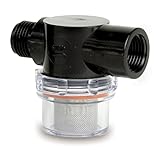
- SHURFLO CLASSIC SERIES STRAINER - Clean, clear economical strainers eliminate unnecessary repairs by keeping debris and other particles out of the...
- Screws directly onto the pump head
Which RV Water Pump Will You Choose?
Should you find yourself in need of a new RV water pump, we hope you’ll find our list of the five best rv water pumps helpful.
While easily overlooked, your RV water pump plays an important role in your RVing experience. When you’re traveling on the road or boondocking, your RV’s water pump is entirely responsible for the flow and pressure of water between your fresh tank and multiple water outlets throughout your RV. Should your current water pump fail, we know you’ll be glad to have a top-rated replacement.
How To Replace Your RV Water Pump Yourself
Now that you’ve chosen the best RV water pump for your rig, check out our DIY video showing how to do the replacement project yourself:
Speaking of a Fresh RV Water Supply…
As we’ve mentioned many times, we don’t bother with the hassle, expense, and waste of bottled water. Instead, we drink water directly from our freshwater tank, using an Acuva LED water purifier to achieve that goal safely.


Ditch the bottled water! Major cities sanitize their drinking water using ultraviolet light, and now you can, too. Acuva’s UV-LED system makes water safe to drink, using a fraction of the space...Show More
Ditch the bottled water! Major cities sanitize their drinking water using ultraviolet light, and now you can, too. Acuva’s UV-LED system makes water safe to drink, using a fraction of the space and power… perfect for RVs.
Check out our Acuva installation video here
Get 10% off any Acuva system when shopping online at Acuva's website and using the discount code listed here.
Show LessIf you’re not familiar with this awesome bit of RV magic-in-a-box, check out our Acuva installation video here and our follow-up video, where we did lab testing to show how effective it is.
Geek Out with Us Every Week
Join our newsletter to learn about all things RV-related. Every week we offer free tips, tricks, product reviews, and more to our online community of RVers. Whether this is your first time on the road or you’re a seasoned expert, we’d love for you to geek out with us!
Pat
Sunday 29th of October 2023
I'm a little confused as the Shurflo Revolution link leads to a pump from RecPro that says it's compatible with the Shurflo 4008 but does not actually appear to be a Shurflo. Seems like the specs are pretty similar. Your thoughts?
TheRVgeeks
Sunday 29th of October 2023
Hi Pat... thanks for bringing that to our attention. Unfortunately, the problem is with Amazon. The unique codes they use that are supposed to identify a product sometimes get reused/reassigned to a new one (or the seller using Amazon as their platform just decides to change the product but keep the code)... so our links sometimes (and beyond our control) end up pointing to the wrong thing.
We've gone ahead and re-pointed the links to the correct product (3.0GPM ShurFlo RV Fresh Water Pump)... so you can either use this link we just added here, or refresh the page (if you're on a computer, you may have to hold down your shift key on your keyboard and then use your mouse to click on the page reload/refresh button in your browser's toolbar to get it to load the page fresh from the server instead of the locally-cached copy your browser already has).
Thanks for your help!
Tim Gerrity
Tuesday 2nd of August 2022
The Remco pump has failed me, twice. Both the backflow preventer discs inside the pump fell out of their proper locations, allowing city water to flow back through the pump and overflow the fresh water tank.
According to Remco, these pumps are not repairable.
TheRVgeeks
Wednesday 3rd of August 2022
Oh no! Sorry to hear about that, Tim! But good to know that the Remco Aquajet pumps aren’t repairable… so we (and others) can plan accordingly.
Taylor
Monday 28th of March 2022
We are full time RVers ourselves (for the past 2 years) and are now needing to replace the water pump, since we almost always use it exclusively while boondocking most of the time. Just wanted to thank you for the info, it's very helpful!
Pat Parker
Sunday 6th of June 2021
Great article about water pumps always learning something.