
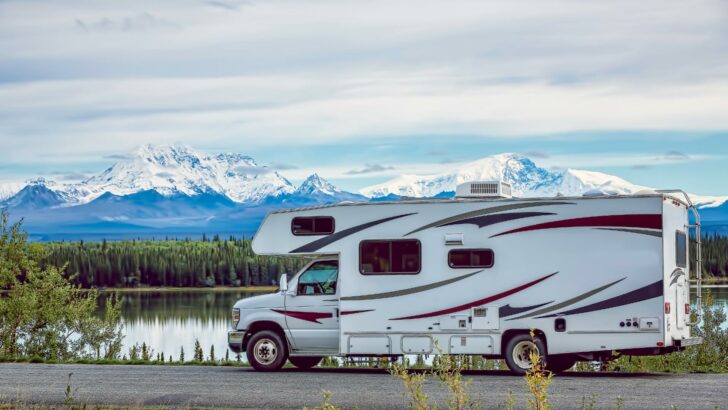

RV graphics are great because they add some flair to your rig. But RV manufacturers don’t tell us much about how to protect RV decals. We’ve learned a lot in our 20 years as full-time RVers, including how to keep RV decals from fading and even peeling.
Even a premium RV can come from the manufacturer with decal graphics (unless it has full-body paint, like ours). But the fact is that over time, UV light damages the typical, vinyl decals that are applied as designs on RVs, causing them to age and fade. Dirt and grime from the road and even sap from trees can eventually cause permanent (and unsightly) damage to your RV decals.
Since an RV is a big investment, keeping your RV graphics from fading and peeling not only preserves the cosmetic appearance of your rig but also contributes to a higher resale value should you decide to sell your RV in the future. There are ways to mitigate the damage the sun can inflict on RV vinyl decals. It’s possible to delay and even prevent your RV’s decals from degrading for decades with the proper attention.
So, today we’re offering our thoughts on how to keep your RV decals in good shape over time.
How Can I Keep My RV Decals From Fading?
There are a few different things you can do to protect your RV decals and keep them from fading. Let’s take a look at each intervention separately.
Keep Your RV Decals Clean
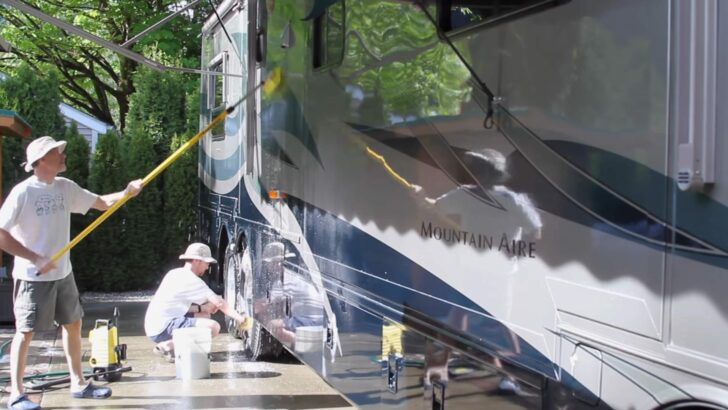
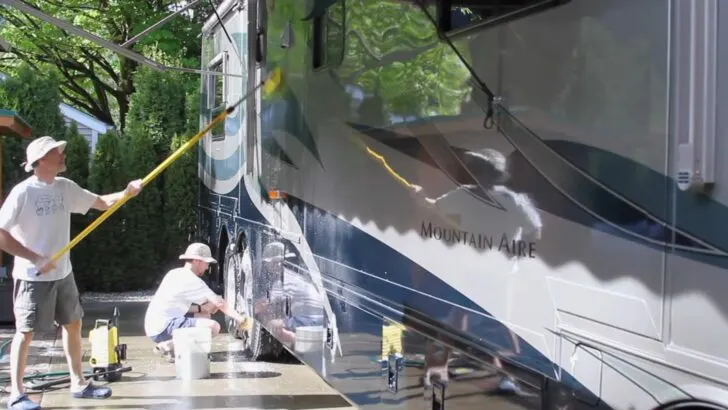
Protecting your RV decals starts with keeping them clean and free from a build-up of dirt, dust, grime, and contaminants.
This is a simple slice of RV maintenance but it’s also an important one. When you wash your RV, cleaning the decals helps to prevent oxidation from chemicals and other contaminants that build up on the surface of your RV. Not allowing this build-up to occur is a great start toward keeping your RV decals from fading and peeling.
As for how best to clean your rig (and thus your decals), we strongly suggest staying away from any type of abrasive cleaner or even dish soap. We’re partial to  , but any soap designed for use on automotive finishes should work fine.
The reason we’re partial to Meguiar’s products is that they’ve proven to work well over many years, they’re readily available, and they’re reasonably priced. Our rig is proof positive that they achieve precisely what we’re setting out to achieve on all fronts. The most important thing, though, is that you wash the rig (and the decals) and use a soft microfiber towel to keep the rig clean and dry.
- ONLY ONE STEP: Meguiar's Gold Class foaming car wash soap simplifies your car cleaning routine by combining cleaning and conditioning into one easy...
- CLEAN AND PRESERVE: Featuring an advanced formula, this powerful car shampoo and conditioner not only cleans your car, but it’s also gentle enough...

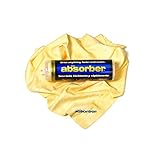
- ABSORBENT. Spend less time drying and more time enjoying life
- SOFT & SAFE. Easy on your hands and easy on your car
After 20 years on the road full-time, we’ve gotten really good at keeping our 2005 Newmar Mountain Aire as ship-shape as possible. In fact, you may have seen our post on RV black streak removers. In that post, we had to use photos of other RVs because – well – we just don’t have black streaks on our rig despite its age.
Use a High-Quality UV Protectant
Next on our list of things to do to keep RV decals from fading and peeling is to use a high-quality UV protectant. Our choice, and the choice of many veteran RVers, is Aerospace 303 Protectant. This product is actually a multi-purpose detailing spray and it offers what many consider to be the best UV protection available. It works well on vinyl and plastic, gel coat and fiberglass, metal, stainless steel, and even natural and synthetic rubber.
As we recommend with every product you buy to use on your RV, we suggest testing on a small area before going full steam ahead. But 303 Aerospace Protectant is our personal favorite UV protection product, and if our 17-year-old rig is any indication, it works very well to protect the RV surface and any decals that adorn it.
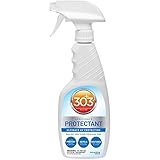
- Ultimate Protection – 303 Aerospace Protectant provides superior protection against damaging UV rays. This protector spray repels dust, lint, and...
- Non-Greasy – Dries to a smooth, matte finish with no oily or greasy residue. When treating your outdoor furniture, spa and pool covers, vinyl...
Use an RV Cover When Your RV Isn’t Being Used
RV covers can be helpful for people who don’t use their rigs for a long stretch of time but park them outdoors. Keeping the sun from baking the surfaces of your RV is a good idea whether you cover the rig or park it in shade. RV covers can also help to protect the rig from snow, ice, and wind.
In a previous post, we took a look at the 5 best RV covers to protect your rig. But prior to publishing that post, we also wrote one on the pros and cons of RV covers. RV covers can certainly be put to good use in the right circumstances. But they need to be high quality and they need to fit properly.
Either way, though, keeping the sun off your RV’s finish and decals will go a long way to helping protect them for years to come.
Can You Wax RV Decals?
This is a good question! The answer is yes, BUT it’s very important to use the right type of wax. RV waxes are NOT all created equal. Here’s why:
Unfortunately, many wax products on the market contain petroleum distillates. Most RV manufacturers discourage the use of products that contain petroleum distillates, since they can damage your RV decals and cause them to degrade prematurely.
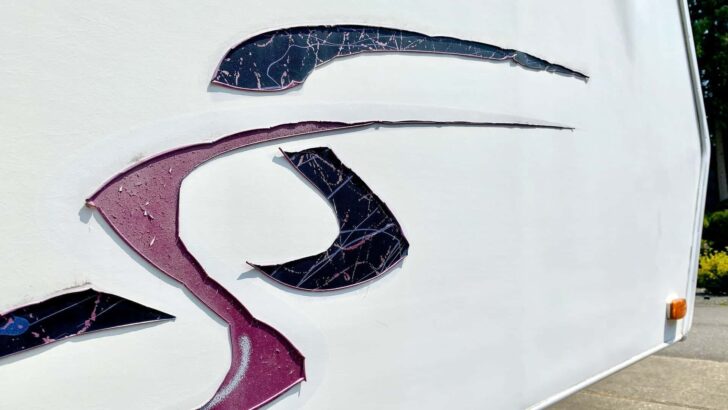
RV decals can fade, crack, and peel due to damage from UV rays and other elements. But this can be prevented with proper maintenance.
You can use a good wax (rub-on or spray wax) on your RV decals but be sure to stay away from any products that contain petroleum distillates. Even our favorite wax (Meguiar’s Ultimate Liquid Wax that we use on our RV) contains a small level of petroleum distillates, so could pose a problem for aging your decals.
Some people prefer a cleaner/wax (a wash & wax in one product). If you’re so inclined, we’ve got a few of those listed in our post on the 5 best RV wash and wax products. Again, just be sure that whatever you choose to use is free of petroleum distillates before using it on your decals.
And, if you want to protect your decals but don’t have a wax that will work, your best bet is to use a quality UV protectant like the Aerospace 303 we listed above.
I Give Up, My RV Decals Are Faded Beyond Repair!
If your RV’s decals are already deeply faded & peeling, and decal removal is on your list of things to do, don’t worry… we’ve got you covered. You can start with our article How to Remove RV Decals Yourself and, once they’re removed you can read RV Replacement Decals: Keep Your RV Looking Good.
For more information on how we keep our rig looking sharp and running smoothly after all these years, feel free to have a look at our video on our annual RV maintenance and spring cleaning routine.
Geek Out with Us Every Week
Join our newsletter to learn about all things RV-related. Every week we offer free tips, tricks, product reviews, and more to our online community of RVers. So, whether this is your first time on the road or you’re a seasoned expert, we’d love for you to geek out with us!
TJL
Monday 1st of August 2022
My 2013 rig is outside 100% of the time. I don't use a cover, which has its own issues. The factory decals took a beating over time. On side was so badly cracked, I paid a small fortune to have them removed and the side painted to match the original pattern. The results look great. A couple of years later I noticed the other side just starting to crack. I went to a local decal shop and had new decals applied over the originals. The results were great and much cheaper than waiting too long. Moral of the story: deal with cracking decals sooner rather than later.
TheRVgeeks
Wednesday 3rd of August 2022
Thanks for sharing, TJL! Sorry to hear about the decals, but glad you got ‘em all taken care of!