
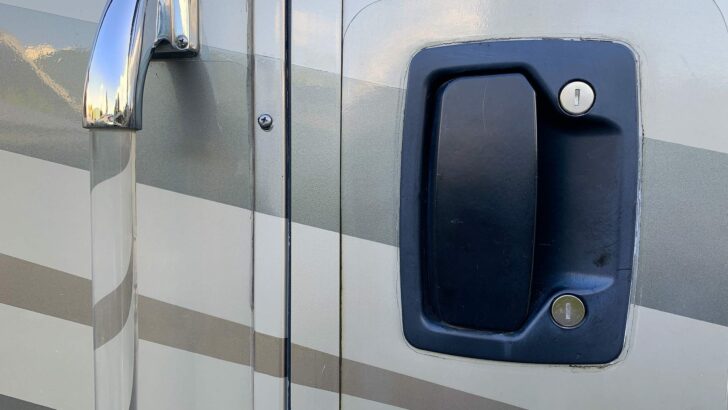

An RV door latch isn’t an item you generally need to spend much time thinking about, but when a door latch fails, the consequences can be serious. A broken door latch could lock you OUT of your RV or allow a stranger IN! Or your RV’s door could open while you’re driving at highway speeds. ????
Clearly, a working RV door latch is important for your security and that of your family, as well as for the preservation of your possessions. So, today we’re knocking on your RV door with an in-depth look at the RV door latch – how to repair it and, if necessary, replace it by installing a new one. Let’s go!
- 1) Common RV Door Latch Problems and How to Fix Them
- 2) Why You Should Change Your RV Door Latch
- 3) Should You Upgrade to A Keyless Entry?
-
4)
How to Replace Your RV Door Latch
- 4.1) Prop Your Door Open
- 4.2) Remove Your Current Latch and Lock
- 4.3) Check that the New Latch Will Fit in the Newly Opened Space
- 4.4) Insert the Front Assembly of the RV Door Latch, Paying Attention to the Placement of Deadbolt and Levers
- 4.5) Attach the Back Assembly and Fasten Screws
- 4.6) Test the New Latch and Locks
- 4.7) If Keyless, Program the Lock
- 5) RV Door Latch Installation Tips
- 6) Conclusion
Common RV Door Latch Problems and How to Fix Them
There are a few common ways in which your RV’s entry door latch can fail. Let’s walk through each of them briefly, followed by suggestions on how to resolve them.
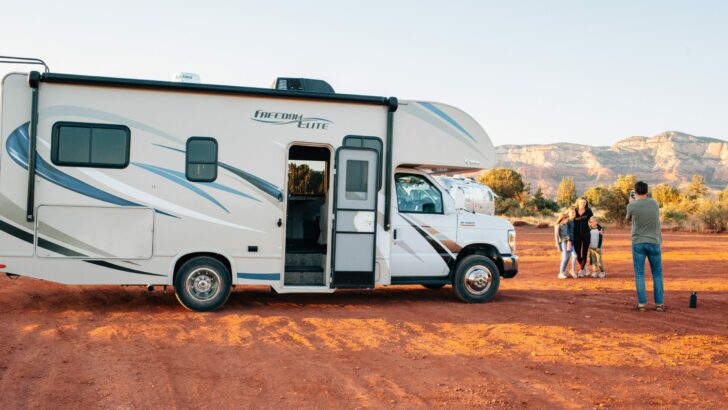
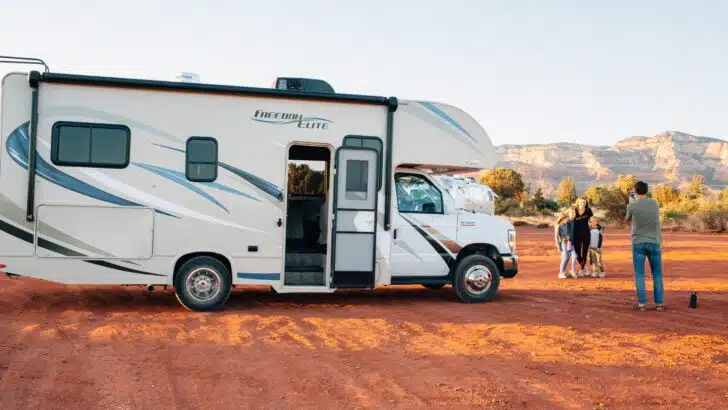
Don’t let a failed RV door latch lock you out and ruin your next RV trip!
Latch Coming Loose
Sometimes your RV door latch will stop working properly because the latch mounted inside the door frame has become loose, causing the door to rattle even when it’s closed. You need to be aware that this issue could cause the door to open while your RV is being driven down the road… or could interfere with the action of the door’s deadbolt, preventing it from being fully locked when you think it is.
So, while it might seem like a loose door latch is a minor issue you can put off dealing with until you’ve got some extra time, it’s really in your best interest to deal with this issue as soon as possible. It’s easy and won’t take much time.
The Solution: Check the screws and bolts that mount the latch to the door frame. These can come loose with time and travel over bumpy roads. Ensuring that these are tightened properly will easily address your loose latch problem making it possible to open, close, and lock your RV’s door, and keep it from opening while you’re driving down the highway. That’s a big win for a small investment of your time.
Latch Not Closing Properly
With a latch that isn’t closing properly, you may find that the door won’t close completely, or it may not latch at all. In this case, you probably have an issue where the catch in the lock on the door isn’t aligning properly with the latch in the door frame.
This is another issue that’s not difficult or especially time-consuming to address but is likely to benefit you significantly. If your RV’s door is starting to fail to close completely, even sometimes, in time it will likely fail to latch at all. Addressing this issue before the door can’t be latched is a good idea.
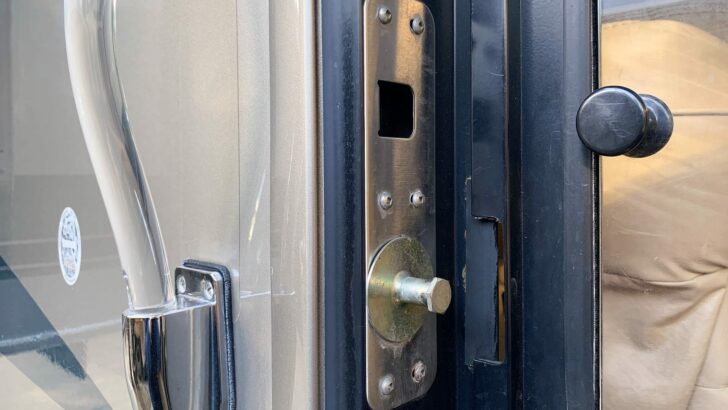
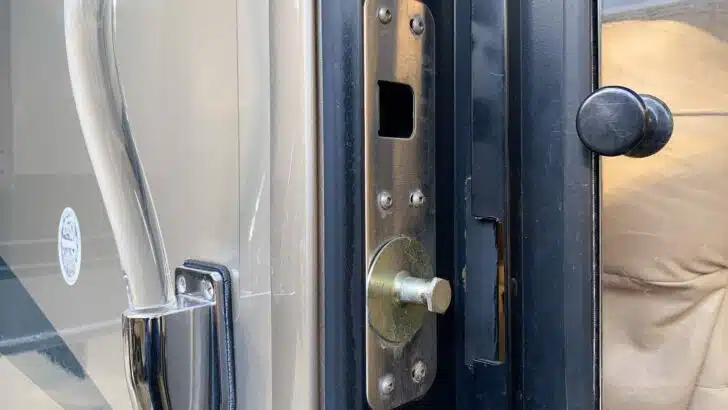
If you’re RV door latch isn’t catching, you may need to adjust the strike plate/bolt in your door frame so it aligns properly.
The Solution: Check the position and tightness of the strike plate/bolt mounted in the door frame to ensure that it matches up with the catch in the door lock. If you find that the door is out of alignment, you may need to adjust the door hinge so that the catch in the door’s lock mates up properly with the strike plate/bolt.
RV Door Locking Automatically
Proper alignment of the mechanism inside the RV door latch itself is what allows the outside lock to move the interior catch out of the way. When your RV door is locking automatically, however, a failure or misalignment of the mechanism in the door lock is preventing it from operating correctly. More than likely when this occurs, you have a bent actuator/lever. This can happen over time from use.
The Solution: Disassemble the interior of the door lock/handle to access the bent actuator. Use a pair of pliers to bend the actuator back up to the proper position. Reassemble the lock assembly, and hopefully, this will address your issue.
However, there are many reasons why RV door latches may need to be replaced, and this could be one of them. If so, don’t despair – we’ve got you covered. Read on…
Why You Should Change Your RV Door Latch
There are many good reasons to change your RV door latch, and a broken door latch is only one of them.
Security is a very good reason to change your RV door latch. You may not be aware that there are only a handful of standard key/lock assemblies for RV doors and RV basement locks. This means that many other people have keys that will unlock your RV’s door if you still have the standard RV door lock assembly in place.
For many years, RV entry door locks have been keyed to one of four master keys or passkeys. If your RV’s door lock has two keyholes, one is the main handle lock and one is a deadbolt.
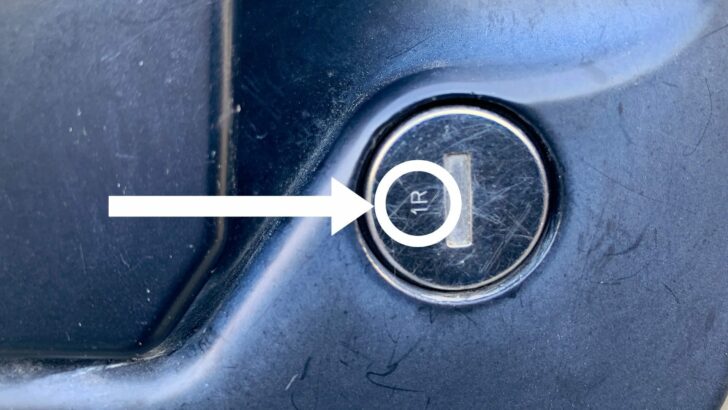
Security is one of the main reasons to replace your RV door latch. If your RV still has the original latch, chances are good that many people have a key that will unlock your RV’s door.
The main keyhole originally had a letter engraved into the metal, which you may or may not be able to decipher today, depending on how worn the area is. That letter corresponds with one of four master keys or passkeys. For this reason, many RVers always lock the deadbolt when they’re away from the RV or when they’re inside, especially at night.
This factor alone is a good reason to upgrade to keyless entry, which not only gets you a new lock mechanism but also provides improved functionality and versatility.
Should You Upgrade to A Keyless Entry?
We think the upgrade to keyless entry is well worth the investment. First, keyless entry means greater security as noted above.
Additionally, keyless entry means you’re less likely to be locked out of your RV, and you and your family (kids included) can get into and out of the RV without having to carry keys. (And as a bonus, you won’t have to worry about losing your keys, either.)
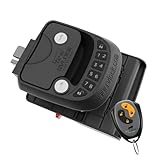
A great choice for going to a keyless entry locking mechanism is a unit from RVLock. They have several different options to fit the most common door latches (and they have an RV door lock fitment guide to help you determine which one is right for your RV).


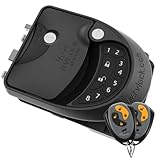
You know how we love a good DIY project, so let’s get to replacing your RV door latch!
How to Replace Your RV Door Latch
Replacement door latches may vary in style and model depending on your RV’s door and lock assembly, but the basics of installation are generally the same, so you should be able to follow along with our guide.
Prop Your Door Open
Prop the door open so that you have a good working space with easy access to the part of the door you’ll be working on during this project.
Remove Your Current Latch and Lock
First, you’ll need to remove your current latch and lock assembly. You should be able to remove it from the inside by removing a few screws from the latch/lock assembly. Once you’ve removed these screws, the assembly should lift right out. You may need to use a set of needle-nose plyers to pry out the interior bar if it’s prohibiting the removal of the lockset.
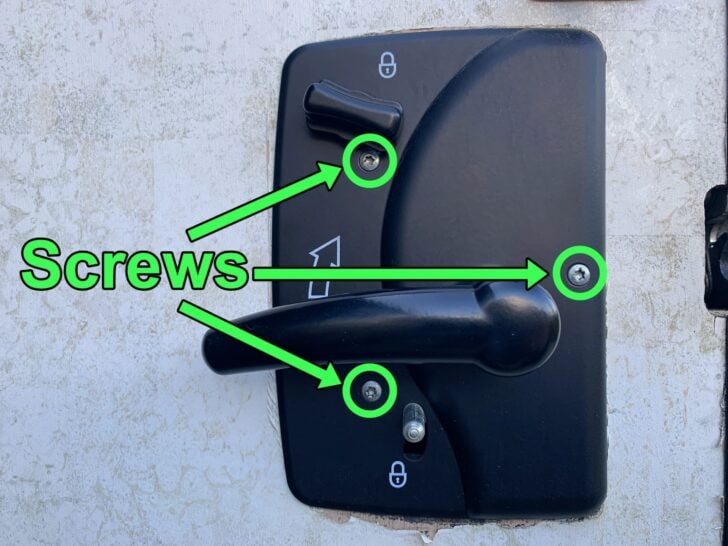
Look at the inside handle of your RV door latch to locate the screws that hold it onto the door.
Pro Tip: It’s always a good idea to take a photo of the mechanics of any assembly prior to removal so that you’ll have a reference should you need one during the process of installing the new assembly.
Check that the New Latch Will Fit in the Newly Opened Space
Next, you’ll want to make sure that the new latch you’ve purchased will fit inside the space from which you’ve just removed the old latch/lock assembly.
Insert the Front Assembly of the RV Door Latch, Paying Attention to the Placement of Deadbolt and Levers
Set the front assembly of the RV door latch into the open space, paying close attention to the placement of both the deadbolt and the levers. The proper positioning of the deadbolt and levers will ensure the alignment of your new latch/lock assembly so that functions optimally.
Attach the Back Assembly and Fasten Screws
Attach the back of the latch/lock assembly and tighten the three screws securely, ensuring that there is no movement of the assembly.
Test the New Latch and Locks
Test the new latch to make sure the door opens and closes properly and fully. Then test the locks to make sure that they function properly as well.
If Keyless, Program the Lock
If you’ve purchased a latch/lock with keyless entry, program the lock, and then check to ensure that the keyless entry system is functioning properly. Educate those traveling with you about the new keyless entry process.
Finally, turn to the member of your traveling party who most often loses or forgets his or her keys and whisper, “You’re welcome”. They’ll thank you the first time a situation that would 0therwise have been a lock-out… isn’t.
RV Door Latch Installation Tips
As always, taking a photo of the interior of the assembly prior to removing it can be helpful if you have difficulty aligning the new assembly.
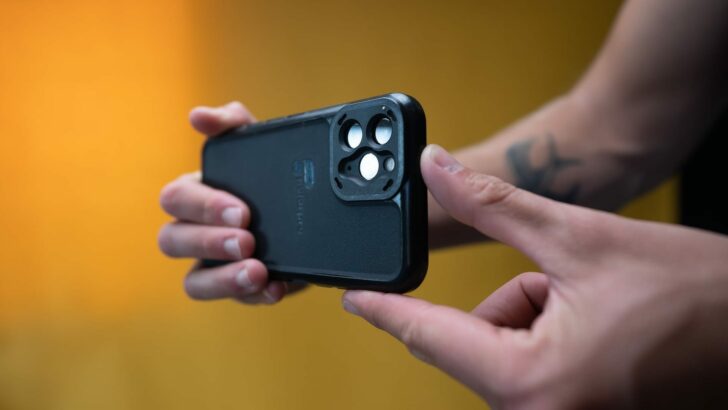
Taking photos of the inside and outside of your RV door latch before removing it can help in the repair/replacement process.
Mark areas with a pencil to assist you in properly aligning the new assembly with the door strike.
If the new latch assembly doesn’t have a built-in or included seal/gasket, run a bead of clear caulk around the outside of the newly installed latch/lock assembly to ensure a good seal to prevent water from entering the assembly and causing parts to rust or degrade prematurely
Conclusion
While an RV door latch isn’t something you’ll need to change or even maintain on a regular basis, its proper functioning is crucial to your positive RVing experience in terms of being able to get into and out of your RV, and it’s critical to your security and that of your family, pets, and possessions.
Now that you know how to repair and replace your RV door latch, you and those traveling with you have the benefit of enhanced security, and you’ve got a new DIY job under your belt!
Geek Out with Us Every Week
Join our newsletter to learn about all things RV-related. Every week we offer free tips, tricks, product reviews, and more to our online community of RVers. Whether this is your first time on the road or you’re a seasoned expert, we’d love for you to geek out with us!
Brian
Thursday 2nd of December 2021
I just spoke to support at RV Lock and they said January should be when the new version is supposed to be released that fits the taller version of door locks:
https://www.screencast.com/t/BMiYjLvK
You can also call customer service at 888-316-9899 and ask to be added to the announcement list for when the new version is released.
TheRVgeeks
Thursday 2nd of December 2021
That's great news, thanks for sharing, Brian. This will DEFINITELY increase the number of people/RVs that can upgrade to RVLock!
Mark Attebury
Wednesday 23rd of June 2021
Great idea for replacement lock, too bad they don’t make one for our style class A lock on our 2021 Newmar Bay Star. I’ve let them know I’d like to see one, hopefully there will be enough “votes” to develop one.
Mark Attebury
Wednesday 23rd of June 2021
Wow, got a response from them:
Sign up for our newsletter to receive updates on new products and promotions. (that is located at the bottom of our web page)
We will have a lock replacement for that style later this year.
Unfortunately, we don't have a time frame as to when that will be. Thank you for your patience.
Reynald
Monday 21st of June 2021
I wish they had a model to fit a Mountain Aire.
TheRVgeeks
Monday 21st of June 2021
So do we, Reynald. We're hoping they come out with one, soon!
Jere
Friday 18th of June 2021
One thing that makes a difference with your door is to lubricate it once in a while--It will work easier and the components don't wear as fast.
TheRVgeeks
Friday 18th of June 2021
Thanks for the great additional tip!
Roger B
Friday 18th of June 2021
I just replaced the lock on our toy hauler travel trailer yesterday because the RV repair business that services our rig had the same door key that we have. I asked why he had the same key and learned that the same lock and key is on almost all trailers. A couple of years ago I replaced the outside compartments locks with Barrel Locks because my neighbor had the same key.
TheRVgeeks
Friday 18th of June 2021
Exactly! How crazy is it that so many of them are the same?! Great to hear you solved the problem, Roger.