
Driving an RV, whether it’s a motorhome or a travel trailer, isn’t the same as driving a car. No matter what RV you operate, there’s a learning curve to RV driving. RVs are usually longer and heavier, they take longer to stop, and there are more (and different types of) mirrors — along with a host of other RV driving techniques to consider.
In today’s post, we’re offering 21 RV driving tips from the perspective of a professional tour bus operator and bus driving instructor (Peter), and from a couple of guys who’ve been driving a 43’ motorhome (towing a car) for nearly two decades.
Here are 21 ways to stay safe and calm while driving your RV.
- 1) Practice Driving your RV
- 2) Be a Patient Driver
- 3) Pay Attention to Your Speed
- 4) Keep to the Right Whenever Possible, and Appropriate
- 5) Know Your Rig’s Braking Power and Plan Accordingly
- 6) Keep Your Distance
- 7) Follow the 2/2/2 or 3/3/3 Travel Rule
- 8) Don’t Overload your Rig
- 9) Don’t Drive in High Winds
- 10) Don’t Drive Distracted
- 11) Never Drive Impaired
- 12) Use Proper Steering Technique
- 13) Learn Proper Mirror Adjustment and Use
- 14) Monitor the Weather and Travel Accordingly
- 15) Never Drive When Tired
- 16) Use Trip Planner Apps and/or GPS to Plan RV-Safe Routes
- 17) Learn How to Turn Correctly
- 18) Have a Good Roadside Assistance Plan
- 19) Carry an RV Roadside Emergency Kit
- 20) Be Prepared to Use Runaway Ramps
- 21) Know How to Back Up Your Rig
- 22) Understand Trailer Sway Control
- 23) What RV Driving Tips Help You to Stay Safe & Calm?
Practice Driving your RV
A big, empty parking lot is a great place to get acclimated. A set of small traffic cones can be a big help for safely practicing turns, backing, and maneuvering. The single biggest difference to get used to when driving an RV vs a car is length — the overall length of the vehicle(s), the length of the wheelbase, and the length of the rear overhang.
Yes, RVs weigh more than cars, and they’re taller. Those factors do come into play, but nothing is more critical than learning to manage the length of your RV. More about those topics below, but practicing maneuvering in a safe environment is hugely helpful for a new RV driver.

- ▲Durable Material: the soccer cones are made of soft polyethylene vinyl, lightweight and practical.
- ▲Ergonomic Design: if training cones get trampled on or squeezed, they retract into their original shapes.

Be a Patient Driver
Other drivers of large vehicles (think truck and bus drivers) are working, often on a demanding schedule. As RVers, we’re able to (hopefully) operate at a more leisurely pace.
Whenever possible, try to allow time to get to your destination early enough that you won’t need to feel rushed. This will help you to maintain a better mindset throughout your travels – one of not feeling rushed or in a hurry… being patient. This not only provides a safer driving environment but a more relaxing one as well.
Besides having driven buses and trained hundreds of professional motorcoach operators, I’m also a 750-hour private pilot. (John & I sold our beloved Bellanca Turbo Viking to go RVing, so you know we must love it out here!) In flying there’s a condition all pilots are familiar with called “get-there-itis” which is a truly dangerous attitude, to be avoided at all costs.
Just like pilots need to avoid the mindset of “I’ve got to get there!” the same applies to RVers. Stay safe by avoiding the rush.
Pay Attention to Your Speed
In the same vein as the previous tip, higher speeds can increase stress, and reduce safety. Things happen faster at higher speeds, reducing the amount of time you have to think… and react.
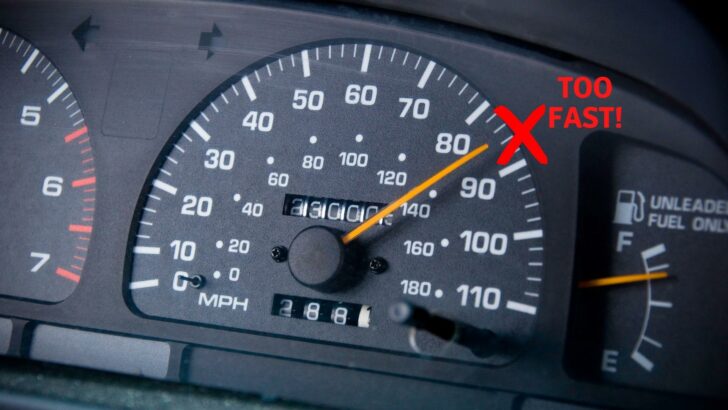
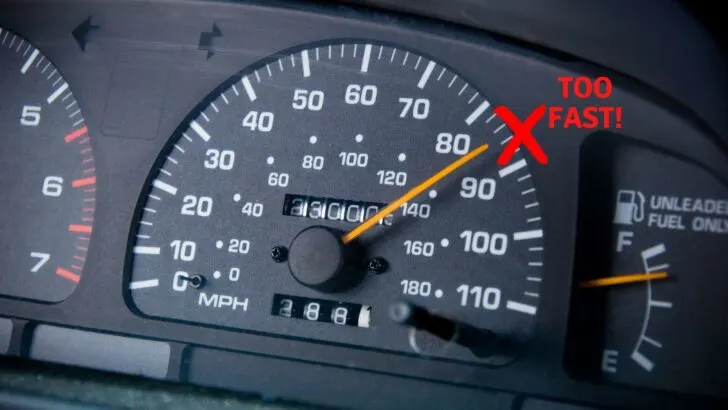
Just because you CAN drive faster based on the speed limit doesn’t mean you SHOULD. Safety above all!
There’s no specific speed that’s right for every RV or every RVer. But since the demise of the 55 MPH national maximum speed limit in the late 80s, some speed limits are now far higher. Many U.S. states, especially out West, have maximum speed limits of 75-80 MPH. But that doesn’t mean you have to drive that fast!
With the skills of a former professional driver and driving instructor — one now operating a diesel pusher that handles extremely well — I would never drive that fast, regardless of the speed limit. RVing shouldn’t be a race. In my opinion, there’s no RV on the road that isn’t safer being operated at a speed slower than those very high limits.
Is there one speed that works for every RV, every RVer, and every situation? Definitely not. But you’ll know when you’re traveling too fast when your heart jumps into your throat, or your right foot buries the brake pedal. But by then it might be too late. Take your time, both speed-wise, and in figuring out what speeds are safest for you, your RV, and the driving conditions.
If you’re not sure about correct speeds when you first start driving an RV, figure it out from the bottom up. By that I mean it’s better to realize that you’re driving a little slower than you can safely manage, rather than the other way around!
Keep to the Right Whenever Possible, and Appropriate
In general, the best place for a large vehicle on a multi-lane highway is the right lane. A primary tenet of Defensive Driving is to leave yourself an escape route in the event another vehicle should come into conflict with yours.
The right lane is adjacent to the shoulder, providing some built-in advantages:
- It’s usually empty, allowing a safe space to take evasive action if needed.
- Since the shoulder isn’t a travel lane, the threat of another vehicle moving into your lane from the right is reduced.
- Because drivers in North America sit on the left side of their vehicles, the right side is the “weak” side, due to your reduced ability to see what’s directly alongside, or approaching, your rig at an angle.
Keeping the right side of your vehicle as clear of collision threats as possible (again, in countries where the driver’s seat is on the left-hand side of the vehicle) provides better safety.
Being alongside the (often empty) shoulder also provides a place to go should a mechanical problem require you to move off the road.
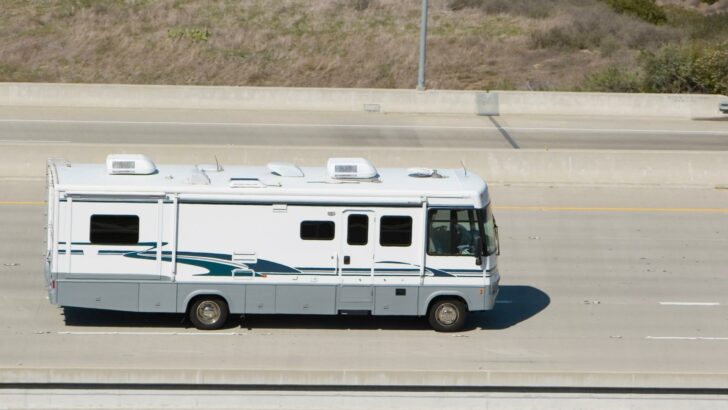
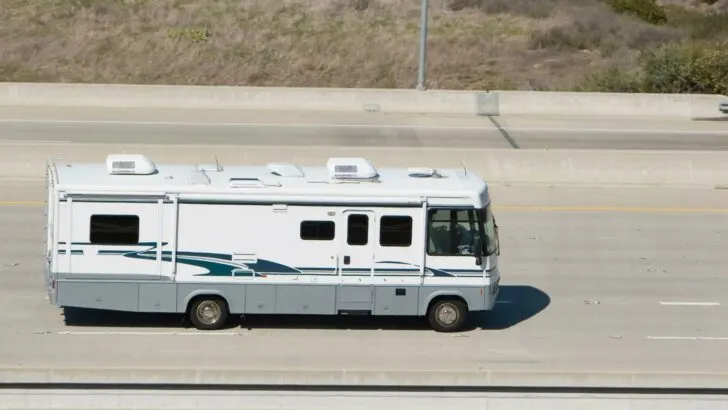
Stay to the right of multi-lane highways where possible, (unless you’re preparing to exit to the left).
Of course, there are exit and/or entrance ramps to consider. If you’re approaching one, but you’re not exiting, be alert for vehicles entering the highway. If traffic allows, move over one lane to the left to avoid conflict.
If you’re traveling on a highway with three (or more) lanes of traffic in each direction, consider staying one lane over (the middle lane of a three-lane highway, the second lane on a 4- or 5-lane highway) in areas with a high concentration of exit and entrance ramps. That’s especially helpful during high-traffic periods, preventing you from having to repeatedly change lanes to avoid traffic merging onto the highway.
Know Your Rig’s Braking Power and Plan Accordingly
Large, heavy vehicles take longer to stop than passenger cars. That requires thinking ahead… and planning ahead. Keep your eyes scanning far down the road. Be alert for brake lights in the distance, or other indicators of slowing traffic or potential conflict. Use your height advantage to see as far ahead as possible. Slow down earlier, and avoid braking hard.
Besides the longer stopping distances required to stop an RV, you should also keep in mind a disadvantage that your large vehicle creates simply by being on the road — other drivers can’t see around you. That virtually guarantees that someone behind you isn’t able to spot potential conflicts up ahead.
But we’ve all seen how simple facts, like lack of visibility, seem to have little to no effect on other drivers. They often tailgate vehicles that block their view, like RVs. When I would ask bus driver trainees what the first thing they should do when being tailgated, not many got the correct answer, which is to increase their following distance from the vehicle ahead of them!
If you’re being tailgated, especially by someone who can’t see around you (your vehicle is big!), the last thing you want to do is stop suddenly. Increasing your following distance is the best course of action to prevent you from having to stop suddenly, and potentially getting rear-ended.
An additional braking consideration with RVs is the fact that you’re carrying around cabinets full of dishes, glassware, food, toiletries, and many other items not normally stored in a passenger car. Stopping suddenly can lead to things falling out of cabinets the next time they’re opened (“Contents may have shifted…”).
Keep Your Distance
Maintaining a safe following distance is one of the most basic safety practices to which any driver can adhere. Rather than attempt to guesstimate the number of feet between you and the vehicle ahead, use time instead.
Passenger cars generally follow the 2-second rule: Watch the vehicle in front of you pass an object (such as the shadow of an overpass or a utility pole alongside the roadway), and count “one thousand one, one thousand two”, and you shouldn’t reach that same spot before two full seconds have passed.
Since larger vehicles take longer to stop, use a 4-second following distance for most RVs. When the roads are wet, use a 6-second following distance. When the road is snow- or ice-covered, use 8 seconds. Keep in mind that these are minimum following distances. There’s nothing wrong with leaving even more space between you and the vehicle ahead of you.
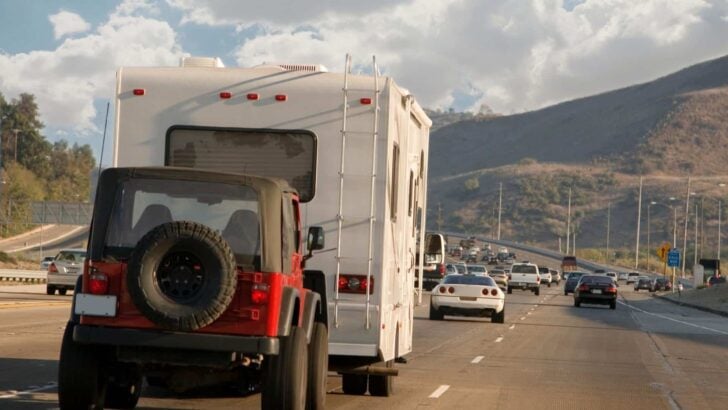
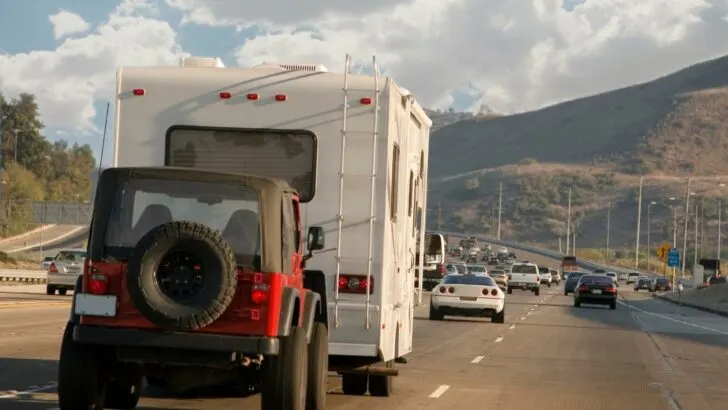
Strive to maintain safe following distances between you and the vehicle traveling ahead of you. Use our time tips to determine your safest following distance, and bear in mind the braking time required to slow and stop your rig.
If you’re thinking “If I leave that much room in front of me, other vehicles will simply move over into that space,” you’re correct. They will. Other drivers will indeed change lanes in front of you (often right in front of you). ???? But the only way to prevent that is to fill the space between you and the car ahead yourself. But of course, that’s tailgating — something that’s so critically important to avoid.
The best practice is to maintain a speed on multi-lane highways that’s slightly slower than passing traffic… about 2-3 MPH is usually good. That way, vehicles that change lanes in front of you will continue to move ahead, re-opening that all-important safety cushion directly in front of your RV, without you having to do anything about it.
Follow the 2/2/2 or 3/3/3 Travel Rule
The 2/2/2 rule refers to a policy of driving no more than 200 miles a day, stopping every 2 hours, and arriving at your daily destination by 2:00 PM. That allows plenty of time to set up camp in daylight, get to know the amenities of the campground and the surrounding area, and further relax after your day of driving.
Some RVers add a fourth “2” which is to “stay for at least 2 nights” in each location, but in this post what we’re most concerned with is an easy travel day.
The 3/3/3 rule is similar, though as you might expect, it refers to traveling no more than 300 miles in a day, stopping every 3 hours, and arriving at your destination by 3:00 PM. (again, some RVers add “stay for 3 nights” in each location.)
Many RVers use variations of these personal “rules,” for example, the “330 rule”. Drive no more than 330 miles a day and stop driving for the day by 3:30 PM.
That doesn’t mean you can’t safely travel further in one day. It means that each RVer should consider, and decide, what their comfort level is. One advantage my professional driving background provides us is the ability to dramatically extend our driving days if needed.
We try not to plan extremely long travel days. But sometimes we have a schedule to keep and need to really cover a lot of ground. Besides many years of bus driving experience, I also have a bus driver’s bladder! That, along with a 150-gallon fuel tank (allowing a 1,000-mile range), we can really cover massive distances when we need to.
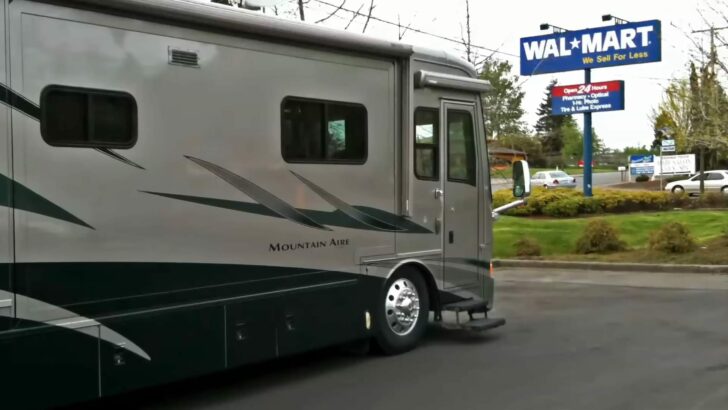
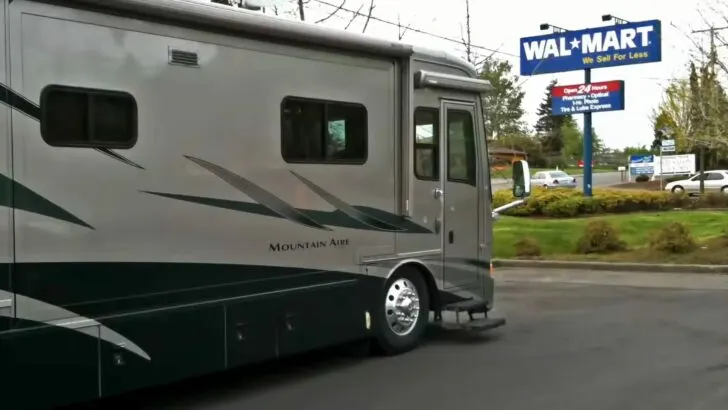
It’s best to limit your driving to a reasonable time or distance covered, based on your ability to remain alert and to function optimally as a driver. Stopping overnight for a good night’s rest is always wise.
I don’t know our record for miles traveled in a single day, but we’ve surely done several 600- to 700-mile days over the past 20 years. I’m not advocating that for anyone else. I’m simply pointing out that your own experience and comfort level are what count most. I know when I’m safe to drive, and when I’m ready to call it quits. And, of course, I have John as a backup driver if needed. Know yourself, your RV, your situation, and your comfort level, and never exceed your own personal safe driving limits. That will make for a relaxing drive, no matter how far you’re traveling!
Don’t Overload your Rig
It’s very important to take note of the weight limits associated with your particular RV and to stay within those limits. When you overload an RV or travel trailer, you’re putting yourself and everyone traveling with and around you at risk.
Both weight and weight distribution are important. RVs have several specific weight limits. There’s the maximum allowable weight of the loaded RV itself (GVWR, or Gross Vehicle Weight Rating).
There’s the maximum allowable weight for the entire rig, which includes anything being towed (GCWR, or Gross Combined Weight Rating). Then there’s the maximum weight capacity on each axle (GAWR, or Gross Axle Weight Rating). Be sure to learn and follow your rig’s weight limits, and avoid overloading it.
If you’re towing a travel trailer, please see our post on trailer sway control.
Don’t Drive in High Winds
Many RVers learn this one the hard way – by traveling down the highway in high winds – at too high a speed for the conditions. Remember that RVs are tall and frequently flat-sided. The aerodynamics of many rigs lend themselves to being blown about to some degree by high winds.
And while you may feel secure traveling down the highway on a relatively windy day, you may find yourself hitting a crosswind and hanging on with white knuckles for all you’re worth.
Avoid this at all costs. Travel in safe conditions. If you find yourself with a very windy day ahead, either stay put or take a slow drive over to the beach or a field to have a picnic and fly a kite!
If you must travel during windy conditions, the most important adjustment to make is to slow down! The faster you’re moving when your rig gets hit with a gust from the side, the more likely you are to lose control of your vehicle. And the more severe the consequences will be.
Don’t Drive Distracted
Distracted driving is the cause of far too many accidents… many thousands annually.


Driving while distracted is NEVER a good idea.
Driving distracted can include everything from checking your phone to eating, to driving with a pet in your lap. Distracted driving refers to anything that takes your attention away from the road and the task at hand – safe driving.
Any non-driving activity that you engage in while operating your vehicle reduces your safety and that of your passengers and fellow travelers on the road around you.
According to the National Highway Traffic Safety Administration (NHTSA), texting is the most dramatic driving distraction:
“Sending or reading a text takes your eyes off the road for 5 seconds. At 55 mph, that’s like driving the length of an entire football field with your eyes closed.”
Don’t drive distracted! Your life, and the lives of those around you, are depending on your vigilance. That’s especially true for large vehicles that take longer to stop and maneuver than a passenger car. And doubly true for the largest vehicles capable of inflicting truly substantial damage if not kept under control at all times.
Never Drive Impaired
Impaired driving refers to driving while under the influence of anything that has the potential to degrade your reaction time as a driver, reduce your attention, or impact your driving ability in any way.
This would include substances like alcohol or marijuana, as well as narcotics, and even prescription or over-the-counter medications that have the potential to impair a driver.
When you get into your RV to drive (or into your vehicle to tow an RV), you need to be at your absolute best. And it’s always best not to self-determine whether you’re fit to drive. If you’ve had a drink or two, no matter how you “feel”, don’t drive. If you’ve been exposed to a recreational drug or a medication with the potential for altering your mind or reaction time, don’t drive. (Read the labels on all medications. Benedryl is a good example of an over-the-counter medication that can have a significant impact on reaction time.)
Part of the responsibility of driving a large vehicle is being aware of your own abilities. If you’re not sure you’re up to the task of continuing, stop as soon as safely possible.
Just don’t drive if there’s a potential for you to be impaired at all. It’s really that simple.
Use Proper Steering Technique

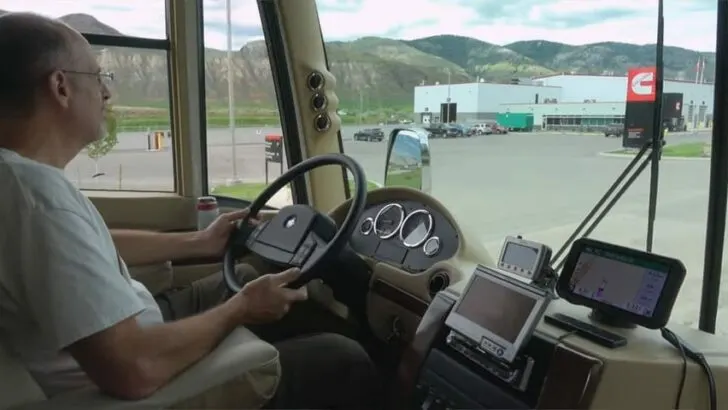
Peter, using the push-pull steering method while making a slow and steady wide turn into a large, open lot.
I teach new drivers to use the “push-pull” steering method, but the “hand over hand” method is also acceptable. Here’s my general rule of thumb:
Turning the wheel slowly or partially (such as when rounding a curve in the road, as opposed to making a sharp turn), I recommend push-pull (and use it myself). That’s because it maintains the right hand on the right side of the wheel, and the left hand on the left side of the wheel at all times, reducing the opportunity to get the driver’s arms crossed up, or in an awkward position (which is why I used to start all new trainees with push-pull).
Hand-over-hand steering is used when the wheel needs to be turned more quickly and/or very far over, as when making a sharp turn. Whichever steering method is used, keep your hands on the outside of the steering wheel rim only. Again, this avoids getting your hands crossed up, or reaching into the wheel where one of the spokes is in the way of your grasping it.
The larger steering wheel in most motorhomes comes into play as well, as the distance required to reach your left hand over to the right side of the wheel (or vice versa) can be rather large. That means using hand-over-hand steering can require twisting your body a bit left or right, moving your head out of the ideal position to see all of the mirrors.
When the wheel needs to be turned more quickly and/or very far over toward (or all the way to) full lock, hand-over-hand takes over from the slower push-pull method.
The bottom line is that push-pull is slower and steadier, and hand-over-hand is faster. I’m not a proponent of using either one exclusively, but rather making the choice between the two methods as appropriate.
Learn Proper Mirror Adjustment and Use
It’s essential when RV driving to be able to see well all around you and to avoid blind spots. Depending on the size of your rig you’re driving or towing, this can be somewhat complicated, but once you become comfortable with proper mirror adjustment and use, you’ll be amazed at how much it assists your safe driving. Which of course will keep you more calm and confident.
For a very thorough instructional piece on proper RV mirror adjustment, please see our post on how to adjust RV mirrors.
We also encourage you to watch our YouTube video on RV mirror adjustment and lane control for a great visual explanation.
Monitor the Weather and Travel Accordingly
This one is also known as “Embrace Plan B”!
Monitor the weather in your current area and along the path you intend to travel. If weather conditions are likely to impede an easy-going driving experience, make a plan B and settle into it. But be ready to adapt if conditions change!
RV driving means understanding that your plans can change at any given time. Not being rigidly controlled by a plan is all part of RVing, and it’s great! We know that most RVers aren’t full-timers, and may have limited time to enjoy their RV vacation. But within those constraints, do your best to avoid traveling when conditions increase the risk to you and your RV.
Never Drive When Tired
Driving an RV while you’re tired is another version of driving impaired. When we’re fatigued, everything is affected – even our sight.
Besides substances, one of the most common (and therefore potentially the most serious) forms of impairment is fatigue. Calling back to the 2/2/2 or 3/3/3 rules, above, make sure you don’t drive longer than your ability to stay alert. That includes getting a good night’s sleep the night before.
Studies have demonstrated that extreme fatigue can be as, or even more, dangerous as driving under the influence of some substances. And it can be more insidious, as it takes no other action beyond staying on the road too long to create a risk.
This also includes driving while you’re feeling sick. If you have a fever or cold, or another ailment that may affect your driving ability, leave the task for another day, or to someone else.
Once again, if you’re tired, we strongly encourage you to embrace plan B and stop for the night and get some good rest, good food, and hydration… then drive again when you’re in top shape for the task.
Chances are excellent that you’re near a place where you can overnight for free or cheap, so always take advantage of the opportunity if you’re fatigued. For some great free overnight ideas, have a look at our post on free overnight RV parking, as well as our post entitled, “Can You Camp in Walmart Parking Lots?”
Use Trip Planner Apps and/or GPS to Plan RV-Safe Routes
Remember that when you’re driving an RV, the height, weight, and contents of your rig are factors that you don’t generally need to consider when driving a car. This is why having excellent trip planner apps or an RV-safe GPS is so important.
There are areas (tunnels, in particular, and some ferries) that you can’t enter if you’re carrying propane on board your RV. Or you may be required to confirm that it’s been turned off at the tank. This is information you’ll want to know in advance of approaching the entrance to a tunnel! You want to be offered alternative routes based on what you’re driving, and the best way to achieve this important end is to plan RV-safe travel routes.
Some GPS units and RV trip planners apps allow you to input the specifics of your RV, and then you’ll be guided according to those specifics.
Learn How to Turn Correctly
When you’re driving an RV, it’s essential to understand the mechanics of such concepts as off-tracking and rear overhang swing.
The very best way we can explain this is to offer this demonstration from our RV driving school on our YouTube channel. After more than 10 years, and over 300 RVing videos we’ve posted on YouTube, this is the one I’m most proud of, by far. I hope you’ll agree that the information in it, and the way it’s demonstrated, are worthy of that feeling!
Have a Good Roadside Assistance Plan
Having a reliable roadside assistance plan is essential when traveling in an RV. We point you to our post on the best RV roadside assistance plans for your consideration.
Choose a plan that suits you best, but be sure to have a good, solid, reliable plan for roadside assistance. Having the peace of mind that, if something DOES go wrong while on the road, you have resources available to get you out of a bind can help keep you calm should something happen.
Carry an RV Roadside Emergency Kit
An RV roadside emergency kit is one of the most important things you can carry when you travel in an RV.
Read our post linked above for 25 must-have items to carry in your roadside emergency kit. Chances are good that you’ll use many of those items – if not in the event of your own roadside emergency, then perhaps to help a fellow traveler!
Be Prepared to Use Runaway Ramps
Brake failure in the mountains can be a frightening experience, but the option to use a runaway truck ramp can save lives.
Should you ever encounter a situation in which you find yourself losing control of your rig on a steep descent, if there’s a runaway ramp ahead then take these potentially life-saving steps:
- Brace your passengers and yourself.
- Signal to others on the road that you’re in distress by turning on your hazard lights and using your horn.
- Aim your rig toward the center of the runaway ramp and remain as straight as possible.
- Once far enough up the ramp that you’ve stopped, cut your wheels to one side to help keep yourself from rolling backward.
- Put your RV/tow vehicle in “Park” and engage your emergency brake immediately.
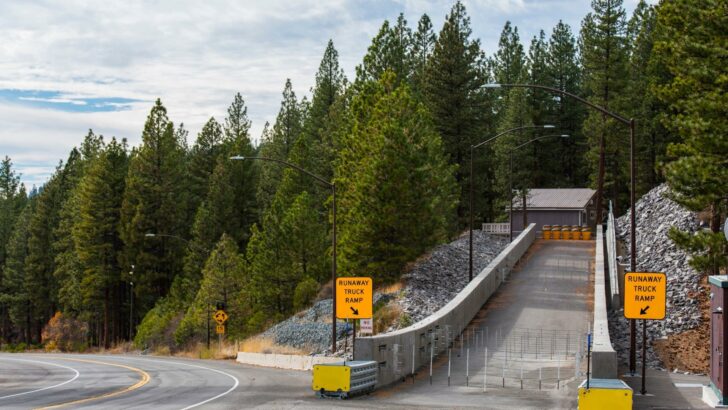
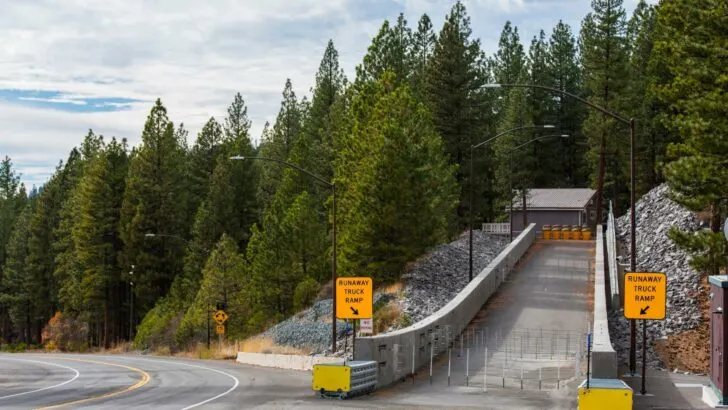
Understanding how to use a runaway ramp prior to needing to do so in an emergency situation can be life-saving.
Of course, an ounce of prevention is worth a runaway truck ramp worth of cure, right? One way to avoid getting into the scary situation of needing a runaway ramp is to use the proper braking technique.
If you have an engine or exhaust brake, be sure to activate it in mountainous areas. If your rig isn’t equipped with an engine brake, it’s extra important to maintain a safe speed while descending mountain roads. The rule of thumb is to stay at, or below, the speed at which you could climb the same hill.
If you need to apply the brakes to slow down on a steep mountain descent, using the correct technique can go a long way toward preventing them from overheating… and failing. Rather than keeping steady, light pressure on the pedal, use firm pressure to slow way down quickly. Then release the brakes to allow them to cool. Repeat as needed, making sure to avoid allowing your RV to gain too much speed.
This “stabbing” technique can help prevent brakes from overheating. But it should only be used for a short time, and only as needed. If the hill is so steep or long that you’re unable to maintain a safe (slow) speed without continued or excessive application of the brakes, first try using your transmission to help slow you down by downshifting to a lower gear (from “Drive” to “3”, “2”, or “1”). That will help to reduce the amount of braking required to maintain a safe speed. Just be sure that you don’t allow your engine to “over-rev” (where you’re engine’s RPMs exceed the manufacturer’s recommended limit).
If braking and downshifting aren’t enough to maintain a safe speed, find a place to safely pull off the road to allow the brakes, engine, and transmission to cool for a while.
The feeling of your brakes becoming “soft” or “spongy” means they don’t slow your vehicle as much as they normally do for a given pressure on the pedal. That’s a sure sign of brake fade (caused by overheating) and a serious indicator of impending brake failure.
Another way to know you’ve been using the brakes too much is when you can smell them. Not sure what overheated brake pads smell like? You’ll know the first time you use them too much. It’s a distinctive odor that means you need to give them a… ahem… break.
Know How to Back Up Your Rig
The best way to learn how to back up your RV is to practice, practice, practice! Here again, an empty parking lot is a great place to get comfortable backing up your rig effectively.
We encourage you to first have a look at our post on backing up a motorhome, where you’ll find some very helpful tips and techniques.
BONUS TIP for Drivers Towing a Travel Trailer:
Understand Trailer Sway Control
We mentioned this tip in a previous section related to RV weight and weight distribution, but it’s well worth mentioning again – it’s that important.
It is critical that you understand trailer sway control BEFORE you need the information. We strongly encourage you to consult our linked post on this topic before you tow.
What RV Driving Tips Help You to Stay Safe & Calm?
Do you have any additional RV driving tips that you find helpful in keeping you safe and calm on the road? We’d love to hear from you in the comments section below!
Geek Out with Us Every Week
Join our newsletter to learn about all things RV-related. Every week we offer free tips, tricks, product reviews, and more to our online community of RVers. So, whether this is your first time on the road or you’re a seasoned expert, we’d love for you to geek out with us!
Paula Aikman
Tuesday 21st of June 2022
Sorry, this is long, but important ???? - Get a wind app, and check it, and your weather app daily, whether stationary or traveling. - Run a maps app, like Google, in addition to our Garmin RV navigator - and we watch for those red lines! - Check Google earth before taking roads that you're not certain about. - And, there are probably other good websites for this but we always Check drive Texas.org for information about construction or closuresin Texas. - we plan stops for rest, meals, fuel, before trips. We make a note of several just in case some don't work out. - Keep emergency meals on hand - We left early one morning to get on the road, intending to have breakfast at some darling country cafe on the way - we WERE in a lovely rural area... only to find nothing open, for the next several hundred miles ???? - And check the historical marker database for potential pullovers. hmdb.org - Don't rely too heavily on the rv planner or gps. For some reason, our trip planner, and even our RV GPS sometimes send us on weird detours - the weirdest one that has persisted for years (initially, we thought it was to avoid construction that was no longer there, although there was no sign there ever had been) is through Channing, TX, from Amarillo to Dalhart - why? Take a narrow 2-lane with no shoulder instead of a 4-lane divided, to bypass the tiny town of Dumas? The first time that happened we actually took the detour and it was horrible. - Pay VERY close attention to warnings! One time we were coming over Raton Pass in northern New Mexico, a Google maps was showing a red line - not something you'd expect at tht time of year, and time of day. We encountered slow traffic and assumed that was all after we cleared it. However over a blind hill we came up on traffic at a dead stop, and it was a close call. Keep aware on blind hills! and be very careful with those red lines ????
Jeff Hawley
Monday 20th of June 2022
I use a piece of tape on the windshield that lines up with the lane marker when the coach is centered in the lane. Always in my line of sight.
Not So Free
Monday 20th of June 2022
I use the edge of the state inspection sticker which is in the lower left corner of the windshield.
TheRVgeeks
Monday 20th of June 2022
Very popular method, Jeff! Good to hear it works well for you. Thanks for adding that tip!
R. Hubert
Monday 20th of June 2022
Lots of great rules & Tips for RV driving - thanks!
Glad to see your emphasis on use of mirrors. When driving I often spend almost as much time checking the L & R mirrors, and my "rearview mirror", as I do looking straight ahead. This is because I need to intensely watch my own lane position as well as other traffic and what they are doing. BTW - my "Rearview mirror" is my OE backup camera, which I leave on continuous display on it's 7" dash screen. Allows me to keep an eye on my TOAD as well as traffic approaching from behind.
One tip I did not notice above was something strongly emphasized in my Motorcycle Safety Foundation training - look ahead! And by that they mean - do not focus on the bumper of the car in front of you, but look down the road as much as you can in front of you. The purpose is to spot "situations" far ahead of you that you might need to react to now, before you get that far. Could be traffic turning, stopped traffic, accident, debris in the road, etc. I have found this practice to be one of the safest driving techniques used. I always try to look down the road as much as possible.
Since driving our 38' Class A we acquired years ago I have gained A LOT of sympathy for truckers, and what they have to put up with from car drivers. I have found that 99% of truckers actually drive very safely & conservatively - it's the "crazy" car drivers which can do dangerous and unsafe maneuvers. So I drive anticipating them to do that - and they often do not disappoint.
One thing which irks me to no end is how few car drivers know how to safely enter a freeway from an entrance ramp. Many simply go far too slow when merging into the right lane - before they then decide to accelerate. Some will merge right into the lane in front of me going maybe 35-40mph - on a freeway where traffic is going 60! So As you mention it is often safer to be on lane over if possible so as not to force sudden braking on my part.
Thanks for all the tips!
TheRVgeeks
Monday 20th of June 2022
Thanks so much for the additional input! We keep our backup camera on at all times as well, for the very reasons you mentioned.
Thanks also for reiterating the importance of looking far down the road. While we did mention that briefly in Tip #5 ("Keep your eyes scanning far down the road"), this is a core tenet of Defensive Driving that we should probably cover in a future post dedicated to that topic.
We're totally with you on the lack of merging skills displayed by many drivers. You'd think that it's some kind of surprise that traffic on the highway is traveling at highway speeds! LOL
Gay Travel Enthusiast
Monday 20th of June 2022
Hey guys. Awesome advice! One thing I think drivers don't consider, either they were told that it's not okay to do, or they didn't know about this feature, is when you're descending a hill, particularly if it's a *steep* hill, is if possible, to downshift, manually downshifting from "Drive" to a lower gear. Most vehicles have a manual mode where you can actually downshift to a lower gear to keep your car, your truck, SUV, etc. at a safe and comfortable speed as you descend a hill.
Gay Travel Enthusiast (Jason)
Monday 20th of June 2022
@TheRVgeeks, You're welcome. We've been told over the years that we're not supposed to downshift manually an automatic. I'm no exception. I think it can be done and done safely.
TheRVgeeks
Monday 20th of June 2022
Thanks for adding that additional tip, Jason! Definitely a good plan.
John S.
Monday 20th of June 2022
The photo in #3 is not, I hope, one you took when driving the coach. (It does look more like a Honda panel.)
I find that 60 mph is comfortable and economical. The only time I go faster is downhill with gravity assist or when I'm thinking my wallet is too heavy and I want to push air faster. (Which is never.)
Reading this blog I'm impressed with all the links from past posts. You guys really are a wealth of information.
TJonH
Tuesday 6th of February 2024
@TheRVgeeks, I had to go back and look at Photo #3, and yeah stock photo so didn't think it was real. LOL.
And I am super-impressed you drove 600-700 miles occasionally! Maybe if we were younger we could, but today it would be only for a family/medical emergency.
The only other recommendation to the above I would add is when you are in a construction zone, with a barriers on both sides and traffic entering, stick to the middle lane, if possible.
Because as R. Hubert mentioned the thing that also irks us the most, is even worse in Texas with all construction and the poorly planned entrance ramps.
TheRVgeeks
Monday 20th of June 2022
That is absolutely NOT either one of our odometers! We don't have nearly that much mileage.... and don't ever drive either vehicle that fast! Thanks for checking though, John!