
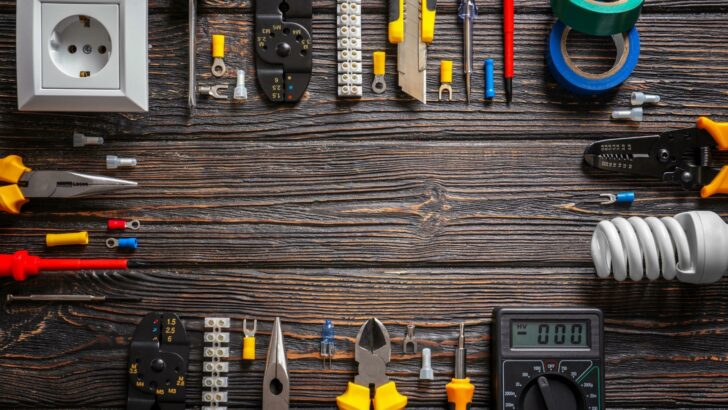

As full-time RVers and chronic DIYers, we carry lots of tools and supplies, and we use them all regularly. But even part-time and occasional RVers need a few tools and supplies. Today we’re looking at RV electrical supplies in particular because RVing means you’ve got a home-on-wheels with not just one, but TWO electrical systems (12V DC and 120V AC). We think these nine items are especially useful to have in your RV toolkit.
Let’s jump right in!
- 1) Digital Clamp Meter with Probes
- 2) Dogbone Adapters
- 3) 30A to 15A Standard Residential “Puck” Electrical Adapter
- 4) Heavy-Duty Outdoor Extension Cords
- 5) High-Quality Surge Protector
- 6) Self-Adjusting Wire Stripper
- 7) Non-Contact Voltage Tester/Receptacle Tester
- 8) Variety of Electrical Wire Connectors
- 9) High-Quality Electrical Tape
- 10) BONUS! LED Lights
- 11) What Other Electrical Supplies Do You Carry in Your RV?
Digital Clamp Meter with Probes
A good clamp meter is an important RV electrical tool to have on board because it allows you to test for current and voltage, making it a tool that comes in handy frequently.
This electrical test tool is actually a combination of a clamp meter and a basic digital multimeter with probes included. The probes allow you to measure voltage, while the clamps can be used to measure current.
Many people carry a basic digital multimeter, and that’s fine. But the clamp (or “jaws”) that are integrated into this digital clamp meter make it possible to clamp the jaws around any point in the electrical system, and then measure the current in that circuit without disconnecting or de-energizing it. So, when using a clamp meter it isn’t necessary to shut off the circuit carrying the current.
In fact, most electricians carry high-quality clamp meters for this reason and because they eliminate the need to cut into a wire and insert the test leads/probes into the circuit to take in-line current measurements. This is because the jaws of a clamp meter don’t need to actually touch a conductor while measurements are being taken.

Dogbone Adapters
Dogbone adapters may be some of the most important RV electrical supplies you carry. The purpose of carrying dogbone adapters is to make sure that wherever you go you’ll be able to hook your RV up to a power source, no matter what the amperage of the shore power is.
For example, our RV has a 50-amp electric service. A 50-amp plug has four prongs, so if we were to show up at a power pedestal that offers only 30-amp hookups, we’d use a dogbone adapter to bring our 50-amp service down to the 30-amp level, allowing us to plug our rig into the 30-amp hookup.
If you’ve got a rig with 30-amp electrical service and you want to connect to someone’s house power, you’ll need an adapter to step down to their 15-amp service.
So, a dogbone adapter converts the plug used for your RV’s electric service down/up to a different style plug for a different amperage connection. Just be aware that when adapting your RV’s plug down to a lower-amperage connection, you’ll need to be sure that you don’t pull more power than that connection can support.
15A Male-30A Female
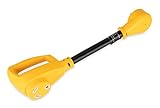
- CONVERTS ELECTRICAL CONNECTION TYPE: Easily hookup your 30-amp RV to a campground's power pedestal or an at-home 15-amp outlet with Power Grip’s...
- HIGH CONDUCTIVITY: Rated for 125 volts/1875 watts, the RV power adapter features 100% copper 10/3-gauge wires for superior conductivity. It includes...

50A Male-30A Female

- Converts Electrical Connection Type: Designed to allow you to hookup to your campground's power pedestal, adapting the electrical connection to fit...
- High Conductivity: Heavy-duty 50-amp male (NEMA 14-50P) and 30-amp female (NEMA TT-30R) electrical heads. Rated for 125 volts/3750 watts. Constructed...
30A Male-50A Female

- Converts Electrical Connection Type: Designed to allow you to hookup to your campground's power pedestal, adapting the electrical connection to fit...
- High Conductivity: Heavy-duty 30-amp male (NEMA TT-30P) and 50-amp female (NEMA 14-50R) electrical heads. Rated for 125 volts/3750 watts. Constructed...
For everything you need to know about dogbone adapters and how to use them, feel free to check out our YouTube video on the topic.
30A to 15A Standard Residential “Puck” Electrical Adapter
In addition to the “dogbone” style adapters listed above, these little puck adapters are very inexpensive and take up very little room. It’s a good idea to toss one or two of these in your toolkit so that you’ll have one if you need it. You may even be able to help out another camper who doesn’t have a toolkit that is well-stocked with RV electrical supplies.
They can come in handy at power pedestals that have recessed/sealed boxes since the smaller adapter won’t interfere.
30A Female-15A Male

- Adapter Connection: Designed to connect to a standard residential outlet and adapts the connection to fit your 30-amp RV
- Contoured Design: Allows for easy removal from the outlet
Heavy-Duty Outdoor Extension Cords
You’ll surely find yourself in need of an extension cord from time to time, and it’s very important to have the appropriate heavy-duty outdoor extension cord for your RV.
If you arrive at a campsite (or at a friend’s home, for example), and you need to park further away from the power source than your RV’s power cord will be able to reach, you’ll use your extension cord. But if you’ve got an RV with 50-amp electric service, you’ll want a good quality, heavy-duty outdoor 50A extension cord.
The same is true if your RV has a 30-amp power cord. You’ll need a good, heavy-duty outdoor 30A extension cord.
It’s always a good idea to use as heavy-duty of a cord as possible, to avoid the risk of overheating. The longer the extension cord, the greater the risk. And drawing too much current through an under-rated extension cord is begging for trouble. It will overheat if left in that situation for too long and could end up starting an electrical fire.
So, whenever possible, use as heavy-duty of a cord/cable as you have available, stepping down to the smaller plug as close to the outlet as possible.
50A Extension Cord

- POWER YOUR RV EFFORTLESSLY: Power up your RV with Power Grip's 50-amp extension cord. This camper essential is 30' long, ensuring you have enough...
- PREMIUM DESIGN & ENGINEERING: This ultra-flexible RV must-have is coated with a heavy-duty flame retardant, heat-resilient, PVC jacket. It serves as...
30A Extension Cord

- EXTENDED LENGTH: 30 amp extension cord extends 50-feet long, providing the necessary length to power your RV.
- HIGH CONDUCTIVITY: Features a standard 30-amp male (NEMA TT-30P) and 30-amp female (NEMA TT-30R) connectors. Rated for 125 volts/3750 watts....
15A Extension Cord
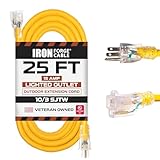
- ULTRA HEAVY DUTY EXTENSION CORD - Our 10 AWG extension cord are made heavy duty for outdoor and indoor use. Great for construction site, home use to...
- WEATHERPROOF & FLAME RETARDANT: Our high flexibility vinyl covering is more resistant to bending and won't break when moved, bent, or pulled for an...
Please have a look at our post on everything you need to know about your RV power cord for lots of important information on RV electrical power.
High-Quality Surge Protector
A high-quality surge protector is a more important part of your RV electrical toolkit than you may think, and since we don’t want you to learn about surge protectors the hard way, we’re including this in our list of important RV electrical supplies.
Here’s the thing: You’ve got a very expensive RV and you’re entrusting it to many different power sources when you travel. Not all campground power pedestals are in excellent condition. Many, in fact, are very old. And even at campgrounds where newer systems have been installed, power surges can occur for a variety of reasons.
We understand that many people would prefer not to invest in a high-quality surge protector like the Power Watchdog due to the expense, but we highly recommend them for their high-quality protection of your far more expensive RV and the electronics and appliances within it (not to mention the fact that the Power Watchdog offers more features and higher surge protection than competitive units, at a lower price).
We’ve got a video with much more information explaining why this degree of electrical system protection is well worth the cost, and we’ll share that with you below.
50A Surge Protector/Power Watchdog

- Replaceable Surge / Spike Module: Should a large spike happen, surge module is completely replacable instead of replacing the entire unit.
- Wirelessly Monitor voltage, amperage, and wattage on your smartphone in real time using our free mobile app! Oldest and most reliable phone app in the...
30A Surge Protector/Power Watchdog
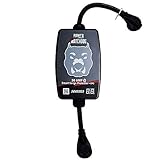
- Replaceable Surge / Spike Module: Should a large spike happen, surge module is completely replacable instead of replacing the entire unit.
- Wirelessly Monitor voltage, amperage, and wattage on your smartphone in real time using our free mobile app! Oldest and most reliable phone app in the...
Self-Adjusting Wire Stripper
Any minor (or major!) projects around the RV that involve wiring will very likely require a wire stripper. And while many people think they’ll never get involved in a DIY project that involves any type of wiring, you’d be surprised at the number of projects you’re fully capable of doing around the rig that’ll require you to strip a few wires. We suggest tossing one into your toolkit as an essential part of your RV electrical supplies.
We like this self-adjusting wire stripper and we use ours all the time.
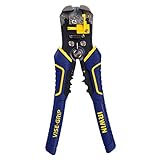
- SELF-ADJUSTING: Strip wire from 10 to 24 AWG with our self-adjusting mechanism. Jaw Width: 2 inches
- ADJUSTABLE STOPPER: Control the length of the core strip with the built-in adjustable stopper
Non-Contact Voltage Tester/Receptacle Tester
A non-contact voltage tester and a receptacle tester are both fantastic tools to have in your RV tool kit.
The voltage tester verifies the presence of AC voltage and is useful anytime you’re troubleshooting an electrical issue in your RV, or when you’re working on an electrical installation. This type of tester allows you to verify the presence of voltage without contact with live electrical conductors.
This non-contact tester we’re linking to also comes with a GFCI outlet tester, which is also very good to have in your RV electrical toolkit. This allows you to test various different wiring conditions of any outlet you’re considering plugin into, simply by plugging it into the outlet and touching a button.
Be sure to see our post on RV hot skin, a condition that is rare but that you should absolutely be aware of for your safety and that of your family.
Non-Contact Voltage Tester & GFCI Outlet / Receptacle Tester Kit
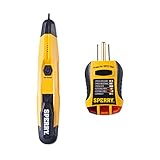
- VERIFIES VOLTAGE PRESENSE: Verifies the presence of AC Voltage prior to working on electrical installation or troubleshooting (GFI6302 and VD6504)
- DURABLE: Hi-Impact Resistant ABS housing with soft over-molded rubber grips with a compact ergonomic design (GFI6302 and VD6504)
Variety of Electrical Wire Connectors
Having a variety of electrical wire connectors as a part of your RV electrical supplies allows you to perform any number of DIY repairs and projects easily.
These are not expensive, but provide you with various types of connectors which will save you from having to break camp and find a hardware store if you have an electrical issue to address.
Screw Terminals/Twist Wire Nut Caps Assortment

- Wire nuts assortment: 50x grey (22 - 20 AWG), 50x blue (20 - 18 AWG), 30x orange (18 - 16 AWG), 20x yellow (14 - 16 AWG), 10x red (14 - 12 AWG). Total...
- Pull the wires into connector and screw on, spring steel makes a stable connection when you are working on wiring projects.
Insulated Fork/Ring/Space Quick-Connect Crimp Terminals

- Copper+ Vinyl (PVC) + Tinplate: Vinyl-insulated barrel ensure excellent wire contact.
- EASY IDENTIFICATION: With three different colors (red, blue, yellow) as well as a detailed chart for easy identification or for different purposes of...
Insulated Butt/Splice Connector Assortment Pack

- [PREMIUM QUALITY]: The thick brass barrel in the wiring kit ensures strong secure crimping every time, providing small voltage drop, high current...
- [DURABILITY]: Each butt terminal features a thick tinned brass barrel that resists corrosion to hold the wire tight when crimped. The barrel is...
High-Quality Electrical Tape
No RV electrical supply toolkit would be complete without a roll of high-quality electrical tape. Electrical tape comes in handy in a variety of situations. The ability to wrap any rewiring you may do with high-quality tape for additional integrity is always a good thing.
You’ll be amazed at how often you reach for a roll of electrical tape.

- PROFESSIONAL TAPE GRADE: Designed for above/below grade, indoor/outdoor, low and high voltage application and for harnessing cables. Primary...
- FLAME RETARDANT: Tape withstands a temperature range of 0 to 221F and inhibits the corrosion of electrical conductors
BONUS! LED Lights
One of the most beneficial changes you can make to your RV, right from the get-go or as soon as you can, is the installation of LED lights.
We’re throwing this one in as a bonus because while LED lights aren’t really tools for your RV electrical toolkit, they’re a very important part of your electrical system due to the dramatic reduction in power consumption of LEDs compared with traditional bulbs.
For more information, please have a look at our post entitled, “What Are RV LED Lights?”. We’ve also got a very thorough post about RV LED lights technology – everything you need to know to outfit your entire RV, saving you money in the long run and power right off the bat.
If you’re interested in the same great M4 LEDs we use in our own RV, head over to the M4 Products website and use Coupon Code RVGEEKS5 to get yourself a 5% discount!
Converting your lights to LEDs is a very simple process and one that will benefit you for as long as you own your RV.
What Other Electrical Supplies Do You Carry in Your RV?
Leave us a comment letting us know what other RV electrical supplies you carry in your toolkit! We’d love to know what you’ve found useful in your RV travels.
And if you’re interested in learning more about your RV’s electrical system, check out our article RV Wiring For Dummies: Don’t Be Shocked By What You Don’t Know.
Geek Out with Us Every Week
Join our newsletter to learn about all things RV-related. Every week we offer free tips, tricks, product reviews, and more to our online community of RVers. So, whether this is your first time on the road or you’re a seasoned expert, we’d love for you to geek out with us!
Bruce
Wednesday 1st of June 2022
Our multimeter is also handy to get a better read on our battery level when boondocking, instead of relying on the basic meter in the trailer. It's easy to use probes in the outside solar power port to check without having to take off the battery box cover. We did have a GFCI pop and it was a pain to find the reset, knocked out most of our outlets; I had to search high and low until I found it.
Don A Gagnon
Tuesday 31st of May 2022
I also carry a soldering iron, spare LED bulbs for most fixtures (including headlights), spare RV to Tow electrical AND air line, complete set of spare fuses, RG-6 coax to connect to campground cable network, spare F-connectors for RG-6 coax, double-female F-fitting adapter
TheRVgeeks
Sunday 5th of June 2022
Very thorough, Don!
Greg Gimlick
Monday 30th of May 2022
Don’t forget a crimper for all of those connectors.
TheRVgeeks
Monday 30th of May 2022
Good point Greg (may have to update the count on this post's title and add this in)! If you're not using WAGO Connectors (another item we're going to need to add to the list), you're going to need a crimper!
Herb
Monday 30th of May 2022
I carry a small soldering iron and solder. I have had to make soldered connections in wires connections that may be under stress or subject to moisture.
I also carry a number of shrink tubes of varying sizes. They can be shrunk by running the soldering iron along the length of the tube. The combination of solder and shrink tubes works well when a wire splice is needed.
TheRVgeeks
Monday 30th of May 2022
Both good additions, Herb. Thanks!
Mike
Monday 30th of May 2022
I also carry a Power Probe with the extension kit Can connect it to the battery at the front of our 28Ft trailer and check any 12volt need in the trailer.It's a little pricey but I find it's well worth it.