
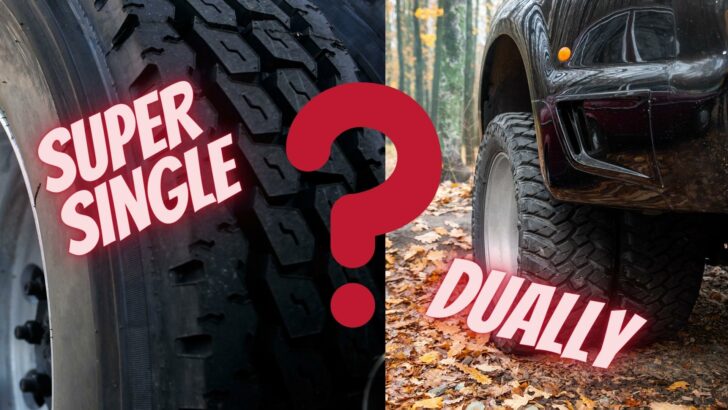

Today’s post is all about super single tires — one large tire that does the job of two — and the pros and cons of opting for this setup.
We’re all familiar with dual tires on the rear axle of trucks, buses, and larger motorhomes. You’ve probably heard of a “dually” pickup truck, which gets that nickname from the double set of tires on each side of the drive axle.
But what kind of tires are super singles and how do they compare to a dual-tire setup?
Let’s take a look at the pros and cons of super single tires, and their best uses for RVers.
What Is a Super Single Tire?
A super single is one large, heavy-duty tire with a wide base that’s able to take the place of typical dual tires. It’s built to carry the same weight as two normal duals, replacing two tires with one. “One Big Tire” = “Super Single Tire.”
Super singles have been around for over 20 years and are most commonly associated with farming equipment, construction equipment, long-haul trucks, and serious off-roaders.
Let’s look at what might make super singles a desirable alternative to dualies, as well as potential drawbacks.
What Are the Advantages of Super Single Tires?
Let’s take a look at the benefits they have over duallies.
Less Weight
The single tire + one rim weighs less than dual tires + two rims. So a big benefit is that they lower a vehicle’s weight.
Replacing duals on steel wheels with super singles on aluminum wheels can save a substantial amount of weight.
Lower Maintenance Cost
Even though larger, replacement involves one tire instead of two. While each tire is more expensive, there are fewer of them. That also means there’s less labor involved in breaking down and remounting them.
Higher Weight Ratings/Load Capacity
Super singles tend to have a higher weight rating so they can support heavier loads.
They also require lower pressure to support the same amount of weight which can make the ride smoother.
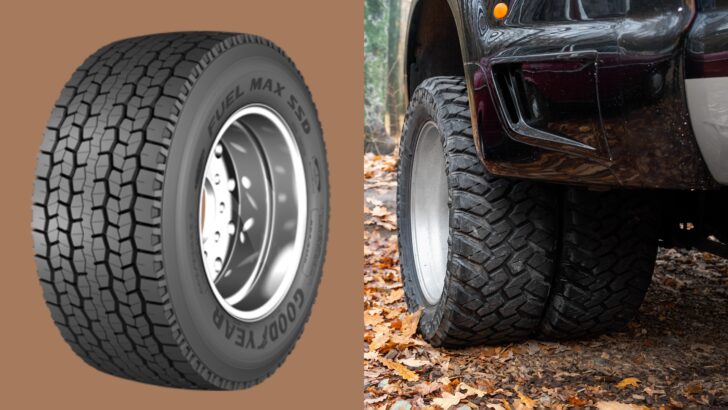
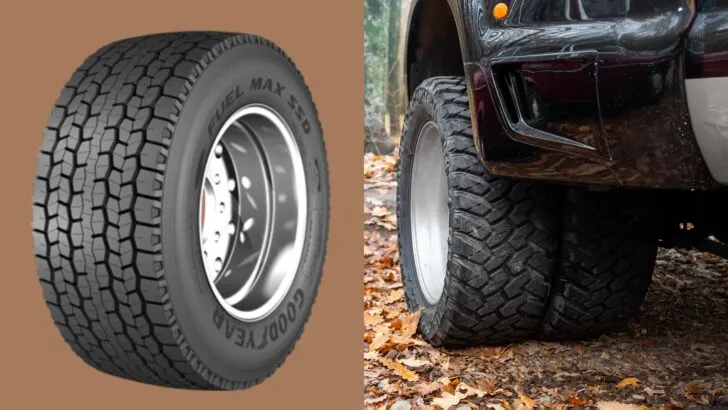
A super single tire (left) can support heavier loads than two “dually” tires (right).
Better for Off-Roading
If your interest is off-roading, a single tire equals no worry about rocks getting jammed between dual tires which can cause a flat.
Fewer Issues with Tire Pressure Monitoring
Using singles instead of dualies eliminates two tires from TPMS systems (fewer sensors needed).
It also eliminates the need to access valve stems on inner duals, which can sometimes be tricky.
Potential for Better Fuel Economy
The reduced overall weight mentioned above means better fuel economy.
And with two singles vs four duals, there’s often less rolling resistance, potentially creating an additional fuel economy benefit.
What Are the Disadvantages of Super Single Tires?
There are pros and cons to every choice, and “singling out” your rig is no exception.
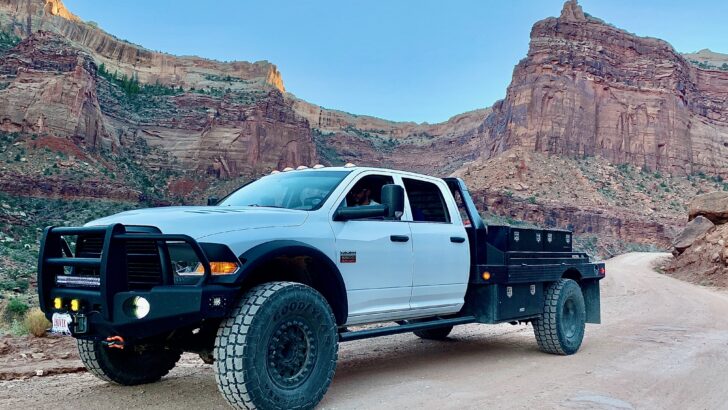
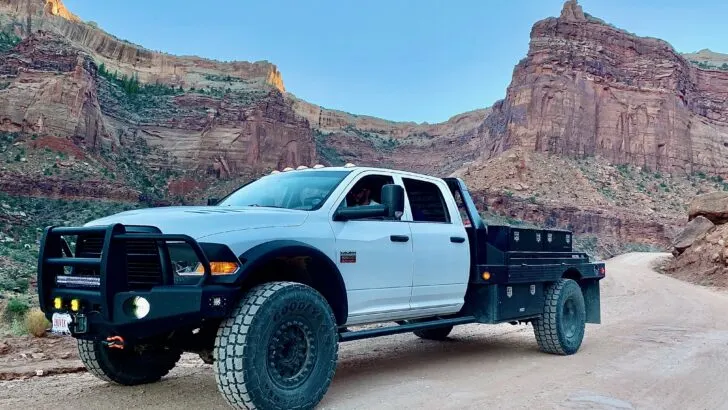
This beast of a truck belongs to our dear friends (and co-hosts on The RVers TV show) Tom & Cait of Mortons on the Move. Check out those mondo single tires!
No Built-In Backup
With duals, in the event of a flat or a blow-out the second tire can support the vehicle’s weight while you pull over in a safe spot to deal with the issue.
With a single tire, there’s no such backup… and maybe no spare tire of that size on board.
Replacements May Not Be Readily Available
If you do need a replacement tire, it could be difficult to obtain one immediately.
Since they’re less common, it may even be more challenging to obtain them when replacement time comes.
Necessary Modifications
Modifications are required to make the switch from duals to super singles. Making this mod is commonly known as “singling out” a vehicle.
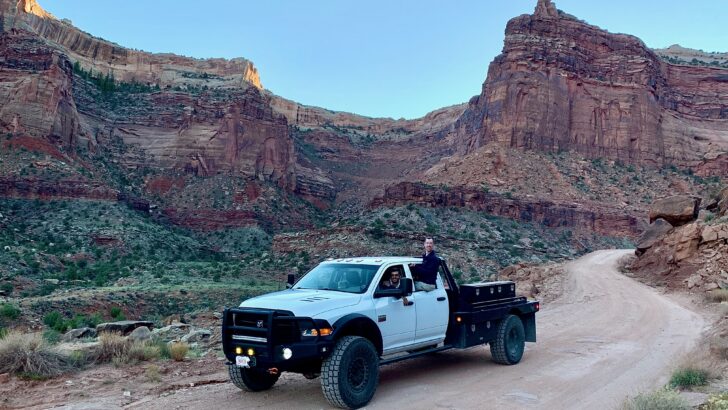
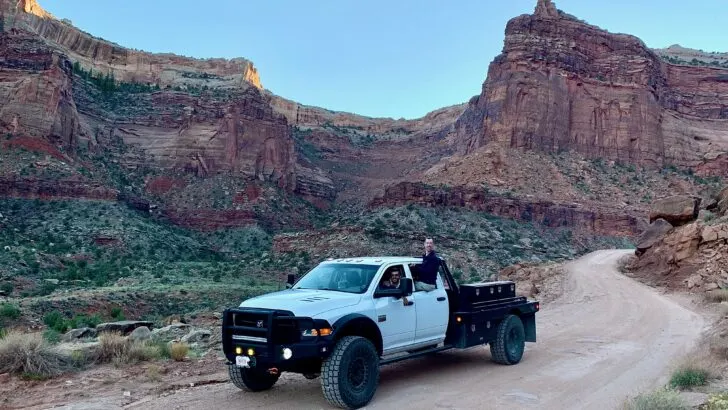
Tom & Cait’s truck required special modifications to “single out” the rear axle. And yes, that’s John hanging out the back window, violating every seatbelt law ever (just kidding… Tom parked for this photo)! Tom & Cait’s rig normally carries a beautifully renovated truck camper. They left it behind for this rugged Canyonlands NP drive.
At a minimum, you’d need to switch to new wheels/rims.
Additionally, on smaller vehicles, wheel well modifications may be required, and/or the suspension may need to be lifted to make room for the larger tires.
Difficult to Lift and Maneuver
A super single tire typically weighs about 70% of what two duals weigh. But that’s considerably more than either one of the duals.
So, a super single is more difficult to lift and handle than a dual tire.
Cost
Super singles are generally a lot more expensive than regular dual tires.
This might not be a big negative if they outlast regular tires. Unfortunately, they tend to wear out faster.
All large RV tires can be expensive, but this can make it worse. Our video about RV tire replacement might help save you some $!
Why Would You Want to Switch to Super Single Tires?
The main reason someone might want to single out their RV is for better off-roading.
RVers who boondock in remote areas probably value the benefits of super singles most. The ability to travel off-road to remote locations for Overlanding experiences is likely the greatest allure of super singles
Otherwise, traditional duals offer better highway performance. The cost of singling out would likely be far less worthwhile for RVers who remain ON the beaten path.
Want to help extend the life of any tire on your RV? Check out our post on tire age, care, and replacement.
Geek Out with Us Every Week
Join our newsletter to learn about all things RV-related. Every week we offer free tips, tricks, product reviews, and more to our online community of RVers. So, whether this is your first time on the road or you’re a seasoned expert, we’d love for you to geek out with us!
Peter Kingsley
Monday 11th of December 2023
You write......
Higher Weight Ratings/Load Capacity Super singles tend to have a higher weight rating so they can support heavier loads. They also require lower pressure to support the same amount of weight which can make the ride smoother.
Actually super singles require higher pressure than duallies; this can be verified on the pressure tables put out by the various manufacturers.
Richard
Monday 12th of December 2022
Supersingles will not hug the road like a set of duals when it comes to the curves and thats because they are not as wide as a set of duals. Supersingles were Design for weight and weight only on commerical trucks the more payload the more money
Bob
Monday 23rd of January 2023
@Richard, super singles Handel better than duals because they put more tread surface on the road and the centerline of the tread is further out than duals.
Dave
Monday 12th of December 2022
I've never ever seen a super single on a motorhome. Doubt I will either. I see them on Semi trailers now and then.
TheRVgeeks
Monday 12th of December 2022
We've never seen them on other RVs either, Dave (besides truck campers). That's probably because the rest of us aren't likely to be headed far enough off-road to need them!
John S.
Monday 12th of December 2022
What does Newmar's chassis manufacturers say about super singles?
Any warranty issues?
TheRVgeeks
Monday 12th of December 2022
That's a great question, John, but one we don't know the answer to. At nearly 18 years old, our rig is pretty far out of warranty... but we'd consider waiting until it's up to consider the switch on a newer rig. LOL But diesel pushers like ours, and yours, probably aren't going into rugged enough areas to bother anyway.