

We all know the nuisance that bugs and rodents can pose to campers. But in this post, we’re not concerned with window & door insect screens that keep flying insects from entering your rig. The RV bug screens we’re referring to here are just as essential, if not more so… but they’re different.
Today we’re talking about RV vent bug screens that cover the vents of your RV appliances. They’re easy to install, generally not expensive, and could save lots of your hard-earned money, or even your life.
What Are RV Vent Screens and Why Are They Important?
Most of your RV appliances are vented to the outdoors. This includes your RV furnace, water heater, and refrigerator.
If you look along the sides of your RV, you’ll see the vents we’re referring to right behind the appliances. Some have long louvered openings, while others have smaller openings. All of them serve as an invitation to trouble.
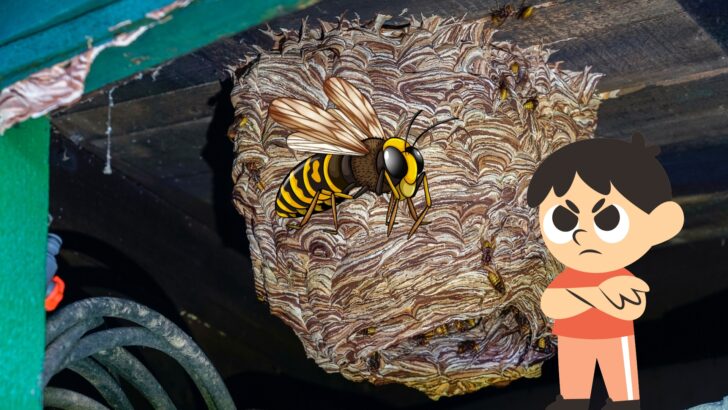
Certain bugs and other pests (particularly mud daubers) can impact the performance of your RV appliances and cause damage by building nests that interfere with airflow. Not only can these nests prevent your rig’s appliances from working properly, but they can also lead to dangerous situations like fire.
We highly recommend heavy-duty stainless steel bug screens (sometimes called “RV mud dauber screens”) for RV vents to protect your RV appliances from invasion by unwanted pests.
Can Mice Get In Through My RV Vents?
Depending on the vent, you bet they can.
When we talk about protecting your rig with RV bug screens, we’re mostly concerned with bugs that tend to build nests that can cause appliances to stop functioning, requiring expensive repair work. Those pests are typically ants, wasps, and mud daubers.
But mice are notorious for entering RVs through the tiniest openings, and some vents on your RV may present the invitation. (For much more on how to keep mice out of your rig, see our posts on how to keep invasive mice out of your RV for good, and the best mouse repellants for RV use.)
But other pests can get in through certain RV vents you might not even consider. Fridge and furnace vents are perfect examples. Check out this video to see how a colony of bats was trying to stow away on our rig!
Which RV Vents Are Prone to Nests & Pests?
Now that we’ve thoroughly freaked some readers out with our all-too-true tales of bugs, mice, and bats, let’s take a look at the most important RV bug screens that’ll keep bugs from building nests in the appliance vents of your rig, and help keep mice & bats out as well.
Before we post the most common areas for pests to nest or enter, as well as the most common screens for covering these areas, we have an important note:
DO NOT use standard vinyl window screening material to cover any of these locations. These appliance vents tend to get very hot due to exhaust gases from combustion. Standard window screening material is not designed to withstand this heat, and will surely melt.
The only thing you should use for covering appliance vents are stainless steel external screens.
RV Furnace Bug Screen
Your RV furnace vents likely have small circular covers seen on the outside of your RV. These are not only popular nesting places for mud daubers, but as you saw in our video above, they can also be an entrance into the RV for bats and other pests.
We popped these exact screens onto the outside of our motorhome and haven’t had a problem there since. For less than 20 bucks and a couple of minutes of your time, you can stop unwanted pests from entering your rig and causing problems with your furnace.
As always, you’ll need to adjust the type of screens you buy based on what your furnace vents look like, but RVs with DuoTherm and Suburban furnaces (as well as others) commonly use these 2.75″ x 1.25″ circular mud dauber screens:

- Product Type :Auto Accessory
- Package Dimensions :9.5" L X8.5" W X1.5" H

If your furnace vents are different, you may require one of the other shapes/sizes of bug screens below:
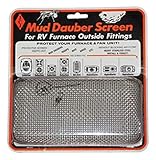
- RV furnace and fan unit outside fittings
- The package length is 23.368 centimeters

- RV furnace and fan unit outside fittings
- Fits M500 series
RV Hot Water Heater Bug Screen
Your RV’s water heater vent is another popular nesting place for wasps and mud daubers. To keep them out, install a water heater bug screen like the ones linked below. Once again, measure the outside of your water heater vent (on the outside of your RV) to see which type of screen will fit best.
The following two products fit many Atwood and Suburban vents. Both are made of stainless steel.
The first measures 8.5″ x 6″:
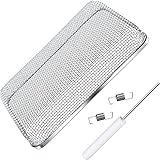
- Quantity: the packaging includes 1 RV furnace ventilation cover or water heater ventilation cover, 4 spring hooks, and 1 installation tool, without...
- Size: each screen size is 8.5 x 6 inch (L x W), 1.3 inch in height, each mesh grid is 0.3 inch in length
This one measures 4.5″ x 4.5″:

- Quantity: the packaging includes 1 RV furnace ventilation cover or water heater ventilation cover, 4 spring hooks, and 1 installation tool; Warm...
- Size: each screen size is 4.5 x 4.5 inch (L x W),1.3 inch in height, each mesh grid is 0.3 inch in length, please check the size before purchase it
If you have a Truma water heater like we do, or if you have an Airstream with an Alde water heater, this may be the water heater screen for you (but check your measurements):
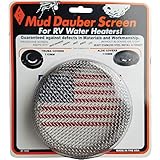
- Keep pesky mud daubers, mice, wasps, frogs, birds and spiders from nesting in your appliances
- Stainless steel screen and springs
RV Refrigerator Bug Screen
RV refrigerator vents can vary in size as well. These tend to be long louvered vents that require a different shape and size of screening, but we’ll link to several options below.
Note that in addition to a sidewall refrigeration vent, you may also have a rooftop fridge vent. The rooftop vent should have its own, built-in mesh screen, but it’s worth taking the cover off to check it if you’re not sure.
These three screens measure 20″ x 1.5″ each. This group of screens fits Dometic refrigerator vents that have 20” long louver openings:
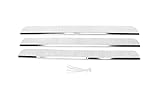
- Includes (3) screens measuring 20 inch x 1 1/2 inch
- NOTE: These vents fit Dometic brand refrigerator vents which have 20” long louver openings
The following screens fit Norcold fridge vents with 6.2″ X 17.8″ openings. But if you click on this link, you’ll find a drop-down menu that links you to many other shapes and sizes of Camco screens that fit many Norcold, Dometic, and other fridge vents as well:
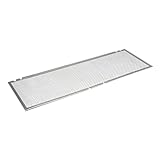
- Designed for exterior RV refrigerator vents with 6-3/16" x 17-13/16" rough opening
- Compatible with Norcold models
Multi-Screen Kit
You can also buy a kit that contains multiple shapes & sizes of stainless steel screens for your RV’s furnace, water heater, and refrigerator vents.
If the screens in the kit work for your RV, this will likely be the best bang for your buck. It includes the little tool for installing the screens for all vents. Again, be sure to measure all of your RV vents before ordering a kit like this:
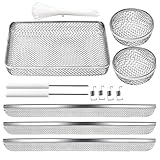
- Package includes:Three 20" x 1-1/2" RV Refrigerator Vent screen;Two 2.8''x1.3'' flying insect screens, One 8.5" x 6" x 1.3" RV Furnace Bug screen
- Heavy-duty stainless steel mesh cover, absolutely strong material, combination product, multi-purpose, more cost-effective. Particularly easy to use...
How to Install RV Bug Screens
All of the screens we’ve discussed above install in the same way. They use a small spring or two to connect the screens to a portion of the vent itself. The spring is attached using a small tool that should be included with the screens.
The screens are easy to install, but you do need to understand how the little spring connector works to prevent frustration. The best way to explain this is to offer you a visual description of the screen installation process.
Free RVing Tips, Tricks, Reviews, Giveaways & More
Subscribe to our daily newsletter! We’ve been full-time RVers for 20 years (!) and share everything we’ve learned about RVing in our daily blog posts. Join our online community to receive a wealth of great RVing knowledge delivered right to your inbox.
Whether this is your first time on the road or you’re a seasoned full-timer, you’ll love the wide range of RVing topics we cover. Don’t miss a single article or any of our famous RV gear Giveaways — Subscribe today!
Tim H.
Saturday 29th of July 2023
Thanks for the article! I’m a big fan of insect screens and installed mine shortly after we purchased our RV from the first owners.
Unfortunately- even though the original owners took very good care of the RV while they had it- one thing they had NOT done was to install insect screens and not too long after we bought it we had a furnace burner problem that was most definitely due to flying insects- I even have the photos to prove it! Lol.
In our case it wasn’t any kind of wasp or mud dauber though- it was actually “stink bugs” (not sure of their scientific name, but that’s what everybody calls them in Ohio). In the case of the stink bugs, the problem wasn’t even a nest per se, but just a densely packed collection of the dead bugs themselves.
In fact, I’ve since heard and read that stink bugs are actually attracted to the mercaptan (the chemical added to LP gas to make it smell) in and around gas appliances! Or it could just be the warm, dark and sheltered hiding place they’re after, but either way it’s just one more example of a potential bug problem that can likely be avoided by the use of insect screens. Happy trails!
Jen
Saturday 29th of July 2023
After my first storage season I ended up having to put a screen over the hole in my rubber bumper caps (where I store my black/gray tank hose). I went to dump my tanks and found a bird nest with eggs had traveled 100+ miles with me when I went to pull out my hose. :(
sparky1
Saturday 29th of July 2023
@Jen, i'll do mine today thanks,didn't think about that.