
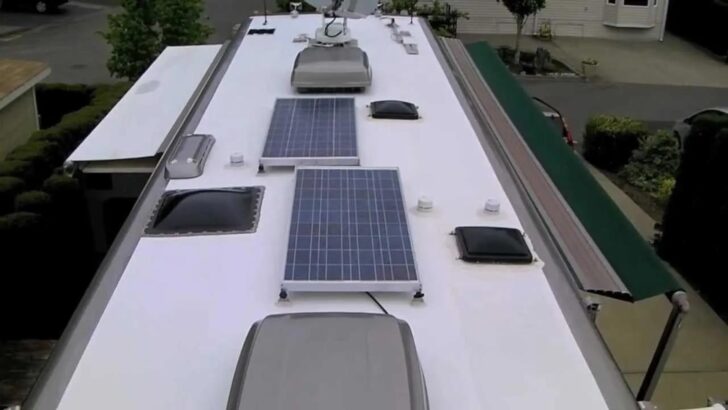

The Dicor RV roof sealant that surrounds the various items on your RV roof is one of the most important maintenance items on your RV.
Dicor self-leveling lap sealant is ubiquitous in the RV industry, sealing roofs on everything from pop-up trailers to diesel pusher motorhomes and everything in between.
As we’ve noted in our post on RV roof leaks, any type of leak into your RV is a serious threat to the integrity and ultimate longevity of your rig. Your RV roof caulk is your only defense.
In this post, we’re talking about how to properly maintain the Dicor self-leveling lap sealant that protects your RV.
- 1) Why Is It So Important to Check & Maintain My RV’s Dicor Roof Sealant?
- 2) How to Properly Maintain Your Dicor Self-Leveling RV Roof Sealant
- 3) What Can I Use to Clean My Dicor?
- 4) How Often Should You Reseal an RV Roof?
- 5) Can I Apply Dicor Over Old Dicor?
- 6) Free RVing Tips, Tricks, Reviews, Giveaways & More
Why Is It So Important to Check & Maintain My RV’s Dicor Roof Sealant?
The reason it’s so important to regularly check and maintain the Dicor roof sealant on your RV is to prevent leaks.
Leaks coming from your roof can do more than become a nuisance by leaking into the interior of your rig. Water leaking into your RV’s roof can cause very serious damage that isn’t easy to detect until it has already ravaged your rig.
Just about everything attached to the roof of an RV is a potential entry point for water. The TV antenna, vent fans, satellite dish, plumbing vents, solar panel mounts, or anything else screwed into or transitioning through the roof to the interior are places that invite leaks.
So, the bottom line is that inspecting and maintaining the Dicor roof sealant on your RV is so important because roof edges, air vents, vent pipes, screw heads, etc. are all invitations to leaks that can ultimately seriously compromise the integrity of your RV.
Don’t believe us? Have a look at this video of an RV in serious need of roof repair:
How to Properly Maintain Your Dicor Self-Leveling RV Roof Sealant
The best way to avoid ever developing a leak in your RV is to inspect the roof at least a couple of times a year, looking for any cracks in the Dicor.
One of the surest signs that an owner is meticulous in caring for their RV is to look for the tell-tale signs of Dicor patching on the roof.
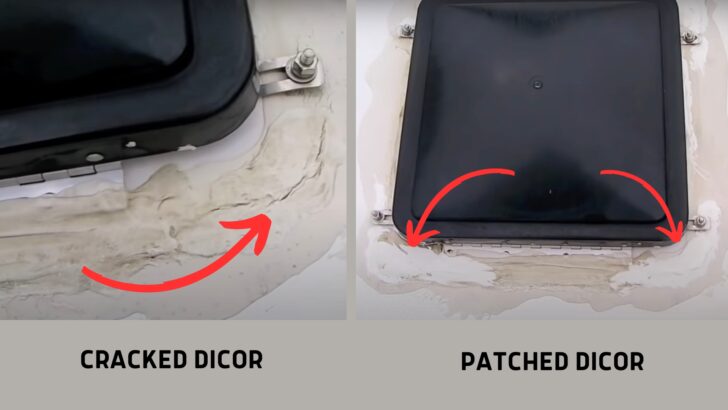
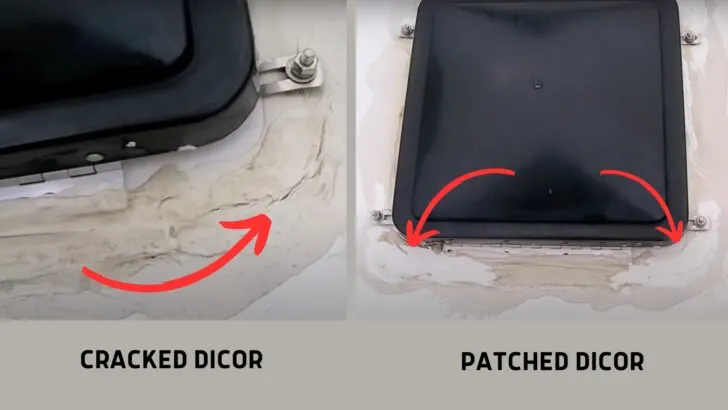
The patched Dicor (as seen on the right) is a sign of a well-maintained RV roof.
Dicor develops small cracks over time, and periodic touch-up with the application of fresh Dicor to cover those cracks leads to the patchwork look of a well-maintained roof. It may not be beautiful, but it’s MUCH better-looking than water damage (and you can’t see it from the ground anyway).
Those small cracks are simply a result of the pliability that’s required to keep Dicor doing its job as your rig vibrates down the highway.
Dicor is available at just about any camping supply store or RV dealer.
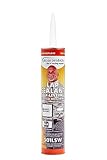
- RV ROOFING USE: Lap sealant is sun-ray stabilized to avoid spoiling and discoloration; Plus, it will not stain or discolor any roofing material to...
- COLOR: White hue for stylish and beautiful RV roof
Dicor requires only a caulk gun to apply. You can choose to use a standard caulk gun or an upgraded caulk gun for better control.
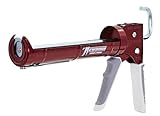
- Steel half-barrel (also called cradle) frame caulking gun for 1/10-gal. cartridges
- Thrust ratio of 10:1 for use with low viscosity materials

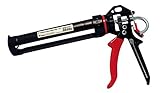
- 26:1 THRUST RATIO: 950 pounds of force easily extrudes the thickest of materials
- COMFORTABLE GRIP: Ergonomic rubber trigger and push release
Dicor products are UV stabilized to prevent deterioration and discoloration. They adhere firmly to aluminum, mortar, wood, vinyl, galvanized metal, fiberglass, and concrete (just in case your RV is really overbuilt ????). However, as mentioned, Dicor may form cracks over time from continuous exposure to the elements.
That’s why it’s important to inspect the Dicor on your roof for any cracking or damage every six months. Cracks are fodder for leaks and should be repaired right away with new Dicor RV sealant.
If (actually when, as this is normal) you locate small cracks in your Dicor, take the following steps to repair the issue.
First, clean the area to be patched with mineral spirits to make sure the new Dicor will adhere well to the surface of the old, cracked Dicor, and let the mineral spirits dry for a few minutes.
Note: We have a fiberglass roof on our motorhome, but you may have a different type of RV roof. Dicor products are compatible with EPDM and TPO roofs, commonly called “rubber” roofs. If you have rubber roofing or roof coating, while it’s still OK to clean the Dicor with mineral spirits, you’ll want to go easy on the quantity, ensuring you don’t soak the material.
Next, use your caulk gun to apply a layer of new Dicor over the cracked or damaged areas.
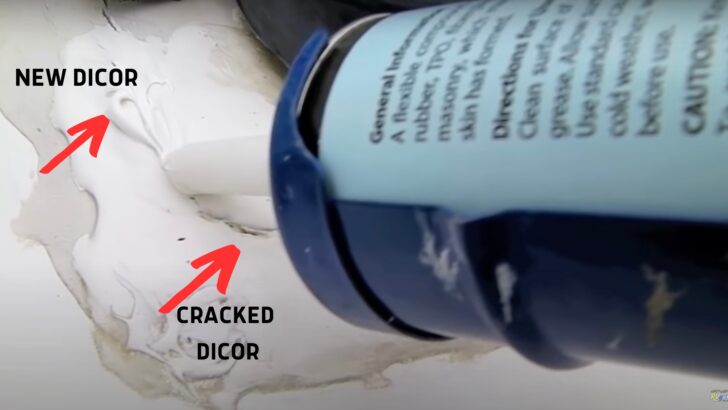
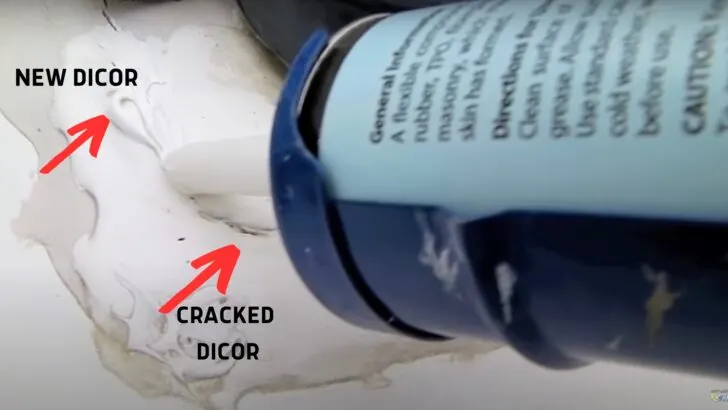
Use a caulking gun to apply a fresh layer of Dicor over all cracked or damaged areas of Dicor.
Don’t forget any bolts or screws. All should have been covered with Dicor sealant and should be inspected twice a year along with the rest of the Dicor.
The only part of your RV roof that may require a different type of sealant is your skylight if you have one.
For the skylight, you’ll want to check the manufacturer’s recommendation for the proper sealant. Our skylight requires a sealant called Surebond SB140, but yours may require a different product.
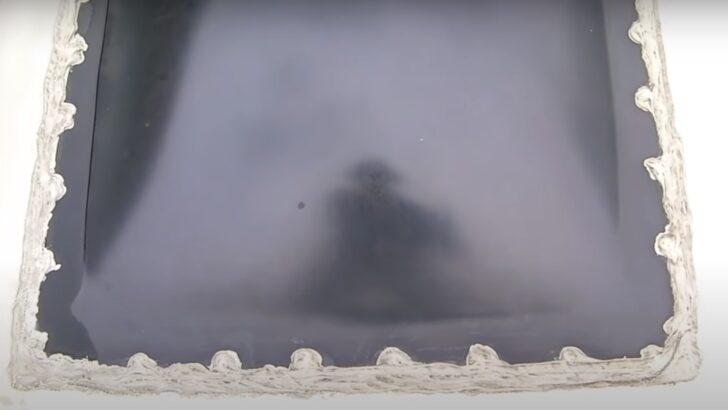
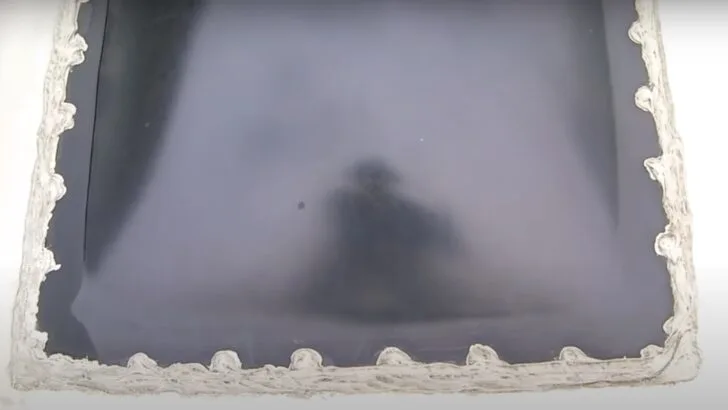
If you have an RV skylight, it may require a different type of sealant. For example, ours requires Surebond SB140, shown here.
Another way to waterproof an RV is with the use of Eternabond tape. If you have Eternabond on your roof or on the seams of your RV, be sure to check the Dicor sealant that may be applied to the ends of the tape. (For more information on Eternabond, see our post “Is Eternabond Tape Really Eternal?“)
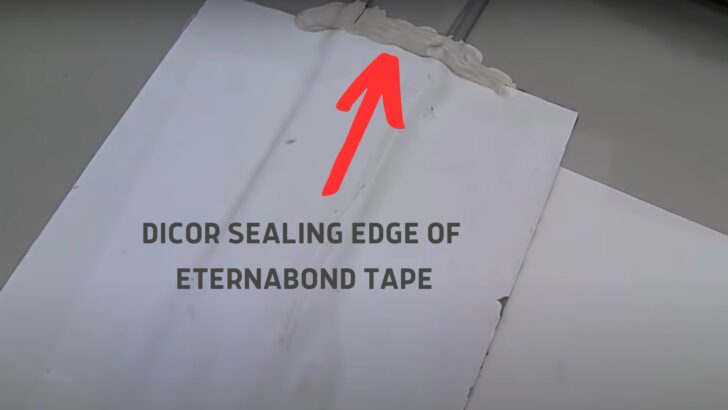
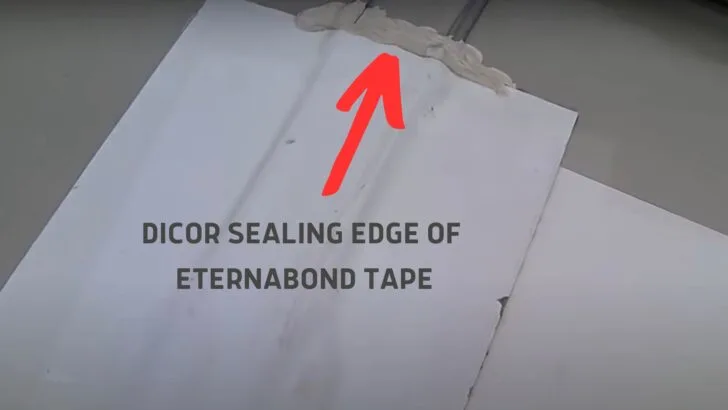
Remember to check any areas of your RV roof where Eternabond tape has been applied. There may be edges that are sealed with Dicor.
What Can I Use to Clean My Dicor?
If you just need to clean the Dicor from road dust, dirt, bird droppings, etc., we’d suggest starting with just mild soap and water. (We prefer Megiars Gold Class car wash for cleaning our entire RV).
If that doesn’t clean it to your satisfaction, then you can use get a rag or paper towel lightly wet with mineral spirits to clean the Dicor.
Again, if you have an EPDM or TPO roof, be very careful not to soak the roof material, as that can cause the underlying adhesive to come loose, which can lead to the development of bubbles.
How Often Should You Reseal an RV Roof?
Again, we recommend inspecting your RV’s roof sealant every 6 months, and cleaning and repairing it as needed.
With that said, you should do this a minimum of once every year.
Can I Apply Dicor Over Old Dicor?
Absolutely, and that’s just what you’ll see us do in the YouTube video below.
Be sure to thoroughly clean and dry it to remove dirt and debris so that the new Dicor can bond to the underlying layer.
If your Dicor doesn’t have a good bond/seal with the underlying material (roof, vent pipe, etc), then you’ll want to replace that area of Dicor, because it could become a source of leaks.
Another reason why you might need to replace old Dicor is if there have been too many touch-ups and the layers have become too extensive.
For a visual tutorial, please take a look at our YouTube video:
Worried about your RV roof? Read our article on how to find RV roof leaks!
Free RVing Tips, Tricks, Reviews, Giveaways & More
Subscribe to our daily newsletter! We’ve been full-time RVers for 20 years (!) and share everything we’ve learned about RVing in our daily blog posts. Join our online community to receive a wealth of great RVing knowledge delivered right to your inbox.
Whether this is your first time on the road or you’re a seasoned full-timer, you’ll love the wide range of RVing topics we cover. Don’t miss a single article or any of our famous RV gear Giveaways — Subscribe today!
Kiley
Friday 8th of September 2023
Is it better to use dicor self leveling or lap sealant to touch up old dicor self leveling cracks around the appliances on the roof?
TheRVgeeks
Saturday 9th of September 2023
Hi Kiley... Dicor has lap sealant that is either Self-Leveling or Non-Leveling. For roof (horizontal) applications, you want to use the Self-Leveling Lap Sealant because it will flow smooth in order to ensure a good seal. The NON-Leveling Lap Sealant is for use on vertical spots (i.e. sidewalls) because it DOESN'T flow (it's more like traditional caulk that way).
So for use around openings on the roof, you want the Self-Leveling Lap Sealant for the best results: https://amzn.to/3PzDiyV