
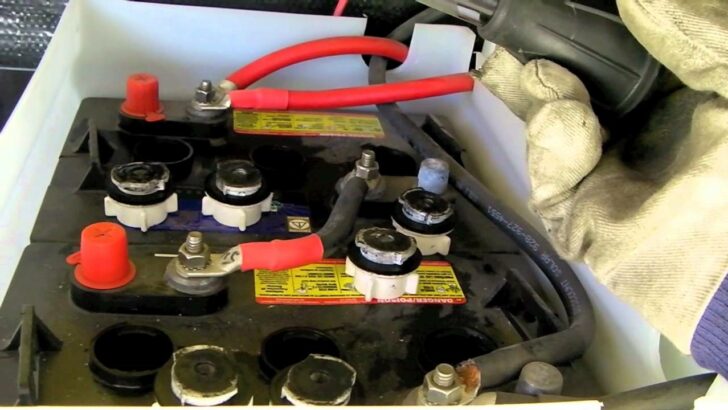

If your flooded lead acid batteries aren’t performing as well as they once did, this post on equalizing RV batteries is for you. In fact, even if your RV batteries are brand new, battery equalization is an important process to understand. Equalizing batteries not only improves their performance, but also extends their lifespan.
So, in today’s post, we’re going to talk about the equalization process, including how long to equalize RV batteries. We’ll show you the type of battery chargers/equalizers that can bring your weakened RV batteries back to full charge.
You can improve the battery life and performance of what may seem like worn-out batteries as the corrective equalization process rejuvenates them.
- 1) What Is Battery Equalization?
- 2) How Do You Equalize a Battery?
- 3) How Often Should a Lead Acid Battery Be Equalized?
- 4) Can All Lead Acid Batteries Be Equalized?
- 5) Do All Battery Chargers Provide an Equalizing Charge?
- 6) Are There Other Ways to De-Sulfate a Battery?
- 7) Free RVing Tips, Tricks, Reviews, Giveaways & More
What Is Battery Equalization?
Over time, and with use, lead-acid batteries can begin to show degraded performance due to the build-up of sulfate crystals on the lead plates. This build-up, known as sulfation, slows and reduces the chemical reactions needed to generate electricity.
Equalizing is a charging cycle/process that supplies a longer-duration, higher voltage charge to the battery. That higher-voltage charging process removes the lead-sulfate build-up from the plates, returning it back into the electrolyte fluid as sulfuric acid.
Many people think that only traditional flooded/wet-cell/vented batteries qualify as lead-acid. But AGM and gel batteries are also lead-acid. Both are sealed VRLA (valve-regulated lead–acid) batteries but still require periodic equalization.
Giving your RV batteries a periodic equalizing charge brings all of the battery cells back to similar levels of sulfation, equalizing them… hence the name. The battery equalization process improves the performance of a battery, allowing it to provide more energy when fully charged.
The equalizing voltage also increases the battery’s lifespan. If allowed to continue, sulfation will eventually kill a battery. The sulfur becomes so hard and so firmly attached to the lead plates that the chemical reaction necessary to generate electricity can’t occur, so the battery dies. Worse yet, excessive sulfation could also result in the battery plates shorting out due to bridging between them.
There’s also a condition called acid stratification in which the acid concentration of the battery is greater at the bottom than it is at the top. This is also damaging to a battery, but equalization reverses this condition.
In short, the battery equalization process is really nothing more than giving the battery a deliberate overcharge to “boil” the sulfate crystals that build up on the plates over time. (It’s not actually boiling, but watching a battery bubble when it’s being equalized looks a little like it’s boiling.)
How Do You Equalize a Battery?
To equalize a battery, you need a charger (or inverter/charger) that’s capable of applying the equalizing charge to your battery. The equalize cycle provides higher-than-usual charging voltage over a set period of time.
It’s a good idea to isolate/disconnect the rest of the RV’s loads and systems first, to ensure the higher equalization voltage doesn’t damage them. However, disconnecting the house batteries in some RVs also prevents them from being charged. If that’s the case in your rig, they’ll have to be left connected or they won’t equalize.
You trigger an equalization cycle and let the process run for the recommended period of time. Battery manufacturers generally recommend equalizing periodically for anywhere from 2–16 hours. As always, check with your manufacturer for specific instructions.
How Often Should a Lead Acid Battery Be Equalized?
It’s generally recommended to equalize a battery once or twice a year, and in some cases, as often as once a month.
However, there’s a better method for determining when equalization is needed. Start by fully charging the house battery (or batteries). Once the batteries are charged, allow them to rest for at least an hour. “Resting” means no power coming in, and no draw going out. So turn off the charger and all loads and let the batteries sit.
Once at rest for a while, use a good quality hydrometer to compare the specific gravity readings of each individual cell of each battery. You’d only want to apply the equalization charge if the difference in SG readings between cells is 0.030 or more.
PRO TIP: A healthy, fully-charged battery should ideally have a specific gravity reading of about 1.278 in all cells. Sulfated batteries will have cells that read lower than that, indicating that running an equalization cycle is called for. When specific gravity no longer rises after equalizing, no additional improvement is possible.
It’s also important to keep the battery cool during equalization and monitor for any increase in heat or venting. Of course, some degree of venting is normal during the process. But hydrogen gas is flammable and can become explosive, so the location where you equalize your battery should have good ventilation.

- BATTERY HYDROMETER: This battery tester is made to stand up to tough treatment in service stations & garages. It's designed so that both customer &...
- RUGGED & EASY TO USE: This hydrometer makes reading & understanding battery levels easy, accurate, & quick, with no difficult float reading & no...

Can All Lead Acid Batteries Be Equalized?
No. Equalizing lithium batteries is not needed… and should actually not be done. Some other types of batteries, particularly gel or some AGM batteries, may or may not be okay to equalize. (Lifeline says our AGM batteries were okay to equalize). Check with your battery manufacturer before applying an equalizing charge to your RV batteries to see what they allow.
Do All Battery Chargers Provide an Equalizing Charge?
No. Not all battery chargers offer an equalizing cycle. In that case, you may need a separate device to equalize your batteries. This portable charger, for example, automatically detects sulfation and runs an appropriate cycle to reduce or eliminate it.

- Meet the GENIUS10 - Similar to our G7200, just better. It's 17% smaller and delivers over 115% more power. It's the all-in-one universal charging...
- Do more with Genius - Designed for 6-volt and 12-volt sealed lead-acid automotive, marine, RV, powersport, and deep-cycle batteries, including...
Are There Other Ways to De-Sulfate a Battery?
Yes. Equalizing a battery by applying a sustained, high-voltage charge cycle is just one way to de-sulfate a battery. There are other types of battery de-sulfators available that use different mechanisms for removing or reducing the build-up of lead sulfate on the plates.
For example, the unit listed below uses a pulsed charging technique to essentially “shock” the sulfate off the lead plates. It’s important to note that these are powered by the battery being treated. So, without an external charger to keep the battery topped up, it will drain the battery you’re trying to repair.
We haven’t used this type of device ourselves, since the inverter/chargers we’ve had from Xantrex and Magnum all came with the ability to trigger an equalization cycle. So, we don’t know how well these work. Reviews are mixed.

- New Advanced Technology: dissolving sulfates without damaging the battery plates
- Auto-setting for 12-72V, Peak Amp: 4Amax
Free RVing Tips, Tricks, Reviews, Giveaways & More
Subscribe to our daily newsletter! We’ve been full-time RVers for 20 years (!) and share everything we’ve learned about RVing in our daily blog posts. Join our online community to receive a wealth of great RVing knowledge delivered right to your inbox.
Whether this is your first time on the road or you’re a seasoned full-timer, you’ll love the wide range of RVing topics we cover. Don’t miss a single article or any of our famous RV gear Giveaways — Subscribe today!
Loggenrock
Sunday 23rd of July 2023
My Renogy solar charge controller actually does a monthly equalization automatically, and this is just off a 100W rooftop panel.
TheRVgeeks
Tuesday 25th of July 2023
That's awesome (good for Renogy for including that feature)... but just be aware that a 100W panel may not be enough to completely equalize your battery bank if it's too large. Equalizing flooded lead acid batteries requires a fairly high voltage (usually around 14V), so that single panel may not have enough "oomph" to get it all the way there. But... it's still doing an extra boost to the full charge when it can, which will definitely improve the longterm health of the battery(ies).
sparky1
Saturday 22nd of July 2023
great articles