

We live and work full time in our motorhome, and there are approximately one million other people who do the same. But we’re a minority when compared to the number of people who vacation in their RVs part of the year, or only seasonally, and who need motorhome storage when their rigs aren’t in use.
Even though motorhome storage isn’t something we regularly require, we have had the need to store our motorhome at times over the years, such as when we fly out to visit family or travel internationally. We als0 know that a majority of our readers need to park or store their RVs routinely. So, in today’s post, we’re going to go over the variety of motorhome storage options available for you to consider.
And even though we own a motorhome, we know that much of what we’re discussing here also apply to towable RVs. But motorhomes do have some additional needs related to the fact that they have drivetrains, which can require some extra consideration.
Where Should I Store My Motorhome When Not in Use?
There are a number of ways to store a motorhome to keep it safe during long periods of inactivity, and there are many things for motorhome owners to consider when storing a rig. Which option you choose will depend on where you live, how long you need to store your motorhome, and several other factors.
Let’s take a look at some of the best storage options available, as well as the advantages and disadvantages of each.
Your Own Property
Perhaps the most obvious motorhome storage option is your own property. If you live on a property that you own with no restrictions, (not in a condo or any other type of home that has a Homeowners Association and/or rules prohibiting the RVs from being parked/stored), this may be the perfect option for you, providing you have sufficient space.
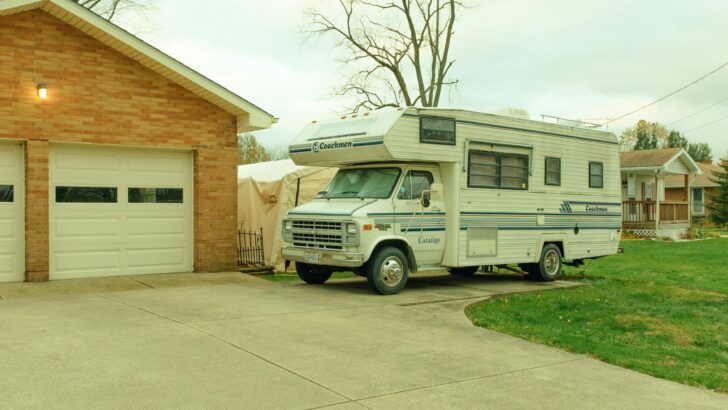
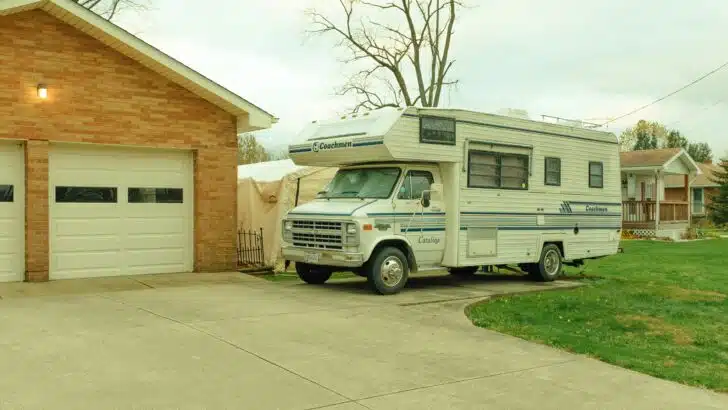
Storing your RV on your own property is by far the least expensive option if you have the space available. This option also gives you access to your rig at all times.
One of the main advantages of storing your motorhome on your own property is that you have access to it, you can keep an eye on it, and you can tend to any issues that need to be addressed. These might include taking care of batteries, periodically exercising the generator, making sure there are no rodents setting up shop (and multiplying!), and keeping the exterior of the rig free from damage.
Another advantage, of course, is the fact that you own the property and therefore you don’t have to pay to store your rig there. That cost savings can be quite significant. More on that later.
If you have a very large garage, barn, or covered area on your own property where you can store your motorhome, you’re very fortunate. Many people need to store a rig outside in the elements, and there are a few disadvantages to this.
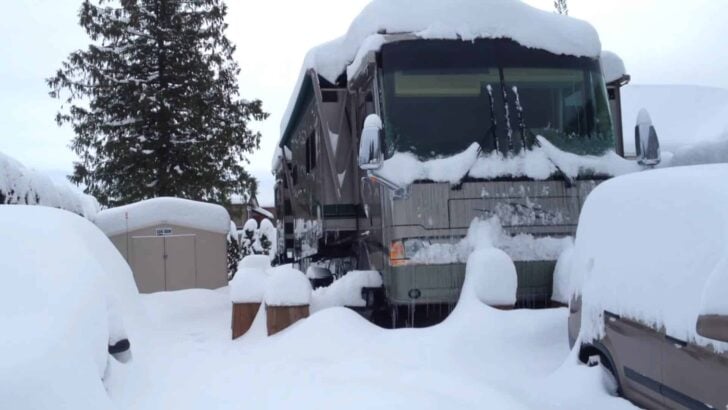
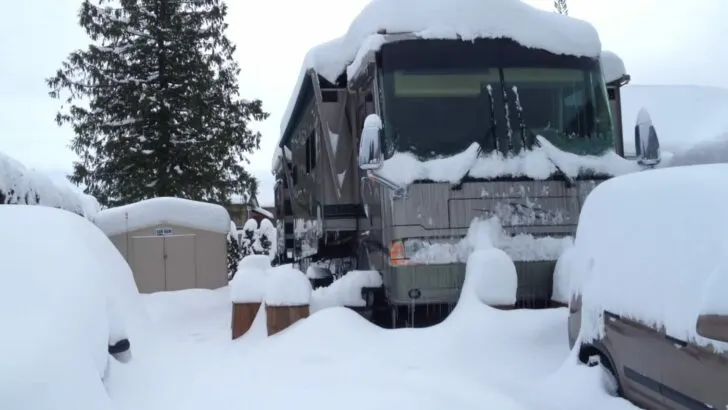
If you store your RV outside, you need to be aware of the impact that cold, snow, ice, and other forces of nature can potentially have on your rig, and how to deal with it.
If you store your motorhome outside, you’ll need to make sure it will be safe from potential damage from trees, falling snow or ice, etc., and you’ll also need to consider the ground on which you park it. Level and solid is best.
Parking a vehicle on grass encourages the formation of rust due to the constant exposure to moisture from the ground. If you live near the ocean, the same is true of constant exposure to the salt air over time.
You’ll also need to consider the tires, depending on how long you’ll be storing the rig without moving it. You may need to chock the wheels, exercise the rig occasionally, and as always, tire covers are a good idea. Speaking of tires, be sure to park them on a barrier of some sort, especially when on asphalt, grass or dirt. Lastly, consider covering your rig to protect it from the elements.
With these considerations in mind, storing your motorhome on your own property is generally a very good option, and certainly the most cost-effective by far.
Storage Facility
There are many storage facilities available all over North America for motorhome storage (and the storage of boats and other vehicles that aren’t used at certain times of the year). These vary in price, security, and structure, but many provide the option of indoor storage, making exposure to the elements less of an issue (although many aren’t heated, which means having to winterize if you’ll be storing during the cold weather months).
But while you won’t need to worry about tree limbs, snow and ice build-up, sun exposure, etc. if stored under cover, you still need to be aware of the possibility of pest infestations. Some storage facilities are better built than others, and some are even heated, but the ability for rodents, spiders, and the like to find their way inside your RV does exist in some facilities. So, take care to pest-proof your rig as thoroughly as possible, and check on your rig periodically while it’s stored.
A great advantage of a facility with covered storage is the lack of exposure to the elements.
The greatest disadvantage can be the cost… but the preservation of the integrity of your RV is important, so if you can afford a covered or indoor storage facility, this option offers a great form of protection for your rig.
Large Self-Storage Containers/Facilities
Large self-storage containers, or large bays at self-storage facilities, may be an option for smaller RVs. These are generally quite safe, and their greatest advantage is that they usually offer good security and protection from the elements while your RV is in storage.


For some smaller RVs, storage containers may be an option, although they can be somewhat costly depending on the region.
Again, a disadvantage here is that rodents and insects can find their way into storage containers, and thus into your RV. If that happens, not only will you have a nuisance on your hands, but rodents can also do a significant amount of damage, especially if the RV is left in the storage area unattended for a long period of time.
Mice can not only create a mess and damage cushions and furniture, but they can also chew on wires and cause serious harm that can be very expensive & difficult to diagnose and repair. Not all storage areas are subject to infestation by rodents or insects, but many are because these creatures don’t need much of an opening to gain entry!
And finally, the cost can be a drawback to all types of storage facilities, including self-storage containers. But if you don’t mind paying the monthly fee, and if your RV can fit into a large self-storage container, this might be a worthwhile option for you. Call around your area to see if any self-store locations offer large enough containers and whether they allow vehicle parking inside (some may restrict it to avoid issues with oil leaks, fire or explosion from fuel or propane, etc).
Campground/RV Park Motorhome Storage
Some RV parks allow long-term parking either in a dedicated area on the property (sometimes fenced and behind gates) or in an area of campsites within the park that are set aside for that purpose. Regardless of which way it’s arranged, in this case your RV will be exposed to the elements, and security is usually light at best. The busier, and more heavily staffed the RV park is, the better off you’ll be.
As with the option of storing your RV on your own property, there are many considerations to be made here. You may be able to park on a level gravel space, but if the storage area is on grass, beware of rust formation due to moisture under the rig, and take precautions to protect your tires.
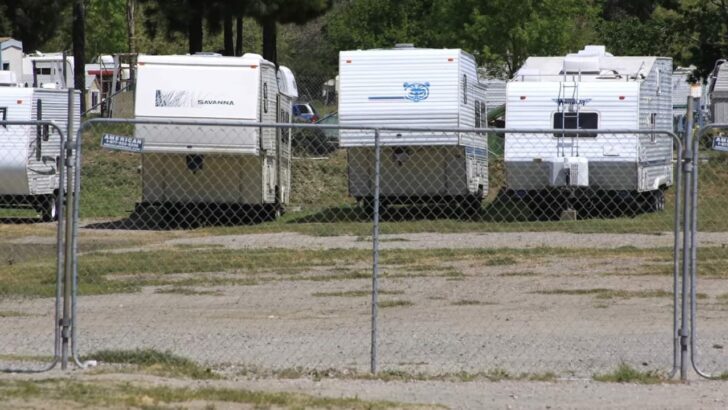
Some RV parks have designated areas for RV storage. There are many things to consider with this type of storage such as exposure to the elements and, in some parks, a lack of security.
Be sure to inquire about the level of security in the park in the off-season, particularly in the storage area of the park. You may want to install security cameras that you can monitor from your smartphone or tablet to keep an eye on your RV (just be aware that those cameras will require their own, dedicated connection to the internet, so plan accordingly).
You’ll also want to make sure your rig is safe from tree limbs above and anything else that might pose a danger to your RV. See our tips below for preparing your rig for this type of storage, including battery care and pest-proofing, two very important considerations with most types of motorhome storage. This brings us to the option of motorhome-specific storage.
Dedicated Motorhome Storage Facilities
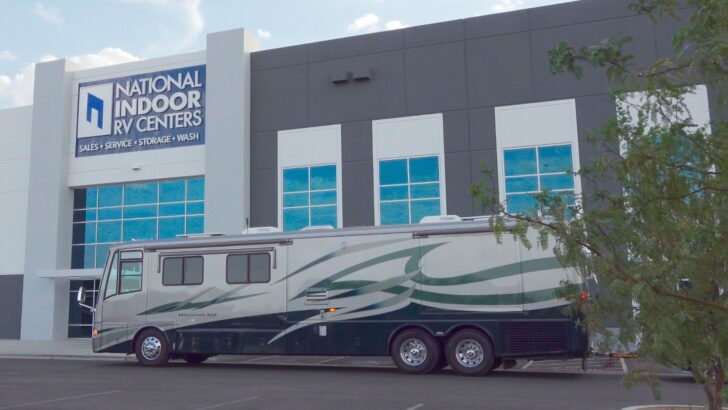
The safest storage option is indoor, high-security, climate-controlled, motorhome-specific storage. It’s the highest-end choice of all, so of course it’s not the least expensive. The 800 lb gorilla in the room when it comes to premium motorhome storage is surely National Indoor RV Centers, or NIRVC for short.
We have considerable personal experience with this awesome company, and we can highly recommend NIRVC’s storage services without reservation. They’ll care for your motorhome as if it were their own, and their indoor facilities are top-notch. And then some. In addition to the security and protection afforded by being indoors, they also provide a 50-amp connection for each RV, ensuring your batteries stay topped up and ready for use.
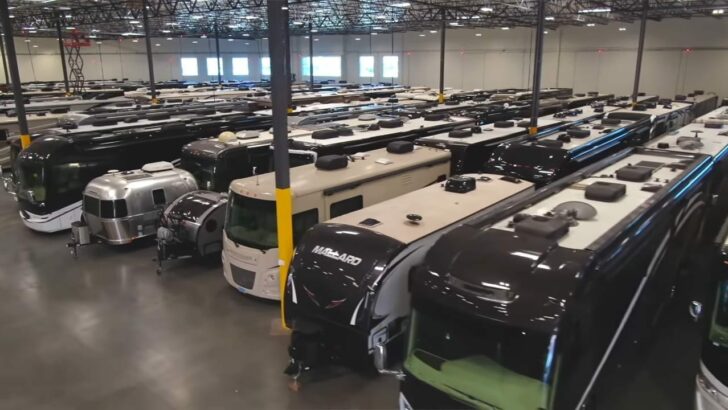
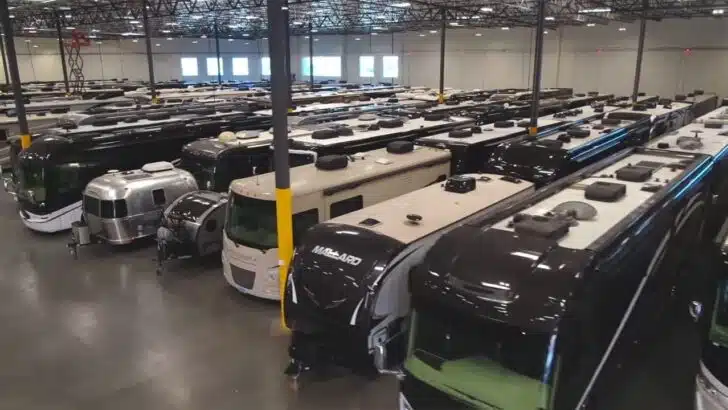
NIRVC indoor storage is top-notch. Every RV is plugged in at all times, and their immaculate, climate-controlled indoor storage facilities equal no winterizing, no rodents, and no worry!
You can get a good sense of the safety and security they offer by watching our video (below) illustrating our experience with NIRVC’s motorhome storage services. This level of storage is, by far, the safest, most secure motorhome storage option available, even beating out most private property (no winterizing, battery issues, or mice)!
There are lots of additional benefits that come with such high-end service. You know what it’s typically like getting your RV out of storage and preparing to use it. Check tire pressures; fill the fresh water tank; check battery levels; turn on the fridge (which of course won’t be cold enough to put food into for hours… or even overnight)! NIRVC does all this for you at no additional charge. Just let them know by phone or online when you’ll be coming in to pick up your rig.
They’ll have your rig ready and waiting for you outside when you arrive. When you return from your trip, you can simply drop your rig off, and NIRVC will park it inside for you and plug it back in. That’s right — valet parking service is included! You can even choose from a wide range of optional services, too, including washing, detailing, and dumping and flushing your holding tanks!
And you’ve probably heard us complain about service appointments before. But since NIRVC also provides full maintenance services, they can simply take care of any repairs or maintenance any time. You don’t even have to be there. THAT’S concierge service.
Really, the only disadvantage of this option is cost. The pricing varies slightly by location (NIRVC has several locations throughout the United States) and is determined by the total length of your RV (mirrors, ladder, tow-bar if you leave it on, etc) which they measure for you when you arrive.
As an example, with our tow-bar attached (but folded up), we measured 44’… which for the Las Vegas location we were storing our RV at meant $490/month. You can check prices on their storage page (just scroll down a bit and click on the green “Click Here To View Our Storage Rates” buttons). Considering all of the safety & security for the RV, and the services they provide, we thought it was very fairly priced. And the peace of mind while we were away was priceless.
So, if you have a significant investment in your rig, the protection offered by a motorhome-specific storage facility like NIRVC may be well worth the cost. If there’s a location near you (they’re opening more all the time) and you want top-of-the-line concierge services, NIRVC is hard to beat.
No Motorhome Storage? Rent it Out When Not in Use
Another non-conventional option for your RV when you’re not using it is to rent it out to other travelers. With this option you’ll make money on the rental, helping to make your RV more affordable, and you won’t need to store the RV as much, thereby saving more money.
The disadvantage of this option, of course, is that strangers will be using your RV. Also, the wear and tear on the RV, the increased mileage, and potential damage are always a consideration.
The following companies can help you to rent out your RV to folks looking to travel by RV without having to buy one:
- RVnGO: https://www.rvngo.com/
- RVShare: https://rvshare.com/
- Outdoorsy: https://www.outdoorsy.com/
- RVezy: https://www.rvezy.com (CANADA)
What’s the Average Cost of Motorhome Storage?
The cost to store a motorhome varies widely by region, type of storage (indoor/outdoor), and by the number and types of services provided by the motorhome storage facility.
Depending on where you live, the size of the motorhome you’re storing, and the amenities you require such as a power hookup or an indoor facility, you could pay as much as $500 per month or more to store your rig. The average is closer to $200 per month, and you can pay as little as $50 for storage in a large, empty parking lot, but you’ll need to be wary of theft or vandalism as well as damage from rodents. (These long-term parking/storage lots are cheap for a reason.)
As usual, you generally get what you pay for with motorhome storage locations. The key is to remember that you’re protecting a significant investment, and paying a little more money to keep it safe and secure can certainly pay off in the end.
If you live in or near a large city or other heavily populated area, you’ll likely have a harder time finding storage and you’ll probably pay more for it as well.
Rural areas may have some different options available… such as a property with an old barn they’ve re-purposed for RV storage. But with this option, you’ll definitely need to be concerned about potential damage from rodents. Storing an RV or any other vehicle in an old barn is a better option if you’re nearby and can check on the rig regularly. You’ll also want to be certain that the integrity of the barn or enclosure is solid.
So, the cost of storage varies widely, but expect to pay anywhere from $50 to $500+ per month depending on the location and type of storage you seek. As with so many things, you generally get what you pay for.
How Do You Store a Motorhome Safely?
Prior to storing your motorhome anywhere, consider the following ideas for long-term storage. Preparations such as these will make your RV storage experience safer and more likely to be a positive one.


It’s a good idea to thoroughly clean your RV before putting it into storage… and a little help doesn’t hurt!
- Clean the RV completely, and be sure to empty the trash. Remove all food and any containers that have previously stored food. This will help to eliminate scents that could lure rodents inside.
- Dry out the RV, relieving it of moisture from cooking, etc. before closing it up for storage.
- Drain and sanitize all tanks. If you’ll be storing the rig in a cold climate, be absolutely certain to winterize the RV. This protects your entire plumbing system. If you’re unsure how to do this, check out instructional videos like ours for details. If you’re not comfortable with this process, have it done by a professional.
- Inflate your RV’s tires to the maximum cold inflation pressure listed on the sidewall. This will help to keep the tire from deforming and forming a flat spot from sitting in one place for too long.
- If you’re parking your RV on grass, bare ground, or asphalt, park it with the tires on top of a solid plastic barrier to ensure that moisture (grass/bare ground) and chemicals (asphalt) don’t damage and prematurely age the rubber of your tires. You can use your leveler blocks for this purpose or, if you don’t have any, you can pick up some cheap plastic cutting boards that will do the job quite well.
- Turn off the propane supply, and power down everything else with the exception of any automatic climate-controlled vents (if you have them), alarms, and security cameras.
- Fill your fuel tank to reduce condensation.
- Tend to your batteries by either: removing them for the duration of the storage; arranging for them to be maintained by solar if you’re in a warm-weather, outdoor environment; or by connecting them to shore power for maintenance by your converter-charger or a battery maintainer appropriate to your application.
- Pest-proof your motorhome to every possible degree that you can. In addition to the tips in the link, this may include setting mouse traps and occasionally checking to make sure rodents have not invaded your RV (as long as you have the ability to routinely visit your rig during storage).
- If possible, set up security cameras in and around your motorhome and monitor them using an app on your smartphone or tablet. This may also include monitoring the condition of your battery bank.
Is Paying for RV Storage Worth It?
If you don’t have a solid, level, secure place to safely store your RV on your property (or on the property of a family member or friend who will keep an eye on it for you), paying for motorhome storage will not only be worthwhile, but likely necessary. If you do have to pay for storage, find the best storage you can afford, because you’ll be investing in the protection of a very significant asset.
And no matter what type of storage you choose for those times when your RV isn’t in use, take care to properly prepare your rig for storage. This will save you time as well as potential headaches and expense when it comes time to remove the RV from storage and take to the road again.
Geek Out with Us Every Week
Join our newsletter to learn about all things RV-related. Every week we offer free tips, tricks, product reviews, and more to our online community of RVers. Whether this is your first time on the road or you’re a seasoned expert, we’d love for you to geek out with us!
Herb
Monday 26th of July 2021
We have available space on our lot to store our 5th wheel, but I have it in a secure storage yard when not in use. The main reason for this is an RV that sits on the lot (suburban) is a visible marker to everyone that passes by when we are gone and the house is unoccupied. We have had friends who keep theirs on their lot, and even though they are in a relatively remote suburban area (low traffic) they have had break-ins to their house while out with the RV (as in "Hey guys!, we're not at home and unlikely to be so for a few nights!"). So while the security of the RV might be good while being stored, security of the house while it is gone is also important.
TheRVgeeks
Monday 26th of July 2021
What a great point, Herb! Thanks for adding that insight.
Dr. Mike
Monday 26th of July 2021
My wife and I agreed not to purchase or first coach until we secured completely enclosed storage for it. Yes, it cost us $300/month but the coach has its own “garage” with security and power and it is located 2 miles from the house. I spray for bugs every other month.
TheRVgeeks
Monday 26th of July 2021
Now THAT'S good planning! Sounds like an awesome situation, Mike!
Scott Floyd
Sunday 25th of July 2021
I appreciate and enjoy your posts. The amount of detail you provide is excellent. I should keep a log of how many times I have avoided issues, and fixed things, by following you and by often printing your posts to carry with me in my Class A. Thank you.
TheRVgeeks
Sunday 25th of July 2021
Thanks so much, Scott. We truly appreciate the kind words. Glad to hear you find our content helpful! Safe travels!