
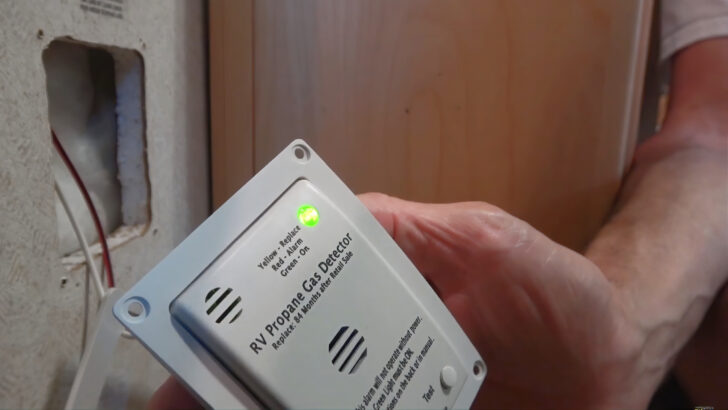
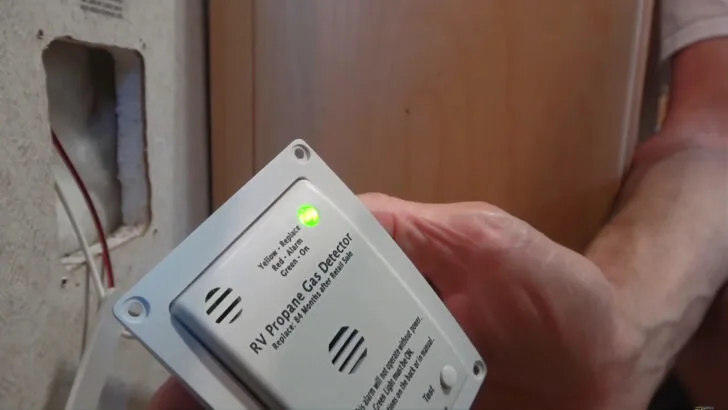
All RVers have different priorities according to their preferred style of RVing. For example, larger holding tanks and a solar system are important to boondockers, but probably not important to travelers who exclusively camp in campgrounds/RV parks with full hookups. But there are a few items that should sit at the top of every RVer’s priority list. Since safety should be high on every RVer’s mind, an RV propane detector is essential.
Because safety is such an important consideration for all of us, we like to make it a priority here on our blog and in our YouTube videos as well. So, today we’re focusing on one of the least expensive and most important items in your rig – an item that could save your life and the lives of your family members – the RV propane detector.
What is an RV Propane Detector?
Let’s start with the basics. An RV propane detector is a device that’s intended to detect a propane gas leak in your RV. When the leak is detected, the device emits a loud alarm or beeping noise to alert everyone inside the rig to the fact that there’s an LP gas leak. This alert can be a life-saving warning.

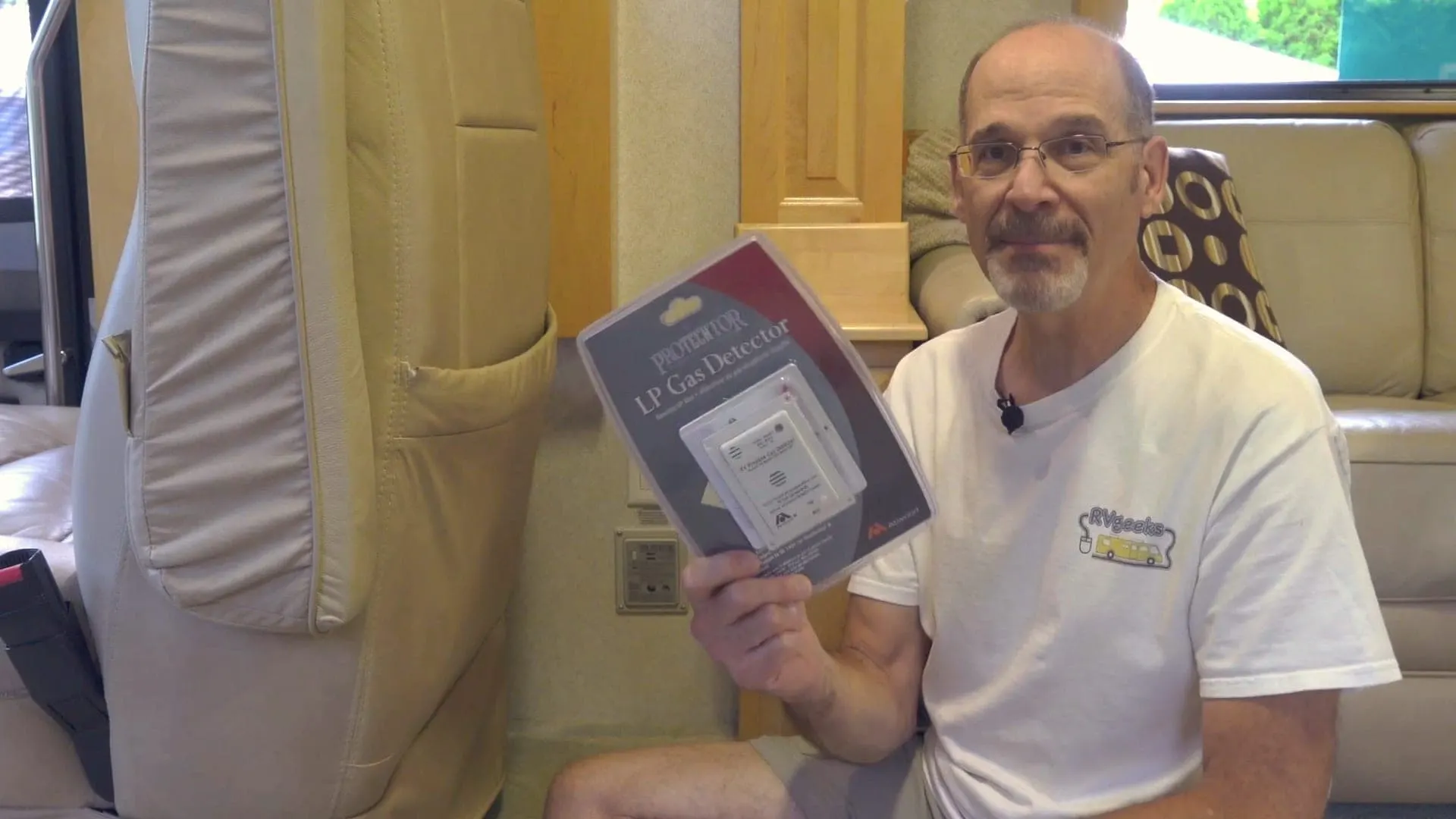
Replacing your RV propane detector could save your life and the lives of your loved ones. What could be more worth the very minor effort and expense?
Because they’re required safety equipment for any vehicle that carries propane on board, they’re usually hard-wired right into your RV’s 12V power supply. That ensures they always have power, as long as your RV’s system is properly charged. Some propane detectors are hardwired to a safety mechanism that disables the supply of propane if the detector goes off (typically on Class A motorhomes where the onboard propane tank is installed in a location where an on/off valve isn’t easily accessible).
Why Every RVer Needs an RV Propane Detector
A working propane detector is not only a requirement for all newer RVs, but it should be a requirement for every rig that is plumbed for propane, no matter how old the rig may be.
There are a number of reasons why every RV must have a properly working propane detector. First, even though gas companies add a chemical called mercaptan to liquid propane to give it a distinct “rotten egg” smell (propane itself is actually odorless and colorless), a propane leak may be slow enough that it might not produce an odor that’s strong enough to be detected early.
Second, not everyone is able to smell the “fragrance” of mercaptan, meaning even a large leak could go undetected. But even if you’re able to detect the smell, because it is not dissimilar to other “rotten egg” odors, you could mistake it for another issue and not realize you have a propane leak.
Or maybe you’re away from your RV and return to a rig that’s become more combustible by the minute while you were away. A spark or a flame could trigger an explosion. So hearing the shrill sound of a propane alarm going off (yes, you should hear it even outside your RV) would alert you to the problem so you could turn off the supply of propane before carefully entering the RV or getting help from a professional.
And the explosion and fire aren’t the only problems. If you’re sleeping and there’s a propane gas leak in your RV, it could kill you before you even know it’s happening, since the odor of mercaptan won’t likely wake you up. While propane isn’t highly toxic, it is an asphyxiant. If you’re exposed to a high enough concentration, it could be fatal.
How RV Propane Detectors Work
An RV propane detector senses and indicates the presence of propane gas in the air. When a certain concentration of gas is detected, the unit uses both an audible alarm and a light to indicate the presence of propane, alerting people in the area to the danger.
You’ll probably notice that your RV propane detector is mounted low down on a wall of your rig. That’s because propane is heavier than air, so in the event of a leak, it tends to accumulate low down near the floor.
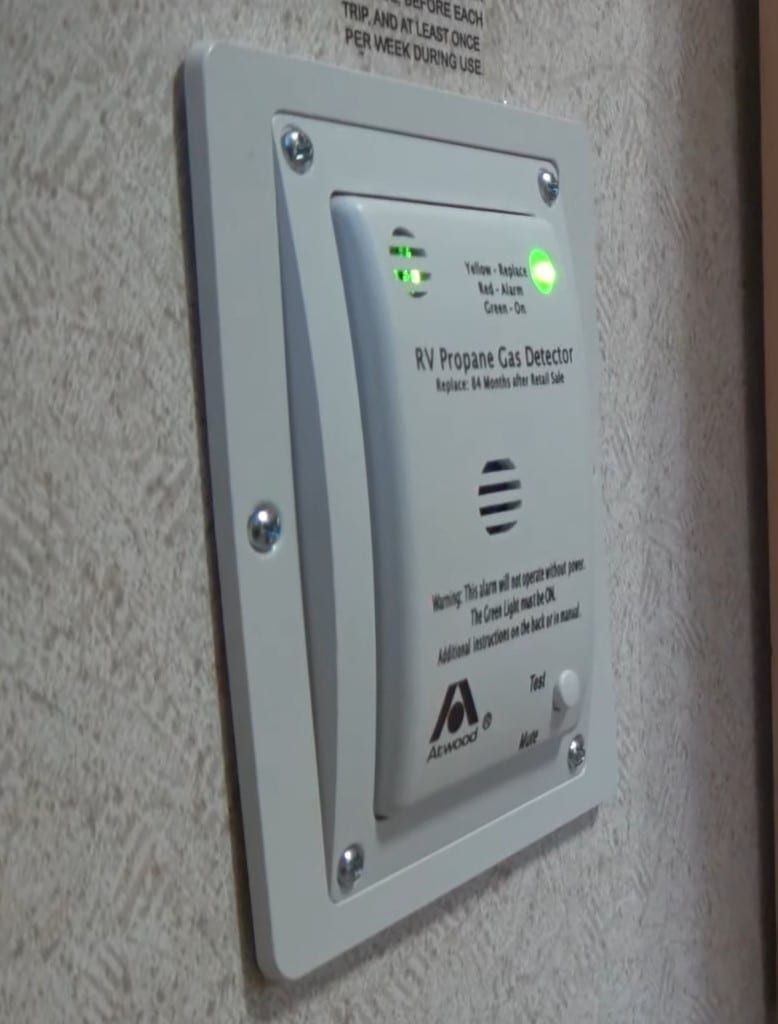
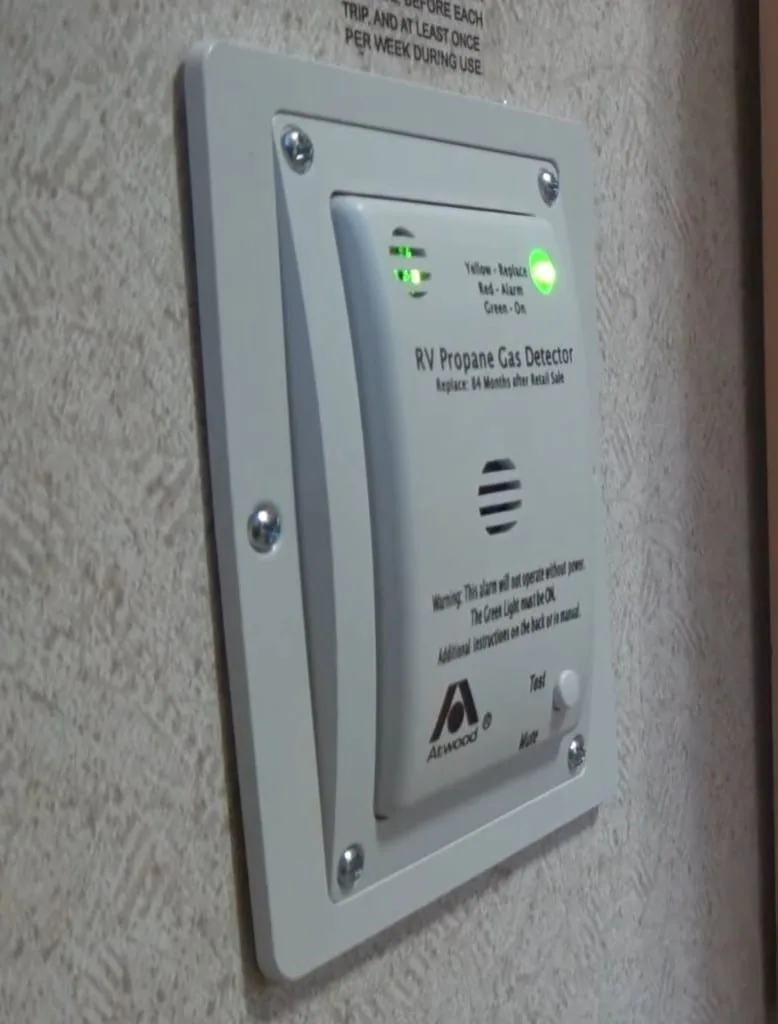
Our RV propane detector uses an alarm and a red light to indicate the presence of a propane leak. A green light tells us the detector is on and working, and a yellow light indicates the need for the detector to be replaced.
How Long Do RV Propane Detectors Last?
Most RV propane detectors last from five to seven years before they require replacement. However, it’s a very good idea to replace your propane detector on a strict schedule so that you don’t forget… and wind up in a situation where it’s been ten years since you’ve tended to yours.
Some propane detectors will beep in a regular pattern when they’re coming near the end of their effective lifetime. Never ignore this warning. It can be tempting to just disable the detector in an attempt to stop the beeping. But if you must do this, be sure to replace it at the soonest possible opportunity.
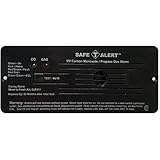
- Double-Duty Alarm Detects Both Gas Leaks And Co Gas Simultaneously
- Reliable 12V Power Means No Missing Or Dead Batteries To Replace. Operating Temperature: minus 40° F To plus 158° F

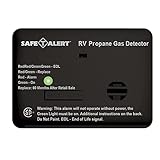
- Includes mounting bracket
- Power Supply and Current Draw: 12 vDC 75mA @ 12 vDC
To help with the process of replacing your RV’s propane detector, please watch this video of our step-by-step guide:
What to Do if Your Propane Alarm Goes Off
Your RV propane detector exists to monitor and indicate the presence of a gas leak. If your propane alarm goes off, you should take the following actions immediately and without hesitation.
Safety First!
Because propane is a combustible gas, the first and most important thing is to be sure you’re safe! You’ll want to:
Turn Off The Propane Supply
Immediately turn off the supply to your propane tank if it’s safe to do so. The shut-off valve is located on the tank itself (the placement of which will vary by RV… towables often have them under a cover on the tongue, while on motorhomes they are often behind a non-lockable basement compartment door). Turn the valve on your propane tank clockwise (to the right) to close the valve.
Ventilation & Fresh Air
Open all of the windows in your RV and leave the RV immediately. Make sure everyone is out of the RV as quickly as possible, pets included. While you’re in the process of getting out, be sure to avoid doing anything that might create a spark or flame!
Identify The Source Of The Leak
If your detector’s alarm shuts off after you’ve turned off the supply from the propane tank and opened all of the windows, this indicates that you do, indeed, have propane leaking somewhere and it should be checked and repaired right away. Don’t turn the supply valve back on until the location of the leak has been determined… and repaired.
The simplest possibility is that you accidentally bumped (or didn’t completely turn off) a knob for one of your stovetop burners. That may have allowed a small leak of propane to continue, unnoticed. And if all of the windows were closed, that leak could accumulate enough propane inside the RV to trigger the alarm. So, before taking your RV in for repair be sure to check that they were completely turned off.
A handheld, instant-read combustible gas detector like this one is a valuable tool to have around:
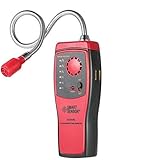
- 1.High Senstivity Quick Respon: Highly sensitive (adjustable) with a quick reaction time, you will be able to detect gas leaks within 10 seconds and...
- 2.Small Detector Super Sensor:A 14-inch flexible probe allows location and detection of leaks in hard-to-reach and confined spacesSix red LED's...
If that simple issue wasn’t the problem, RV refrigerators (that run on propane), water heaters, and furnaces are other likely sources. If they fail to ignite, they could be allowing propane to continue to escape and trigger the alarm. Unless you are extremely comfortable working with propane appliances, we’d recommend having any of these possible sources checked out by a professional.
Don’t let the need/urge to get this resolved cloud your judgment and put you and your family at risk. If you aren’t comfortable handling propane, leave it to the pros. The leak may not be somewhere that you can easily access/repair yourself.
False Alarm? You May Need to Replace Your RV Propane Detector
A false alarm, meaning that the alarm goes off and there’s no actual leak detected, is likely an indication that it’s time to replace your RV propane detector. If you’ve turned off the propane gas supply and opened the windows in your RV and 30 minutes later your detector’s alarm is still beeping, it’s either telling you that something else is wrong or that it’s time to replace it!
The first cause of a “false alarm” on your RV’s propane detector could be that your batteries are low on charge. Since the detector is hardwired into your RV’s 12V power supply, if the batteries are dead, the low voltage could be causing your detector to beep. Use a multimeter and check to be sure your battery voltage is correct, as that could be the real problem.
If that isn’t the problem, try silencing the detector by pressing the “Reset” (or similar) button on the front panel of the alarm. If the fault/condition that caused the alarm to trigger has now been resolved, it should stay off. But if, after a period of time, the alarm continues to sound/beep when you know there’s no chance there’s a leak, it’s time to replace it.
Again, please refer to our video above to follow our easy step-by-step process.
Conclusion
Here’s our appeal to all RVers and to any traveler using propane: Please never take your propane system for granted!
If you carry propane, it deserves your greatest respect. And the best way to illustrate your respect for propane is to install and regularly maintain a working RV propane detector.
And while we’re on the topic of propane, if you’d like to know how to check the level of propane remaining in your tank (built-in or portable), and you don’t have a gauge handy, we’ve got you covered there as well, with this helpful video tip:
Geek Out with Us Every Week
Join our newsletter to learn about all things RV-related. Every week we offer free tips, tricks, product reviews, and more to our online community of RVers. Whether this is your first time on the road or you’re a seasoned expert, we’d love for you to geek out with us!
John Mount
Thursday 7th of December 2023
Always good to refresh ones knowledge on a critical safety item. My question is on the new detector. Since they are dated does their in service date start when manufactured or when they are first powered up. I have found some that have been sitting on store shelves for almost 2 years since manufacture. Thank You, J, Mount
TheRVgeeks
Thursday 7th of December 2023
Good question, John. Unfortunately, it varies. For the unit we used (Dometic/Atwood brand), the 5 year service life begins from the date it is first powered on. But for others, it can be from the manufacture date. So you just have to check for the one you buy to see which applies (and, of course, in the case of a unit that expires X years from date of manufacture, getting one that hasn't sat on a shelf for too long is important).
Scott Floyd
Thursday 22nd of July 2021
Thank you for the reminder. I purchased the detector just now. Very handy to have.
TheRVgeeks
Thursday 22nd of July 2021
No problem, Scott. Glad we could tickle you to take care of this very important item. We let ours go for too long... and were lucky that we didn't have a problem with any propane leaks while our detector was past it's replacement date. We feel much safer now that we've refreshed ours.