


In a recent post, one of our readers asked about the benefit of a dual-axle trailer vs single-axle trailer for hauling with their large SUV. (Thanks Jane!) We answered her question in general, but the differences are considerable.
So, today we’re covering the differences between single- and dual-axle trailers (also called “tandem” or “tandem-axle” trailers), and the pros and cons of each.
- 1) What Is an Axle?
- 2) What Is the Difference Between a Dual Axle vs Single Axle Travel Trailer?
- 3) What Are the Pros and Cons of a Single Axle Trailer?
- 4) What Are the Pros and Cons of a Dual Axle Trailer?
- 5) Dual Axle vs Single Axle Trailer – Which is Better?
- 6) Free RVing Tips, Tricks, Reviews & Giveaways
What Is an Axle?
A trailer’s axle is the bar or rod that extends between a set of wheels (on opposite sides of the trailer) to maintain their position as they rotate. An axle has a shaft or beam to which the wheels attach. The wheels are attached to the axle using bearings that allow them to rotate freely.
A trailer’s axle assembly includes the beam or shaft, the hubs, the hanger hardware, and various suspension components. Trailer axles vary in size and weight capacity based on the different types of trailers, (single axle vs tandem axle, or even triple axle or more).
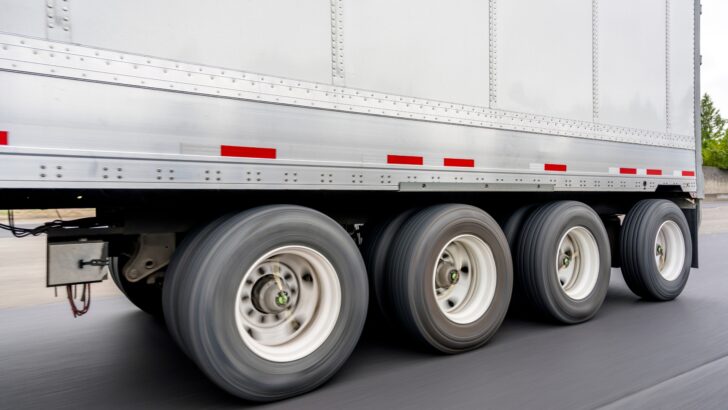

While most campers/travel trailers are single axle or dual axle, some heavy-duty semi trucks can have four or more trailer axles for hauling very heavy loads.
What Is the Difference Between a Dual Axle vs Single Axle Travel Trailer?
The primary factor for RV manufacturers choosing between single axle and dual axle is a trailer’s gross vehicle weight rating (GVWR). As trailers get heavier they need more axles, wheels & tires to support and spread the weight evenly. However, length, weight, and torque are all factors that determine whether a single axle or dual axle configuration is called for.
Many trailers have double axles to accommodate heavier loads. But a longer trailer may require two axles for increased stability while traveling, even if it isn’t especially heavy for its length. Bottom line — single axle vs dual axle travel trailers are generally smaller and lighter.
Typically, the biggest benefit you’ll get from a dual axle setup is an improvement in stability when towing. Dual axles help the trailer to track better and also help to resist sway.
That said, dual axle trailers are heavier (since, again, weight is typically the primary reason for the second axle). Thay’re also more expensive, have more tires to maintain and replace, require somewhat more maintenance, and usually require a wider turning radius. A single-axle trailer will be lighter, so more fuel efficient , as well as easier to maneuver in tight spaces.
What Are the Pros and Cons of a Single Axle Trailer?
Let’s take a look at the major pros and cons of single axle vs dual axle trailers.
Pros
There are several benefits to a single-axle travel trailer.
Lighter Weight
A lighter trailer of a smaller size doesn’t need more than a single axle. Additionally, one axle and only two tires contributes to the lower weight, and better fuel economy. And finally, lighter weight generally means less wear and tear on components.


Single axle travel trailers are lighter weight, easier to maneuver, and only require two tires.
Lower Cost
Smaller, lighter trailers that only need a single axle cost less than larger, heavier ones. And the greater the number of axles, the greater the number of tires (and RV tire covers) you’ll need to buy and maintain.
Less Maintenance
Fewer axles mean fewer components to maintain — fewer wheel bearings to lube & replace, and again, fewer tires to buy.
Easier to Maneuver
A single axle trailer vs tandem is generally easier to maneuver. That’s because larger, longer, dual-axle trailers require wider turns and are less maneuverable in general.
Better Fuel Economy
Whether you have a single axle or dual axle trailer usually figures into the fuel economy you’ll get from your towing vehicle. Single axle trailers contribute to better fuel efficiency while towing partly due to the smaller, lighter size and weight, but also due to less rolling resistance with only two trailer tires on the road.
More Nimble Off-Road
Single axle travel trailers tend to be better for off-road camping especially if the trailer has good ground clearance. That’s not to say that dual axle trailers can’t be great for off-roading, too. We spent a month in lots of hard-core off-road situations in a two-axle Black Series camper. But it had independent suspension, which is a whole ‘nother step up from a solid axle (which is far more common, and mostly what we’re referring to today).
Cons
Despite the numerous benefits of a travel trailer with just a single alxe, there are a few cons to consider.
Less Load Capacity
For travel trailers, less load capacity could translate into lower cargo carrying capacity for water, storage, gear, and other personal effects. Of course, if you’re considering smaller single-axle trailers, you’re probably looking for compact size, and are prepared for lower capacities all around.
Less Stability When Towing
Whether you tow a single or double-axle trailer, stability is important. A single-axle trailer generally offers less stability than a dual axle trailer. This is partly due to weight and, more importantly, to the additional axle and tires. Double the tire-to-road contact area means tandem trailers have more grip on the pavement.
Greater Risk From a Tire Blowout
In the event of a tire blowout, the risk of losing control is greater in a single axle trailer. That’s because if you only have two tires (one on each side) and you have a blowout, there’s no second tire on that side to support the trailer.
That means the wheel of the blown tire is going to drop down and hit the pavement. This sudden drop can cause an almost-as-sudden loss of control.
On the other hand, if you’re towing a tandem axle trailer, a blowout will still leave you with one intact tire on that side. This will usually leave the trailer with enough support to allow you time to bring it to a safe stop.
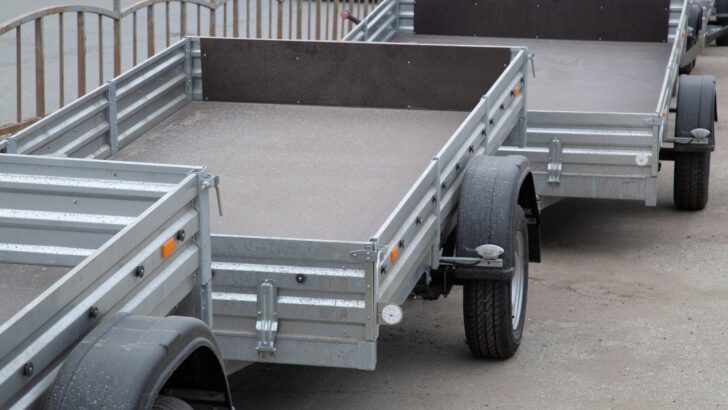
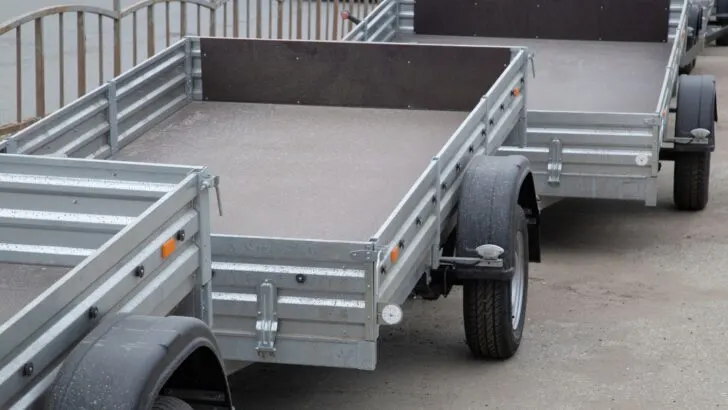
With a single-axle trailer of any kind (like these utility trailers), a tire blowout will seriously compromise stability. With a tandem/dual-axle trailer, you’d still have three tires (two on one side, and one on the blowout/flat tire side) to carry the weight of the trailer and its contents until you can come to a safe stop.
What Are the Pros and Cons of a Dual Axle Trailer?
As is the case with single axle trailers, dual axle trailers (also called double axle or tandem axle trailers) offer both pros and cons.
Pros
Increased Carrying Capacity
Again, dual axles generally mean you’ve got a larger, and increased carrying/load capacity. Some of that capacity will be used up by the larger trailer and extra axle, wheels, and tires. But larger/heavier campers almost always have greater cargo capacity than smaller ones.
Greater Straight-Line Stability
When towing, two sets of tires in line with one another help reduce the sometimes “squirrelly” behavior of a trailer, particularly in windy conditions or when being passed by other vehicles (which of course creates wind, too).
However, it’s important to note that this is also dependent on the trailer hitch height being correct and the cargo weight being properly distributed so that you can help avoid excessive trailer sway.
For more information, please see our posts on proper trailer hitch height and trailer sway control.
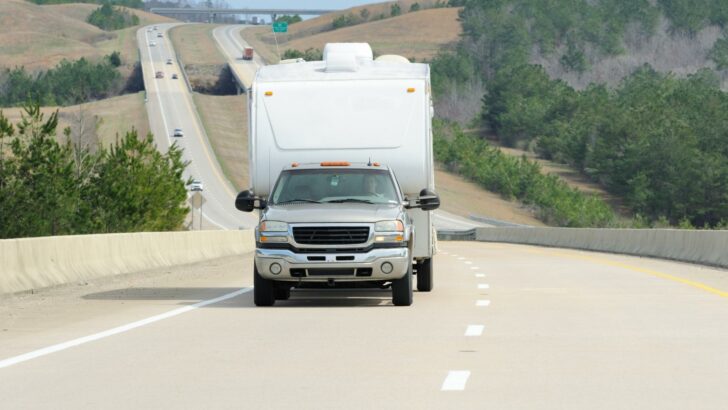
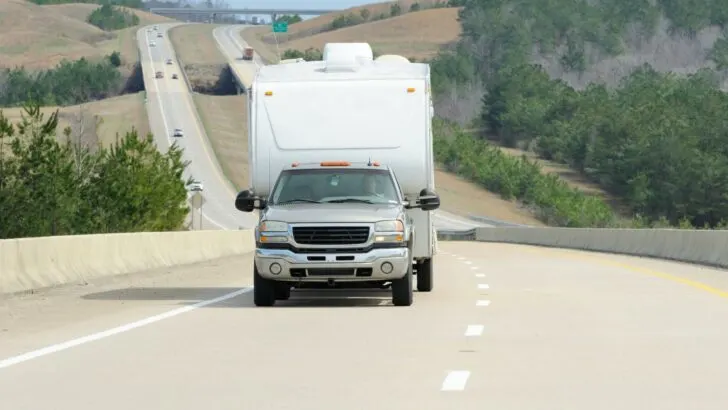
Although two sets of tires in line with one another helps to reduce squirrely trailer sway, any type of travel trailer that’s excessively or improperly loaded can be unstable, causing dangerous sway issues.
Extra Safety
With a dual axle trailer, you’ll have increased safety in the event of a single-tire blowout because the three remaining tires should carry the load long enough to allow you to come to a safe stop.
However… this makes having a TPMS system extra important because without it you might not know a tire is flat. That could lead to a second blowout due to the remaining tire now being overloaded and continuing to drive on it.
For important information on tire pressure monitoring systems, see our post RV TPMS – What it is and Why You Need It.
Improved Braking Redundancy
Many people believe dual axle trailers offer better braking in general, but it really depends on the weight per tire/wheel and the braking capacity of the brakes.
So, it’s not universally true that a tandem axle always offers better braking. However, a dual-axle trailer offers the benefit of braking redundancy, meaning that if one brake fails, three other brakes are still available. It also offers twice the tire contact area on the road surface for greater braking traction.
Cons
Dual axle trailers generally have a few disadvantages to consider as well.
Higher Cost
Larger, heavier trailers cost more to purchase and maintain. There are twice as many axles to lube, twice as many components to maintain, and twice as many tires to replace. They also require larger, more expensive towing vehicles.
Increased Weight
Again, due to the increased weight of a dual axle trailer, a larger towing vehicle is required to tow it.
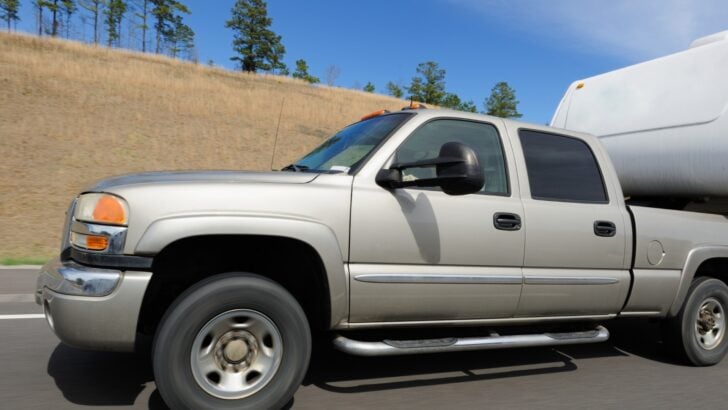
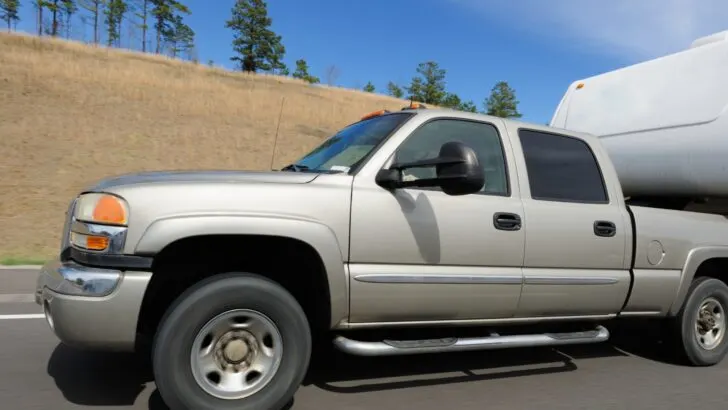
Dual axle trailers generally require a larger, heavier, more expensive towing vehicle, like this big pickup truck, shown here towing a 5th wheel.
Less Maneuverable
Because dual axle trailers are generally longer and require a wider turning radius, they’re less maneuverable in tight spaces. A single-axle trailer is likely your best choice if you want the most nimble trailer and are okay with smaller space and lower capacities.
More Sensitive to Being Off-Level When Hitched
If the trailer hitch is too high or too low, the weight will be shifted to the front or rear axle. This could lead to a dangerously overloaded tire that could blow out. If you’re unfamiliar with how to level a travel trailer the right way, read our post about this critical topic.
Dual Axle vs Single Axle Trailer – Which is Better?
As you can see, there are pros and cons to both single and dual-axle trailers, so there’s not really one clear winner.
While it’s generally true that a dual axle trailer handles better when towed, the added costs, decreased maneuverability, and need for a larger, more expensive, less fuel-efficient towing vehicle means that a smaller, more nimble, lighter single axle trailer has more appeal for many RVers.
In the end, manufacturers decide how many axles a trailer has based on the weight, length, and a few other factors. So the consumer’s choice is limited and comes down to what’s most important to you in terms of weight, maneuverability, cargo carrying capacity, size, etc.
Free RVing Tips, Tricks, Reviews & Giveaways
As 20-year full-timers, we share everything we’ve learned about RVing over the years. Join our online community to receive a wealth of great RVing knowledge delivered daily to your inbox.
Whether you’re a new RVer or a seasoned full-timer, you’ll love the wide range of RVing topics we cover. Don’t miss a single article or any of our famous Giveaways. Subscribe to our newsletter today!
Bruno
Tuesday 24th of October 2023
In general at what gvwr do trailer manufacturers go from a single axel to a tandem axle?
jadatis
Friday 6th of October 2023
Con of tandem-axle trailer is more sensitivity to alignment problems, which results in unequal wear on tires.
And question is if an equalizer also equalises the weight difference when towbar is too high or low, or only takes care the wheels stay on the ground.
Rick Dowling
Friday 6th of October 2023
When you’re pulling your horse trailer with two horses and three cats it’s nice to have two axles when one of your tires tries to pass you on the highway. Ask me how I know. 😊