
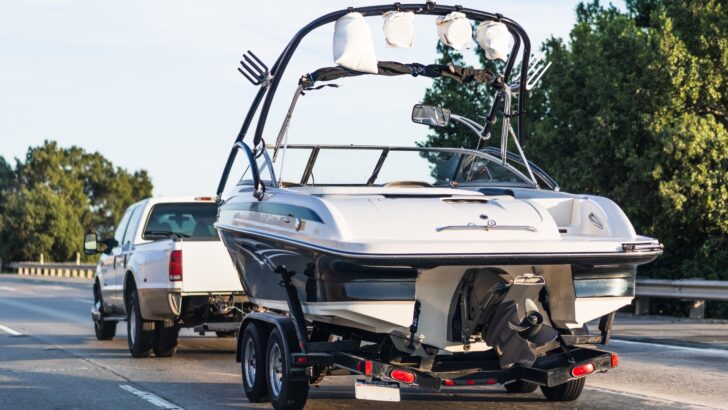

In the world of trucks and towing, few innovations have had as big an impact as Tow/Haul mode. Understanding Tow/Haul mode and how and when to use it can make your towing experience safer and better overall.
Having towed a vehicle ourselves for more than 20 years, we take towing safety seriously, as noted in our posts on trailer sway control and related topics such as tongue weight.
Today we’re taking an in-depth look at an towing enhancement. We’ll discuss what Tow/Haul mode is, how it works, and when to use it. Let’s find out why truck enthusiasts, especially those who haul large, heavy utility trailers or travel trailers & 5th wheels, consider it a game-changer.
- 1) What is Tow/Haul Mode?
- 2) What Does Tow/Haul Mode Do?
- 3) Why Is Tow/Haul Mode Important?
- 4) When to Use Tow/Haul Mode
- 5) How to Activate Tow/Haul Mode
- 6) Can I Engage Tow/Haul Mode While Driving?
- 7) Should I Use Tow/Haul Mode on the Highway?
- 8) Can You Drive In Tow/Haul Mode All the Time?
- 9) Does Tow Haul Mode Increase Towing Capacity?
- 10) When Should the Use of Tow/Haul Mode Be Avoided?
- 11) Free RVing Tips, Tricks, Reviews & Giveaways
What is Tow/Haul Mode?
Tow/Haul mode is a special driving mode found in many modern trucks and larger SUVs, particularly those designed for heavy-duty towing and hauling.
In a nutshell, this specialized mode enhances a vehicle’s performance and safety when towing heavy loads. It makes adjustments to the vehicle’s transmission, engine, and braking systems to optimize performance while towing.
What Does Tow/Haul Mode Do?
When you engage Tow/Haul mode, several adjustments are made to the way the truck/SUV operates. Following are the areas where it makes changes to a vehicle’s operation, how they work, and why they’re helpful:
Transmission Shift Points
A change in transmission shift points is a key way this special feature improves towing. During regular driving, gear shifts happen earlier to maximize fuel efficiency.
In Tow/Haul mode, the transmission holds on to the lower gears for longer. This provides more power and torque to the wheels, helping the truck or SUV gain or maintain speed when pulling a heavy load. This is especially helpful when climbing steep hills/grades.
Engine Performance
Tow/Haul mode also alters engine performance, where an increase in throttle sensitivity can deliver more power more quickly. This helps maintain speed, especially when towing uphill or when you need to accelerate quickly while hauling a heavy load.
Engine Braking
When pulling a heavy trailer, controlling your speed on steep downgrades can be difficult. Tow/Haul mode engages engine braking, using the engine’s compression to slow the vehicle down without solely relying on the brakes. This reduces brake wear and heat buildup, preventing or reducing brake fade. It also makes driving down steep hills much more relaxing… and much safer.
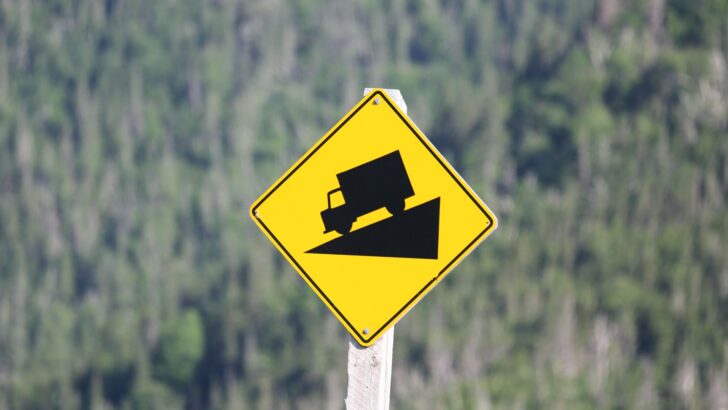

Tow/Haul mode is helpful when towing a heavy load both uphill and downhill.
Stability Control
In some vehicles, Tow/Haul mode can adjust the stability control systems, providing improved handling and traction during towing. This allows the vehicle to remain stable even on uneven terrain or in challenging weather conditions.
Towing Alerts
In some trucks/SUVs, Tow/Haul mode can provide alerts or warnings on the instrument panel to make the driver aware of important information including excessive trailer sway or high transmission temperatures.
Here’s an overview from a RAM truck owner as he drives:
Why Is Tow/Haul Mode Important?
There are a number of reasons why this can be so important for owners of trucks or large SUVs who regularly tow heavy loads.
Improves Safety
Tow/Haul mode contributes to a safer towing experience by providing better control and stability overall. The risk of accidents caused by a loss of control or overheated brakes is reduced through adjustments to transmission shift points, improved engine performance, and improved engine braking.
Reduces Wear & Tear
Because tow haul mode distributes the workload more evenly between the engine and brakes, it helps to prolong the life of these important components. As a bonus, it saves money on maintenance and repairs over time.
Improves Performance
Tow/Haul mode improves the performance of the towing vehicle by delivering the extra power and torque required to take on steep inclines and challenging terrain. It can also prevent the potential for transmission overheating or failure due to the excessive shifting that could occur without it.
Enhances Fuel Economy
There’s bound to be some debate on this one and it’s clearly counterintuitive because, in general, a vehicle uses more fuel when Tow/Haul mode is engaged (higher RPMs, etc.).
However, by optimizing the engine’s performance, it’s possible that fuel efficiency may be improved when towing heavy loads because it prevents the unnecessary gear shifts that occur in regular driving mode.
When to Use Tow/Haul Mode
Generally speaking, you should use this great feature whenever you’re towing a large trailer or hauling a heavy load.
You may not need it if you’re pulling a small utility trailer or transporting light cargo. But you might want to use it even when towing a light load if you’re traveling in hilly terrain.
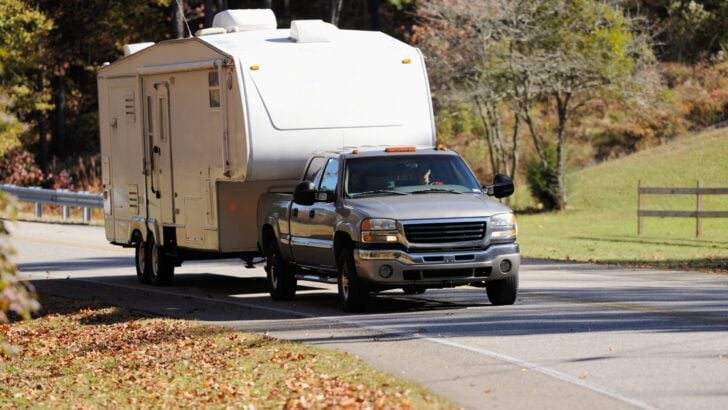
Tow/Haul mode is great for towing heavy loads. Though it may not be needed when towing light loads, it can still be helpful in hilly areas.
How to Activate Tow/Haul Mode
In most vehicles, engaging and disengaging Tow/Haul mode is as simple as pressing a button or flipping a switch on the dashboard, center console, or shift lever. Once it’s engaged, you’ll typically see an indicator light confirming that it’s active.
There are likely differences in how to activate the mode and in recommendations for use based on the brand of the truck. Be sure to check your owner’s manual for instructions and recommended uses.
Can I Engage Tow/Haul Mode While Driving?
Tow/Haul mode can be activated at any time, including as you’re driving. But again, just in case your specific vehicle has other restrictions, always defer to the owner’s manual. After all, nobody knows your vehicle better than the manufacturer.
Should I Use Tow/Haul Mode on the Highway?
Using tow haul mode on long stretches of highway driving on level terrain (or even for everyday driving when not towing) is typically unnecessary and may reduce fuel economy.
In these situations, you can usually leave it off unless you find that your truck is hunting for gears or lugging. But even during highway driving, if you’re going uphill or downhill, go ahead and activate tow haul mode.
Can You Drive In Tow/Haul Mode All the Time?
You can drive with tow/haul mode active all the time, and some drivers choose to do just that. While it’s unlikely to harm your vehicle in any way, you’re likely to lose some fuel economy by doing that.
Some drivers feel they get better performance and a better driving experience overall when tow haul mode is engaged. So they like driving with it on all the time. Driving in hilly areas is where you’re most likely to see the greatest benefit of doing that.
Does Tow Haul Mode Increase Towing Capacity?
No! Tow haul mode does not increase a vehicle’s towing capacity (or load capacity). Although there are benefits to your vehicle’s drivetrain when you’re towing heavier loads, tow haul mode does not increase the amount of weight you can tow or carry.
To avoid putting yourself and those around you in danger, it’s important to stay within a vehicle’s rated towing capacity.
When Should the Use of Tow/Haul Mode Be Avoided?
It’s best to avoid using tow haul mode when traveling in icy or very slippery road conditions. When it’s in use, the amount of engine braking increases, which could cause a skid on slick roadways.
Free RVing Tips, Tricks, Reviews & Giveaways
As 20-year full-timers, we share everything we’ve learned about RVing over the years. Join our online community to receive a wealth of great RVing knowledge delivered daily to your inbox.
Whether you’re a new RVer or a seasoned full-timer, you’ll love the wide range of RVing topics we cover. Don’t miss a single article or any of our famous Giveaways. Subscribe to our newsletter today!
Ross Holbert
Thursday 30th of November 2023
Any time I'm pulling my 5th wheel I use tow haul. My RAM 3500 also has exhaust brakes. I haven't found any advice on if I can use tow haul mode and exhaust brakes at the same time. I'm taking a trip through Kentucky and Tennessee next year, so I'm sure there will be some pretty steep and long hills. Any advice would be appreciated.
Judy Bowen
Saturday 7th of October 2023
Recently completed a 12,000 mile trip from west to east in US and back thru the Canadian provinces with a 30 ft Class C and used T/H frequently. Was getting 10.5 mpg…up from usual 9. Loved what it did in the mountains!