


The wide variety of RV floor plans that are available for nearly every type of rig these days can make choosing the best floor plan for your RV lifestyle daunting. Knowing what will suit you best before you have the opportunity to live in it is challenging at best. Making the right choice among the wide array of RV floorplans is super important when you’re making a major investment in a recreational vehicle.
So, in today’s post, we’re giving you 10 key things to consider when deciding on an RV floor plan.
How to Choose the Best RV Floor Plan for Your RV Lifestyle
Whether you’re a full-time RVer, a snowbird, a weekend warrior, or any type of RVer in between, your choice of floor plan can impact your family’s overall comfort level which will, in turn, affect your enjoyment on the road.
To make the best decision with your RV lifestyle in mind, begin by considering your unique needs and preferences, including the following 10 factors.
Travel Style
Your travel style and purpose are key factors in choosing the ideal motorhome, fifth wheel, or travel trailer floor plan. For example, if you’re a solo traveler or a couple with a small pet heading out for summer weekend camping trips, you may find a smaller RV with a compact floor plan sufficient.
On the other hand, if you have a larger family, plan to travel with guests, or live in your RV full-time, then you may be happier with a spacious floor plan with separate sleeping and living areas.
And if you intend to travel with recreational gear like an ATV, jet ski, motorcycle, etc., you’ll likely want to consider a toy hauler.

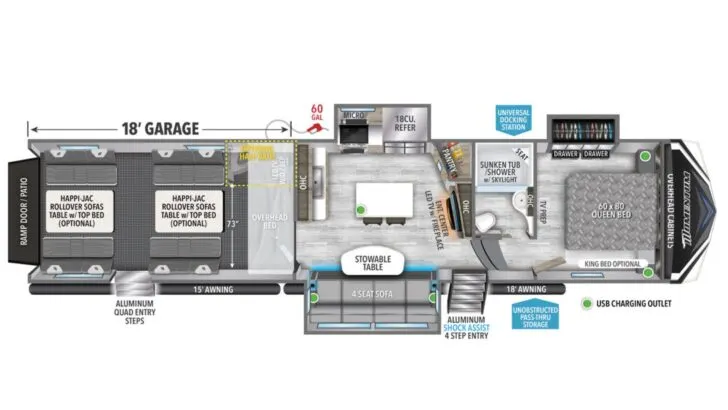
This RV floor plan – a Grand Design Momentum M-Class fifth-wheel toy hauler – shows the large garage that allows you to carry “toys” like ATVs, motorcycles, personal watercraft, and more. (Photo source: Grand Design)
When people ask for our thoughts on RV size and floorplan, we always suggest buying the smallest RV you think you can be comfortable in. Bigger isn’t always better, because larger rigs are more expensive to both buy and maintain, are harder to maneuver, and may not fit in smaller campgrounds or campsites.
For some travelers, large Class A motorhomes or 5th wheels are the perfect fit. (Case in point, see our post on diesel pusher motorhomes.) But if you can be happy traveling in a smaller rig, there are many advantages to doing so.
Sleeping Arrangements
Consider how many people will be sleeping in the RV and what type of beds or sleeping areas you need. As you’re thinking about this, consider whether you might be traveling with grandchildren or other family members or friends in the future.
Some RVs come with a master bedroom, bunk beds, convertible sofas, or convertible dinettes. If you have children, grandchildren, or frequent guests, planning your designated sleeping areas as you’re choosing an RV floor plan can be very helpful. How much space and privacy does each person require to be comfortable?
The grandkids may be fine with sharing sleeping space with friends or relatives of any age or gender. Grandma? Maybe not so much.
If you travel full-time or frequently, it’s especially important to consider your own sleeping comfort and privacy. For example, you may want to look at floor plans that include things like a king-size bed or a bunkhouse model.
Kitchen & Dining Area
When you’re thinking about what’s important to a floor plan for your RV, consider the layout and size of the kitchen as well as the dining area. If you enjoy cooking, look for a floor plan with a well-equipped kitchen and sufficient counter space. Also, consider the dining area, how you’ll use it, and how many people can sit comfortably.
In smaller RVs, dinettes or dining tables often pull double duty. Will you need to work at the dining table? Do you have kids who’ll need to do schoolwork or arts & crafts? Consider all the ways you’ll need to use the dining area in addition to meal times and social gatherings.
If space in your RV becomes an issue for working, remember that there are ways to enhance your ability to work on a sofa, outside, or even on a bed. For example, lap desks can offer a space to write or work on a laptop computer or tablet.
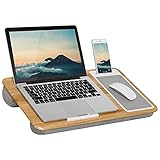
- Spacious Design: Measuring 21.1" wide and 12" deep, our lap desk comfortably fits most laptops up to 15.6". Extra room for accessories ensures...
- Enhanced Functionality: Packed with handy features, including a 5x9" precision tracking mouse pad and a built-in phone slot for seamless work or video...


- Dimensions: The top of the Designer Lap Desk is large enough for a 15.6-inch laptop and small enough to be easily portable. The solid surface measures...
- Added Features: The integrated phone slot keeps your phone handy and nearby for calls or meetings. The elastic band at the corner of the desk holds...
Bathroom Facilities
Depending on the size of your RV, an RV bathroom can range from a compact RV wet bath to more than one spacious bathroom.
Full-time RVers often prefer larger bathrooms, or more than one. Occasional travelers may be content with more compact options. When choosing the best RV floor plan for your family, consider your preferences and needs for bathroom space and privacy.
Storage Space
The amount of storage space on the interior and exterior of an RV is often overlooked when choosing an RV floor plan. But take it from us (with 20+ years of living full-time on the road): RV living requires good organizational skills. Having sufficient storage space for your style and duration of travel can make life on the road so much easier to manage.
Regardless of the size of the RV you’re buying, focus on floor plans with as many spacious cabinets, closets, and exterior storage compartments as possible to accommodate your gear.
For some good organizational ideas, see our post on RV storage ideas.
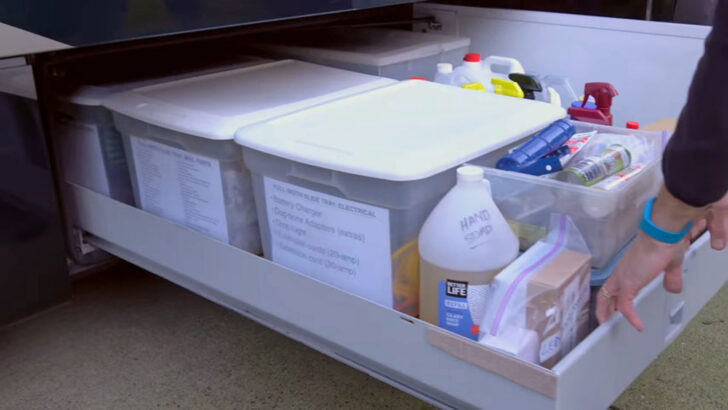
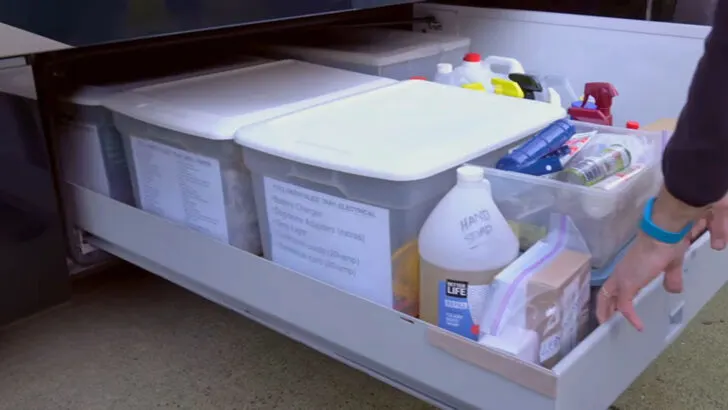
Living in an RV calls for some heavy-duty organizational skills so that when you need something, you’ll know right where to find it.
If you want to know how we’re almost always able to find things on board our rig, check out this video:
Slide-Outs — Has An RV Got Them? If So, How Many?
This one may be a bigger deal than you think. You probably know that slide-outs are extensions that expand the interior living space of your RV when it’s parked. They can really increase the space inside a rig, but as we note in our post on RV slide-outs, they have their share of pros & cons.
When deciding whether to purchase an RV with slide-outs, keep a couple of important points in mind.
First, slide-outs add to the weight of an RV and they also add to your maintenance concerns.
Maybe even more important, if you do decide you’d like an RV with slide-outs, be sure the layout of the rig works for you with slides IN as well as OUT. There are many floor plans with bad arrangements in this regard, making it difficult or even impossible to get around inside the RV when the slides are retracted/in.
This is something you want to know before you buy an RV. Avoid buying a rig that you’ve only been on board with the slides extended. Always ask to tour the rig with all slides retracted so you’ll have a good grasp of the space that’ll be available whenever you can’t extend your slides.
This can be very important if, for example, you’re overnighting in a Walmart or other parking lot or at a rest stop, since you should avoid putting your slides out in those situations whenever possible. (See our post Can You Camp In Walmart Parking Lots? for more information.)
Interior Layout
We suggest that the top three most important considerations when RV shopping are Floorplan, floorplan, floorplan! After you figure out the size range you’re interested in, there is absolutely nothing more important than floorplan.
The interior layout of your RV impacts flow and functionality. Look carefully at the layout and consider how well the various areas are set up to figure out if it suits your needs.
For example, some travelers prefer distinct rooms with private spaces, while others prefer an open layout that connects the kitchen, dining, and living areas.
Size and Maneuverability
The size of an RV and its maneuverability are crucial factors to balance when you’re considering any rig. Large RVs such as Class A motorhomes and big 5th wheels offer much more living space. However, they can also be challenging to maneuver, especially in tight campgrounds or on narrow roads and city streets. (Check out our posts on backing up a motorhome and how to back up a trailer.)
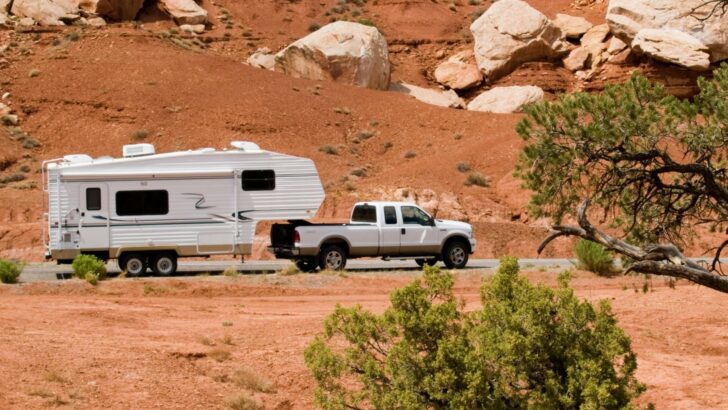
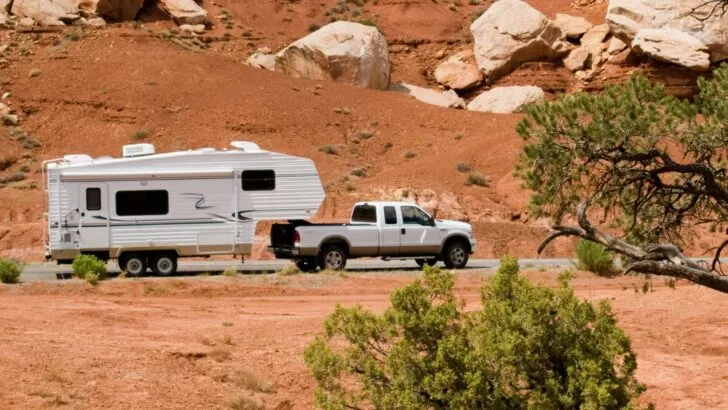
Maneuvering narrow roads or city streets, or backing into a tight campsite can be challenging in a larger RV.
Smaller RVs are easier to drive and park, but they also have less interior space. It’s an important balance to consider when choosing an RV that aligns with your travel plans and your comfort level while driving and parking.
This is yet another reason why we always advise people to choose the smallest RV in which they think they can be comfortable. Not only do you need to be comfortable living in your home-on-wheels, but you also need to be comfortable driving it down the highway, maneuvering it in tight spaces, and backing and parking it.
With large RVs, you need to be especially good at things like how to adjust RV mirrors and how to drive an RV with off-tracking and rear overhang. With smaller RVs, the learning curve is considerably less as is the need for space when maneuvering and parking.
Weather Considerations
Many people, especially those who are new to RVing, might not consider this when looking at potential new RVs. Consider the type of weather you plan to travel in and what will be important in all types of weather in those areas.
For example, if you plan to travel in extreme weather conditions (very hot or very cold or both), consider the rig’s insulation rating, and its heating and cooling capabilities.
Some RV floorplans, with features like double-pane windows, insulation upgrades, and very efficient climate control systems, are better suited to four-season camping.
Budget
And as always, budget is a key factor when selecting an RV floor plan, so you’ll need to consider both build and price.
Larger, more luxurious rigs come with a higher price tag and are generally more expensive to operate and maintain. Determine how much you can comfortably spend on your RV, balancing your desires and preferences with your financial comfort level.
In general, your travel style and your personal needs and preferences should guide your choice of RV floor plans. It’s always best to work this out in advance and carefully consider factors such as those laid out above when seeking the perfect RV floor plan for your home on the road.
A ways back we made the following video to share how well (and why) our RV’s floorplan worked for our needs, even when we have guests on board. Stay tuned to the end of the video for some special surprise guest stars!
Free RVing Tips, Tricks, Reviews & Giveaways
As 20-year full-timers, we share everything we’ve learned about RVing over the years. Join our online community to receive a wealth of great RVing knowledge delivered daily to your inbox.
Whether you’re a new RVer or a seasoned full-timer, you’ll love the wide range of RVing topics we cover. Don’t miss a single article or any of our famous Giveaways. Subscribe to our newsletter today!
Neal Davis
Tuesday 31st of October 2023
These daily installments are extremely well done, giving the reader an easily understood review of a common question or problem along with a systematic presentation of information pertinent to the reader making an informed decision. The order of presentation does not imply order of importance; the reader should choose that. I do think that manufacturer is the paramount consideration. An RV that hits all 10 points for a buyer but is made by a manufacturer with a poor reputation for quality is a high-risk purchase. I settled on Newmar because I think that they produce the best non-bus conversions available. Once that was settled, then we honed in on models, floorplans, tank sizes, and other features in light of our travel style and budget. Having said all that, thank you for another excellent presentation of an aspect of RVing!
Betty
Monday 30th of October 2023
This another very good article! I’ve been a full time traveler for 10 years now made more enjoyable by your great posts. So a heartfelt thank you. But before full timing I traveled 6 months a year. Then a concern for me was where to park the Rv the other 6 months.
TheRVgeeks
Thursday 2nd of November 2023
Awww... thanks so much, Betty! Love the idea that going full time could be the result of not having a place to park/store the RV! 😉
Steve
Monday 30th of October 2023
One floor plan definitely does not fit all. We love certain features that upon research others hate. Good thing we are not buying for them! With over 25 years of RVing we pretty much know what we like. Kitchen entry, park side windows for ocean views, roomy bed and bath. And as you say, less size.