

How long do RV tires last? There’s lots of misinformation out there, with many RV owners trying to distill the answer down to one easy-to-remember number. But is it 4 years? 6? 10? Is mileage important? How about tread depth?
Does it matter what type of RV we’re talking about? For instance, what if you want to know how long trailer tires are good for? Is the answer to how long trailer tires last the same as it is for how long motorhome tires last?
The lifespan of RV tires can be a complex topic. But it’s super important, which is why this post is dedicated to answering questions about tire lifespan.
How Long Do RV Tires Last?
When asking how long camper tires last, there are a number of variables to consider. Knowing when to replace your RV tires is super important. But can you simply use a hard and fast number of years to decide when it’s time to replace them? The answer is “No.”
For example, for towables, it’s not uncommon to hear people claim that you should replace your tires every 3-5 years. And for motorhomes, 5-7 years is commonly quoted.
But we’ve safely run our motorhome tires for as long as 10 years. How did we do that?
There are numerous important things to consider where your RV tires are concerned. Factors like the brand and type of tires, load capacity, proper inflation, knowing how to identify signs of wear, professional inspections, and manufacturer’s guidelines, can all figure into the answer.
With passenger car tires, we’re used to the idea that tread wear is what indicates that it’s time to replace a tire. When they get below the minimum tread depth, it’s time to pitch them. But for most RVs, that’s not the case. Most RVers just don’t drive enough miles to wear the tread out before it’s time to replace their tires due to other considerations. A tire with plenty of tread may actually be worn out and dangerous to keep in service.
Rather than tread depth, RV tires are more likely to need to be replaced due to factors such as weather, dry rot, storage conditions, and conditions of use (load, speed, tire pressures, maintenance, etc.) that the tire has been subjected to throughout its life.
The most common reason RV tires need to be replaced is because they’ve aged out… often long before they wear out. This is why it’s so important to understand how to properly maintain and inspect your tires so you’ll know when it’s time to replace them.
Regardless of brand, there isn’t a single number that’s correct to use because it depends on so many factors. So, trying to reduce your RV tire’s lifespan down to one hard-and-fast rule can be a big mistake. And it could put you at greater risk because you don’t think you have to pay attention to your RV’s tires until that time has elapsed.
What Factors Determine When It’s Time to Replace Your RV Tires?
Let’s take a look at some important factors that come into play in determining how long RV tires last, and how you can keep your tires running safely for longer. Even though safety is always number one, waste is also a factor to consider. We’re not in any way advocating that a tire should be run beyond its safe useful life. But we’re also not fans of wasting money by tossing perfectly good tires into a landfill when they may have years of useful life left.
Manufacturer’s Recommendations
First, start with the recommendations from your RV’s tire manufacturer. For instance, we always ran Michellins on our motorhome. So we always placed our trust in Michelin to know their tires best. Here’s what Michelin says about the lifespan of their RV tires:
“In addition to regular inspections and inflation pressure maintenance by consumers, it is recommended to have RV/Motorhome tires, including spare tires, inspected regularly by a qualified tire specialist, such as a tire dealer, who will assess the tire’s suitability for continued service. Tires that have been in use for 5 years or more should continue to be inspected by a specialist at least annually.”
They follow up by saying “Michelin recommends that any tires, including spare tires, should be replaced after 10 years of service, even if they have not reached the legal wear limit.” (our bold & italics)
Michelin itself says that if all other tire care requirements are met, 10 years of service is the maximum… but is fine. That’s how we were able to safely, legally, and sensibly get 10 full years of use out of most of our tires. If interested, you can read Michelin’s Technical Bulletin on the topic here.
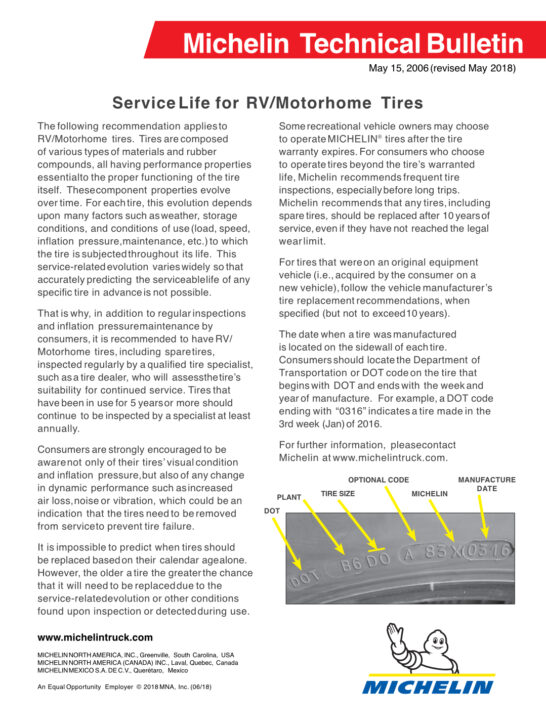
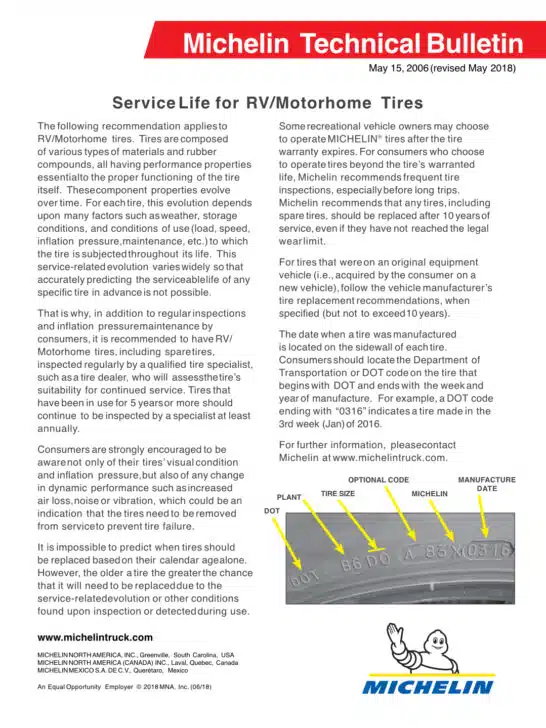
Click the image above to view a PDF of Michelin’s Technical Bulletin about RV Tire Service Life.
Some commenters have said that we should pitch all of our tires after 7 years, no matter what kind of RV or tires we had. Considering that we carefully followed every single requirement for tire maintenance, care, and inspection, and our huge tires usually cost around A THOUSAND DOLLARS EACH, we placed our confidence in Michelin’s guidance for over 20 years and never had the slightest problem.
Towables, especially multi-axle rigs, often have different guidelines, as being towed can put different stresses on tires. Some towables may need to replace tires as early as 3 to 5 years. Always follow your manufacturer’s guidelines to be sure.
Visual Inspection
It’s important to routinely inspect your RV tires. Look at the rubber for signs of damage such as that which can occur from “curbing” them (driving them against a curb). This is where you’ll see scuffing and scrapes that can weaken the sidewall.
Having years of extensive tour bus driving experience has given Peter an advantage when it comes to avoiding tire damage. Professional drivers are especially good at positioning their rigs properly when cornering, which will reduce curbing incidents. If your right rear tires are badly scuffed, you likely need some help with off-tracking.
You should also inspect for damage that occurs from sun exposure such as dry rot. This is where the drying out of the rubber results in small cracks that can end in tire failure. Dry rot can also occur due to lack of use. Note that regularly driving on the tires and getting them up to temperature can help to distribute the compounds contained in the rubber that help keep them from cracking, as well as prevent flat spots.
The damaging effects of UV radiation from direct exposure to the sun is the most common cause of tire sidewall cracking. We keep our tires covered as often as reasonably possible, and you should, too. More on that below.
Proper Tire Inflation
It’s critically important to keep your RV tires properly inflated. This means getting corner/position weights to ensure that you’re staying within the proper capacities for your tires, chassis, and suspension components on your RV.
If you’re unable to get corner/position weights, be sure you run the tires at their maximum PSI, as printed on the tire sidewall until you can get your rig properly weighed. (See our post on the Escapees SmartWeigh program that offers corner weights for RV tire safety.)
To properly monitor tire pressures, you’ll need to keep a quality tire pressure gauge on hand.

- Heavy duty construction and rugged design for long lasting use
- Angled head and rubber coated handle for easy gripping

You’ll also want to make sure that you have a clear understanding of how to properly determine the correct RV tire pressures for your rig.
This is such an important topic that we wrote an e-book all about it: How To Infllate RV Tires Correctly. Access to our book is FREE for our subscribers. So if you haven’t already done so, we encourage you to subscribe today to learn all you can about this important topic. You’ll also receive our daily newsletters, packed full of great RVing information. NOTE: If you’re already a subscriber, and can’t find your link to the book, simply subscribe again using the same email where you receive our newsletters. You won’t be double subscribed!
Also, please take some time to check out our post on RV tire pressure as well as the one on cold tire pressure so you’ll know what it is and why it matters.
Remember, the number one cause of tire blowouts is under-inflated tires. To learn more about this, see our post on why RV tires blow out. While you’re at it, take some time to learn what to do and what not to do if you have a tire blowout!
Check DOT Dates
Check the DOT (Dept of Transportation) dates on your RV tires so you know when they were manufactured. And remember — it’s likely that they won’t all have the same date, so you need to check them all.
To learn how to check the DOT dates on your tires, have a look at our video on age, care, and replacement of RV tires:
NOTE: The DOT manufacture date on a tire’s sidewall may not always be inside a little oval.
How to Care for Your RV Tires to Increase Their Lifespan
There are several things RV owners can do to improve the chances that they’ll get the optimal amount of use and time out of their (often very expensive) RV tires.
Keep Tires Clean and Covered
Keep your RV tires clean, and cover them whenever possible to reduce aging from UV rays. A good set of tire covers is well worth the investment, especially if they’re simple to use (which means you’re more likely to use them regularly).
For more on our favorite tire covers, why we loved them so much, and how well-designed they are, see our post on RV tire covers. If you’re interested in buying a set of our favorite tire covers (Snap Ring TireSavers by Covercraft), you can buy them on Amazon.
Use a Good UV Protectant
Your RV tires can’t always be covered, so it’s important to treat them with a good UV protectant to reduce sun damage when they’re not covered, as well. Our favorite tire protectant, which we’ve used for years, is Aerospace 303:
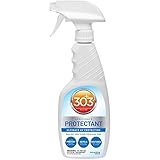
- Ultimate Protection – 303 Aerospace Protectant provides superior protection against damaging UV rays. This protector spray repels dust, lint, and...
- Non-Greasy – Dries to a smooth, matte finish with no oily or greasy residue. When treating your outdoor furniture, spa and pool covers, vinyl...
Tire Rotation
For trailers and/or smaller motorhomes, rotating the tires can help avoid uneven wear due to weight distribution issues. As always, follow the tire or RV manufacturer’s guidelines. Note that on larger motorhomes, rotating isn’t usually needed. Just be on the lookout for signs of unusual treadwear which could be an indication of an alignment issue.
Use a Tire Pressure Monitoring System (TPMS)
Use a TPMS so you can monitor the health of your tires while you’re driving. Catching a problem early, like a leaky valve that’s slowly causing pressure loss, could save your tire from serious damage, both keeping you safe and saving a whole lot of money.
Not familiar with a TPMS system? See our post on RV TPMS to learn more about what it is and why we’d never drive without one.
Final Notes
Other than the maximum permitted by the manufacturer, there’s no set number of years your RV tires should last. How long they last can be affected by how you drive and how you care for them. But, many factors need to be considered when determining when it’s time to replace your RV tires.
Since a front tire blowout on a motorhome is about the most dangerous of all, we also installed RettroBand tire blowout protection devices on our front wheels. You can read about that in our RettroBand post.
Your safety, and the safety of those with you and around you, rides on your tires. So be sure to learn as much as you can about this important topic, and take the time to care for your tires so they’ll be able to take good care of you for as long as possible.
Free RVing Tips, Tricks, Reviews & Giveaways
As 20-year full-timers, we share everything we’ve learned about RVing over the years. Join our online community to receive a wealth of great RVing knowledge delivered daily to your inbox.
Whether you’re a new RVer or a seasoned full-timer, you’ll love the wide range of RVing topics we cover. Don’t miss a single article or any of our famous Giveaways. Subscribe to our newsletter today!
Tim
Friday 19th of April 2024
Where do you get the professional inspection by a "qualified tire specialist" as recommended by Michelin performed when you are out in the road? Do you use RV specific tire shops, or just any Michelin dealer? We just purchased our 1st Class A, a used 2018 Newmar Dutch Star 4369 and spent over $10k putting all new Michelins on it before we start full timing and exploring the country in retirement, and we want to make sure those babies last as long as possible.
Thanks!!!
Robert
Wednesday 14th of February 2024
We use our pie iron for making pies.we use canned pie filling between two slices of bread in the pie iron. I would imagine fresh fruit would work just as well.
rag_ftw
Tuesday 13th of February 2024
Glad to hear y'all are practicing manufactures' recommendations on tire replacement and not jumping on the 5-7 year bandwagon. I have run my tires for a 10 year replacement cycle since 1993, when I got my first class A, with no problems. I subscribe to your advice about TPMS, 303, cleanliness, and covers. I think front end alignment is critical also. Thanks for the good news!
TheRVgeeks
Tuesday 13th of February 2024
Great to hear we're not alone! :-)